How to Care for Linen Clothing: Complete Washing & Maintenance Guide
- Share
- Issue Time
- May 11,2026
Summary
Learn how to care for linen clothing with expert washing, drying, ironing, and storage tips. Keep your linen garments soft, breathable, and long-lasting.
How to Care for Linen Clothing
Linen clothing has become one of the most loved choices in modern wardrobes thanks to its breathable texture, timeless appearance, and sustainable qualities. Whether it is a relaxed linen shirt, elegant summer dress, lightweight trousers, or a resort-inspired co-ord set, linen garments offer comfort and effortless style that few fabrics can match.
However, many people hesitate to invest in linen because they are unsure how to care for it properly. Questions like “Does linen shrink?”, “Can linen go in the dryer?”, and “Why does linen wrinkle?” are common among both first-time buyers and fashion brands.
The good news is that linen is actually one of the easiest natural fabrics to maintain when cared for correctly. In fact, linen becomes softer and more comfortable over time, making it a long-lasting and rewarding fabric for everyday wear.
In this complete guide, we will explore everything you need to know about caring for linen clothing—from washing and drying to ironing, stain removal, storage, and long-term maintenance.
Why Proper Linen Care Matters
Linen is made from natural flax fibers, which are known for their strength and durability. Although linen is naturally resilient, improper care can shorten the lifespan of garments, cause shrinkage, damage fibers, or affect the softness of the fabric.
Proper linen care helps preserve breathability, maintain garment shape, extend fabric longevity, and improve softness over time.
Unlike fast-fashion synthetic fabrics that often deteriorate quickly, linen has the unique ability to age beautifully. With proper maintenance, high-quality linen garments can last for many years.
Understanding Linen Fabric Characteristics
Before learning how to care for linen clothing, it is important to understand the nature of the fabric itself.
Natural Fiber Structure
Linen fibers are stronger than cotton fibers, which contributes to their durability. However, because linen fibers have low elasticity, they wrinkle more easily than some other fabrics.
Moisture Absorption
Linen can absorb a large amount of moisture without feeling damp. This makes it highly breathable and ideal for warm weather.
Softening Over Time
One of the best qualities of linen is that it becomes softer with every wash. Unlike some fabrics that weaken with repeated laundering, linen improves in comfort when cared for properly.
How Often Should You Wash Linen Clothing?
Linen does not need to be washed after every wear unless it becomes visibly dirty or heavily exposed to sweat. Because linen is naturally breathable and antibacterial, it stays fresh longer than many synthetic fabrics.
Overwashing can unnecessarily stress fibers and reduce garment lifespan. In many cases, simply airing out linen clothing after use is enough.
General Washing Guidelines
- Linen shirts: every 2–3 wears
- Linen dresses: every 1–2 wears depending on weather
- Linen jackets or outerwear: occasional cleaning only
- Linen pants: every 2–4 wears
How to Wash Linen Clothing
Check the Care Label First
Always start by reading the garment’s care label. Some linen pieces are blended with cotton, rayon, or other fibers, which may require different care methods.
Machine Washing Linen
Most modern linen garments can be machine washed safely.
Best Machine Wash Practices
- Use cold or lukewarm water
- Select a gentle cycle
- Use mild detergent
- Avoid bleach and harsh chemicals
- Wash similar colors together
Cold water washing is one of the safest ways to preserve linen texture, prevent shrinkage, and maintain garment color.
Hand Washing Linen
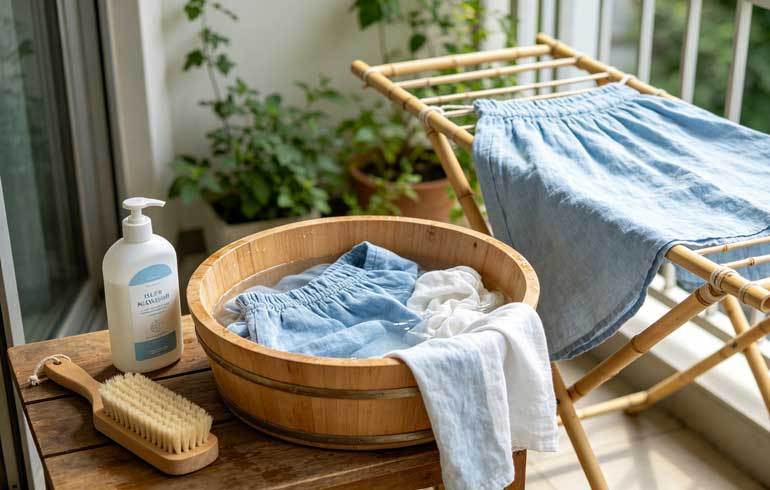
Hand washing is ideal for delicate linen garments, embroidered pieces, or lightweight linen dresses.
Fill a basin with cool water and add a small amount of mild detergent. Gently move the garment through the water without scrubbing aggressively.
Rinse thoroughly to remove soap residue.
What Detergent Is Best for Linen?
Choosing the right detergent plays a major role in maintaining linen quality.
Recommended Detergent Features
- Mild and pH-neutral
- Free from bleach
- No optical brighteners
- Suitable for natural fibers
Harsh detergents can weaken linen fibers and fade garment colors over time.
Can Linen Shrink?
Yes, linen can shrink if exposed to excessive heat during washing or drying. However, pre-washed and garment-washed linen products usually experience minimal shrinkage.
How to Prevent Shrinkage
- Wash with cold water
- Avoid high dryer temperatures
- Air dry whenever possible
- Do not overdry garments
High temperatures are the main cause of linen shrinkage.
How to Dry Linen Clothing
Air Drying: The Best Method
Air drying is widely considered the safest and most effective method for drying linen clothing.
Hang garments naturally or lay them flat on a drying rack. Smooth out wrinkles gently while damp.
Benefits of Air Drying
- Reduces shrinkage risk
- Protects fibers
- Maintains garment shape
- Saves energy
Can You Tumble Dry Linen?
Yes, but with caution.
If using a dryer, choose a low heat or delicate setting and remove garments while slightly damp.
Overdrying linen in high heat can weaken fibers and increase wrinkling.
How to Iron Linen Clothing
Linen wrinkles naturally, and many people consider those wrinkles part of the fabric’s relaxed charm. However, if you prefer a smoother appearance, ironing linen is simple when done correctly.
Best Time to Iron Linen
The best time to iron linen is when it is slightly damp.
Ironing Tips
- Use medium to high heat with steam
- Iron inside out for darker colors
- Spray water lightly if fabric is dry
- Use a pressing cloth for delicate finishes
Can You Steam Linen?
Absolutely. Steamers are excellent for linen garments because they remove wrinkles gently without direct pressure.
How to Store Linen Clothing
Proper storage is essential for maintaining linen garments between seasons.
Best Storage Practices
- Store in a cool, dry place
- Use breathable garment bags
- Avoid plastic covers
- Fold heavier garments carefully
- Hang lightweight dresses and shirts
Because linen is a natural fiber, it needs airflow to prevent moisture buildup.
How to Remove Stains from Linen
Stain treatment should be done as quickly as possible.
General Stain Removal Tips
- Blot stains instead of rubbing
- Use mild stain removers
- Test products on hidden areas first
- Avoid chlorine bleach
Oil Stains
Apply baking soda or cornstarch to absorb excess oil before washing.
Wine or Coffee Stains
Rinse with cold water immediately and treat with gentle detergent.
Makeup Stains
Use a mild soap solution and dab carefully.
Why Linen Wrinkles Easily
Wrinkling is a natural characteristic of linen due to its low elasticity. Unlike synthetic fabrics that maintain rigid structure, linen fibers move freely and create a relaxed appearance.
Many fashion enthusiasts appreciate linen wrinkles because they contribute to the fabric’s effortless and organic look.
How to Reduce Wrinkles
- Remove garments promptly after washing
- Shake garments before drying
- Steam lightly before wearing
- Choose linen blends for smoother appearance
Travel Tips for Linen Clothing
Linen is a popular travel fabric because it is lightweight and breathable. However, packing linen properly helps minimize wrinkles.
Travel Care Tips
- Roll garments instead of folding tightly
- Use packing cubes
- Hang garments immediately after arrival
- Carry a travel steamer if needed
Seasonal Linen Care
Summer Care
Frequent summer wear may require more regular washing due to heat and perspiration. Always allow garments to dry fully before storing.
Winter Storage
Store seasonal linen items in breathable cotton bags with natural moisture absorbers if necessary.
Can Linen Be Dry Cleaned?
Yes, linen can be dry cleaned, especially structured garments such as blazers or tailored linen suits.
However, frequent dry cleaning is usually unnecessary for everyday linen clothing and may expose garments to additional chemicals.
How Linen Changes Over Time
One of linen’s most attractive features is how it evolves with wear.
Over time, linen becomes:
- Softer
- More flexible
- More comfortable
- Less stiff
This aging process is part of linen’s premium appeal.
Common Linen Care Mistakes
Using Hot Water
Hot water can cause shrinkage and stress fibers.
Overloading the Washing Machine
Linen needs space to move freely during washing.
Using Bleach
Bleach damages natural fibers and weakens fabric structure.
Overdrying
Excessive dryer heat increases wrinkles and shrinkage risk.
How Brands and Manufacturers Care for Linen During Production
Professional linen garment manufacturers often use specialized finishing techniques to improve garment stability and softness before products reach consumers.
Common Linen Finishing Methods
- Garment washing
- Pre-shrinking treatments
- Softening finishes
- Steam finishing
These processes help reduce shrinkage and improve comfort.
The Sustainability Advantage of Proper Linen Care
Taking care of linen clothing properly is not only beneficial for garments—it is also beneficial for the environment.
Long-lasting clothing reduces:
- Textile waste
- Overconsumption
- Resource usage
- Environmental impact
Well-maintained linen garments can remain wearable for many years, supporting sustainable and slow-fashion lifestyles.
Why Linen Is Worth the Maintenance
Although linen requires slightly different care than synthetic fabrics, the rewards are significant. Linen offers unmatched breathability, timeless style, comfort, and sustainability.
Its durability means that proper care becomes an investment rather than a chore.
Final Thoughts
Linen clothing is one of the most practical and rewarding fabrics to own when maintained correctly. From gentle washing and air drying to smart storage and wrinkle management, caring for linen is surprisingly simple once you understand the fabric’s natural properties.
Instead of fighting against linen’s organic texture and relaxed appearance, embracing its natural qualities often leads to the best results.
With proper care, linen garments become softer, more beautiful, and more comfortable over time—making them a long-term essential for both sustainable wardrobes and premium fashion collections.