100% Linen vs Linen Blend: Which Should You Choose? | KOSSR Buying Guide
- Share
- Issue Time
- Aug 3,2026
Summary
100% linen delivers maximum breathability, durability, and the lowest environmental footprint, while blends trade some performance for easier care, stretch, and lower price. See the honest comparison and which to choose for your wardrobe.
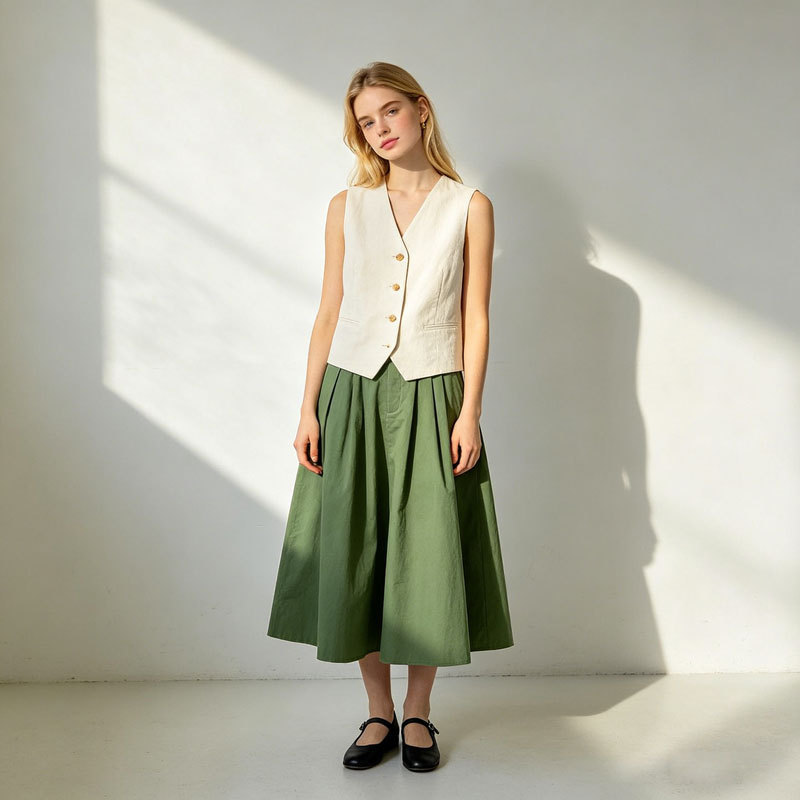
If you are deciding between 100% linen and a linen blend, the honest answer is: it depends on what you need the garment to do. Pure 100% linen — made entirely from flax fibre — gives you maximum breathability, the strongest natural durability, and the lowest environmental footprint, at the cost of more wrinkles and a higher price. A linen blend (usually linen mixed with cotton, viscose, polyester, or a little elastane) trades some of that natural performance for easier care, stretch, lower cost, or a softer drape. This guide compares both honestly — what each actually feels like, how they behave over time, what the labels really mean, and which one you should choose for your wardrobe.
This guide is written for shoppers and buyers deciding between pure linen and blends — whether you are choosing a summer dress, work shirts, trousers, or bulk fabric for a brand. We cover the fibre facts, the trade-offs you will actually notice, how to read labels, and the questions worth asking before you buy.
1. What "100% Linen" and "Linen Blend" Actually Mean
The difference starts with the fibre itself. Linen is made from flax, a plant grown mainly in Western Europe. When a garment says 100% linen, every fibre in the fabric is flax — nothing else. When it says "linen blend," a percentage of the fabric is something else, and the ratio matters a lot.
Under EU and US textile labelling rules, the fibre composition must be listed by percentage, in descending order. So a label reading "55% linen, 45% cotton" means the fabric is just over half linen; "80% linen, 20% viscose" means linen dominates. The same word "linen" can describe very different fabrics depending on that ratio — which is why the composition line is the first thing to read.
- 100% linen: pure flax fibre — maximum breathability, strength, and natural texture.
- Linen-cotton (typically 55/45 or 50/50): softer hand-feel, slightly less crisp, cheaper than pure linen, still breathable.
- Linen-viscose (typically 70/30 or 55/45): smoother drape and less wrinkling; viscose weakens durability and adds manufacturing footprint.
- Linen-polyester (varies): wrinkle-resistant and low-cost, but less breathable and not biodegradable.
- Linen-elastane (typically 95/5 or 97/3): a small amount of stretch for comfort in fitted styles; still mostly natural.
The practical takeaway: a "linen blend" is not automatically better or worse than pure linen — it is simply a different fabric with different trade-offs. The rest of this guide helps you match those trade-offs to how you will actually wear the garment.
2. Side-by-Side: 100% Linen vs Linen Blend
Here is the comparison that matters for everyday decisions. We rate each property honestly, based on how the fabrics behave in real wear rather than marketing language:
| Property | 100% Linen | Linen Blend |
|---|---|---|
| Breathability & cooling | Best — hollow flax fibres and open weave move air and moisture faster than any blend | Good but reduced, especially with polyester or viscose content |
| Durability | Excellent — flax is about twice as strong as cotton; garments last years | Depends on the partner fibre; cotton blends are durable, viscose and polyester blends wear faster |
| Wrinkling | Wrinkles naturally — part of linen's character; some find it charming, others not | Fewer wrinkles, especially with polyester or viscose content |
| Softness & drape | Starts crisp, softens with every wash; a relaxed, natural drape | Often softer and smoother from day one, with a more fluid drape |
| Stretch & fit | No stretch — relies on cut and drape | Elastane blends offer stretch for fitted silhouettes |
| Care | Easy but specific: cool wash, air dry, iron while damp if wanted | Usually easier — fewer wrinkles, often machine-friendly |
| Price | Higher — European flax and longer processing cost more | Lower to moderate, depending on the partner fibre |
| Environmental footprint | Lowest — rain-fed flax, biodegradable, no microplastics | Higher with viscose or polyester; cotton blends dilute linen's advantage |
| Biodegradability | 100% biodegradable — returns to soil naturally | Only the natural fibre content biodegrades; synthetics persist |
Two patterns stand out. First, 100% linen wins on the properties that matter most for hot weather: breathability, durability, and sustainability. Second, blends win on convenience: fewer wrinkles, softer feel from day one, stretch, and a lower price. Neither is "better" in the abstract — they suit different priorities.
Quick answer: Choose 100% linen when breathability, durability, and sustainability are your priorities — typically for summer clothing, travel pieces, and long-term wardrobe staples. Choose a blend when you want easier care, stretch, a softer drape, or a lower price, and you accept a trade in breathability or durability.
3. When 100% Linen Is the Right Choice
Pure linen earns its keep in specific situations. These are the cases where the blend's conveniences matter less than what only flax can deliver:
- Hot, humid, or sweaty conditions. Nothing beats 100% linen for airflow and moisture wicking. A cotton or viscose blend feels warmer and clammier in real heat — the difference is noticeable within minutes.
- Travel and vacation packing. Pure linen dries fast, packs small, and resists odour — ideal for trips. The wrinkles are part of the relaxed holiday look, and you can steam or hang garments in a bathroom to release them.
- Long-term wardrobe staples. Because flax is roughly twice as strong as cotton, a well-made 100% linen shirt or dress can last 5–10 years. If you are buying fewer, better pieces, pure linen is the better investment.
- Sustainability-first buying. If you are choosing a fabric for its lower water use, biodegradability, and absence of microplastics, only pure linen delivers the full benefit. Every synthetic or viscose percentage dilutes it.
- Natural texture lovers. The crisp, slightly irregular, "real linen" hand-feel and the way pure linen softens with washing are part of its appeal — blends smooth that character away.
If three or more of these describe you, 100% linen is almost certainly the right call — especially for summer pieces where breathability is the entire point of the garment.
4. When a Linen Blend Makes More Sense
Blends exist for real reasons, and there are honest cases where they are the better choice:
- You dislike ironing and wrinkles. A linen-viscose or linen-polyester blend wrinkles noticeably less and looks presentable straight out of the wash — a genuine advantage for office wear or busy schedules.
- You want stretch and a fitted silhouette. A 95/5 or 97/3 linen-elastane blend gives comfort stretch that pure linen cannot, ideal for fitted tops and trousers.
- Budget matters. Cotton and polyester are cheaper fibres than European flax. A linen-cotton blend gives you much of linen's look and breathability at a lower price point.
- You prefer a softer drape from day one. Viscose blends drape more fluidly and feel smoother immediately, without the break-in washes that pure linen needs.
- Garments that need structure or repeated washing. Some blends hold their shape through more machine wash cycles, which suits high-rotation basics.
The key discipline with blends is reading the ratio: a 70/30 linen-viscose garment still behaves mostly like linen, while a 50/50 linen-polyester garment has lost most of linen's breathability. The higher the linen percentage, the more of the flax benefits you keep.
5. How to Read a Linen Label Like a Buyer
Whether you shop for yourself or source for a brand, five label details separate a good linen purchase from a disappointing one:
- Read the fibre composition first. Look for the exact percentage: "100% linen" or a specific ratio like "70% linen, 30% viscose." Avoid vague terms like "linen mix" without numbers.
- Check the flax origin. European flax (France, Belgium, the Netherlands) is rain-fed and grown under strict EU rules. Origin disclosure is a strong quality signal — and a red flag when absent.
- Look for weight (GSM). Mid-weight linen (140–180 gsm) is the versatile sweet spot for clothing; very light linen (under 110 gsm) is airier but more translucent and less durable.
- Check pre-washing. Pre-washed linen is soft on arrival and won't shrink further; unwashed linen can shrink 5–8% in the first wash.
- Examine construction. Look for neat, tight seams, reinforced stress points, and consistent weave. A great fibre in a poorly made garment is still a poor purchase.
At KOSSR, every product page lists fibre composition, flax origin (European), fabric weight range, and finishing (pre-washed) — so the label question is answered before you order, not after.
One more honest note on blends in "linen" products: the word "linen" on a label does not guarantee the percentage. A garment can legally be described as "linen" with a surprisingly low flax content. Always check the composition line — it is the only number that tells you what you are really buying.
6. What KOSSR Recommends — and Why
Our position comes from making and wearing linen at scale, not from theory. For our core collection we choose 100% European flax, pre-washed, in mid-weight ranges (140–180 gsm), because our customers repeatedly tell us the same three things: they buy linen for hot weather, they want it to last, and they want a fabric they can trust the story of. Pure linen delivers all three.
We are not opposed to blends on principle — a touch of elastane can make a fitted piece genuinely more comfortable. But we believe a blend should be a deliberate choice, disclosed clearly, not a cost-cutting surprise. When we use blends in future lines, the ratio will be stated on the product page alongside the same origin and weight information we publish for our pure-linen pieces, so you can compare on facts rather than marketing.
If you are choosing between pure linen and a blend, our practical advice is: buy 100% linen for anything you will wear in heat, travel with, or expect to keep for years; consider a blend only when you specifically need stretch, minimal wrinkles, or a lower price — and verify the ratio before you buy. More guidance on choosing quality linen is available in our linen buying guide library, and you can read about our sourcing and production standards on our About Us page.
Frequently Asked Questions
Is 100% linen better than a linen blend?
For breathability, durability, and sustainability, yes — 100% linen is better. For ease of care, wrinkle-resistance, stretch, and price, a blend can be better. It depends on what you prioritise in the specific garment, which is why reading the fibre ratio matters more than the word "linen" on its own.
What is the best linen blend ratio?
There is no single "best" ratio, but a few common ones perform well: 95/5 or 97/3 linen-elastane adds stretch while keeping the fabric mostly natural; 70/30 linen-viscose softens drape and reduces wrinkles with modest trade-offs; 55/45 linen-cotton balances price and breathability. The higher the linen percentage, the more flax benefits you keep.
Does linen blend wrinkle less than 100% linen?
Usually yes. Viscose and polyester content reduces wrinkling noticeably, and cotton blends wrinkle a little less than pure flax. If a wrinkle-free look matters more to you than maximum breathability, a blend is the honest choice.
Is linen cotton blend breathable?
Yes — linen-cotton blends are still breathable, though less so than pure linen. A 55/45 or 50/50 linen-cotton fabric keeps much of linen's airflow while adding cotton's softness and lower price. It is a reasonable compromise, especially outside peak summer heat.
Why is 100% linen more expensive?
European flax is a premium natural fibre: it is rain-fed but labour-intensive to harvest and ret, and long-staple flax produces finer, stronger yarn. Pure linen also skips the cheap partner fibres that lower blend prices. The higher cost buys durability and a smaller environmental footprint — for most owners, linen's cost per wear falls below cheaper fabrics over a 5–10 year life.
Does 100% linen shrink more than blends?
Pre-washed 100% linen shrinks minimally (1–3%) because it has already undergone most shrinkage at the factory. Unwashed linen can shrink 5–8% in the first wash regardless of blend status. The biggest factor is pre-washing, not fibre content — so check whether the garment is pre-washed before buying either type.
Choosing between 100% linen and a blend comes down to one question: what does this garment need to do? For heat, durability, and a lower environmental footprint, pure European flax is the stronger choice — which is why the entire KOSSR linen collection is made from 100% pre-washed European flax, with the composition, origin, and weight stated on every product page. Browse the collection to feel the difference, read more linen guides, or contact our team — we are happy to help you pick the right fabric for your wardrobe.