Best Linen Tops for Summer: Cool & Breathable Styles | KOSSR Best Picks Guide
- Share
- Issue Time
- Aug 17,2026
Summary
Find the best linen tops for summer: breathable shirts, short-sleeve tops, tanks, and light layers. Fabric weight, fit, and care tips to choose cool, comfortable linen clothing.
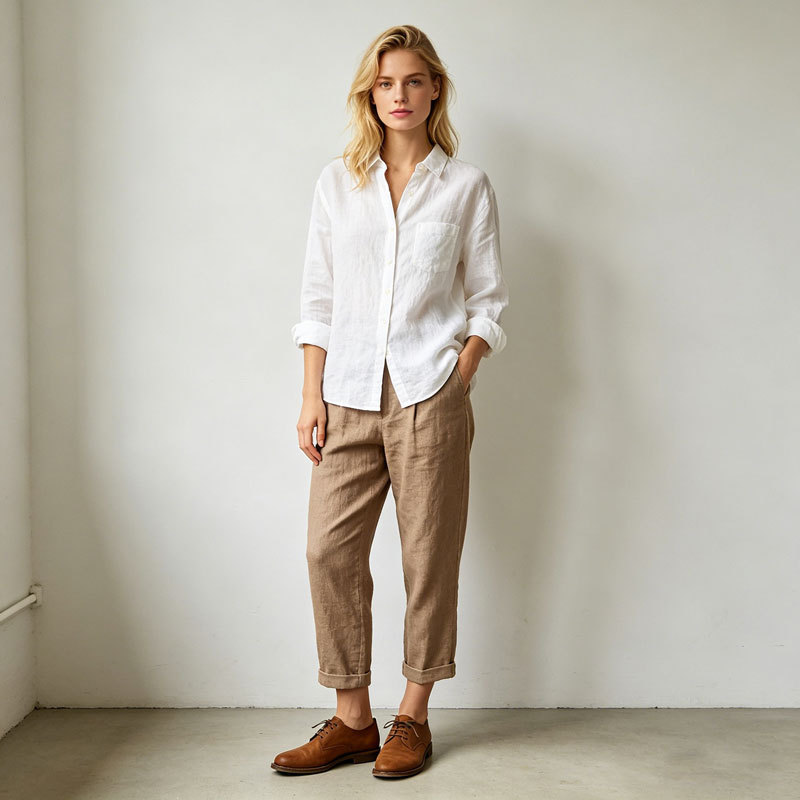
Best Linen Tops for Summer: Cool & Breathable Styles
A good linen top is the closest thing summer has to a uniform: it keeps you cool in the heat, needs no ironing to look right, and works from beach days to city evenings. The best linen tops share a few qualities — breathable 100% linen or a linen blend, a fit that leaves room for air to move, and a cut that suits the way you actually live in summer. This guide breaks down the linen top styles that earn their place in a warm-weather wardrobe — shirts, short-sleeve tops, tanks, camisoles, and light layering pieces — explains what to look for in fabric and fit, and gives honest notes on what each style is and is not good at.
This is a practical buying guide for women in Europe and North America, written with realistic expectations: linen creases, linen breathes, and a well-chosen linen top outlasts most summer tops you already own. Where numbers appear (fabric weights, shrinkage ranges), they reflect standard industry ranges for linen, not a single brand's claims.
1. What Makes a Linen Top "Best" for Summer
Linen has been worn in hot climates for thousands of years because the fibre does something cotton cannot match: it conducts heat away from the skin and dries quickly when you sweat. But not every linen top delivers that benefit equally. The difference is in the fabric weight, the weave, and the finish — the same three things that decide how a linen top feels and how long it lasts.
- Fabric weight: for tops, roughly 140–180 gsm is the practical sweet spot. Below about 120 gsm, linen becomes sheer and delicate — fine for an airy blouse you wear occasionally, but it wears out faster. Above about 200 gsm, linen feels more like a shirt or jacket fabric and drapes heavier. For everyday summer tops, mid-weight linen gives the best balance of breathability, opacity, and durability.
- Weave: a smooth, even plain weave is the standard for quality linen tops. It breathes well, holds its shape, and wears evenly. Some tops use looser or slubby weaves for a more textured, artisanal look — that is a style choice, but looser weaves are more delicate and can snag more easily.
- Finish: pre-washed (garment-washed) linen is softer from the first wear and shrinks little after that — typically 1–3%. Unwashed linen starts crisp and shrinks more (often 5–8% on the first wash), which makes sizing harder. For a top you want to wear immediately in summer, pre-washed is the easier choice.
- Colour and dye: natural and undyed linen shows its character best and fades least; garment-dyed linen has a softer, slightly lived-in colour. Both are fine — the point is to know which you are buying so the colour change over time does not surprise you.
These four factors are what this guide uses to judge every style below. A top can look beautiful and still fail as a summer piece if the fabric is too heavy, too sheer, or unwashed and unpredictable in size. Fabric details matter more than style trends, so we will look at them first and the silhouettes second.
2. The Linen Top Styles Worth Owning
Linen tops come in a handful of repeating silhouettes, and each one serves a different part of summer. Rather than owning many similar tops, most people do better with one or two from each category that genuinely fits their life. Here is the honest breakdown of the main styles:
| Style | Best for | Fabric note | Watch out for |
|---|---|---|---|
| Linen shirt | Versatile all-rounder — work, travel, evening | 140–170 gsm, pre-washed preferred | Collars and cuffs add stiffness; check seam finish |
| Short-sleeve button top | Easy everyday wear, smart-casual | 130–160 gsm, soft drape | Sleeve length matters — too short can feel tight |
| Tank / camisole | Hottest days, layering, beach-to-town | 120–150 gsm, smooth weave against skin | Opacity — check it is not see-through in sunlight |
| T-shirt style | Casual everyday comfort | 140–160 gsm, often linen-cotton blend | Blends crease less but breathe a little less |
| Light overshirt / layer | Evenings, air-conditioned spaces, travel | 130–160 gsm, open weave | Useful as a layer more than a main top |
The sections below go through the strongest picks in each category with the specific qualities to look for. The right choice depends on your climate and how you spend your summer days — a linen shirt earns its keep almost everywhere, while a linen tank is the specialist for heat.
3. Linen Shirts: The Most Versatile Summer Top
If you can only own one linen top, make it a linen shirt. A well-cut linen shirt works over shorts on a beach day, untucked over trousers in the city, or as a light layer over a tank in the evening. It is the style that moves through the most of summer with the fewest changes — which is exactly what you want from a summer wardrobe.
What makes a great linen shirt:
- Relaxed but defined fit: the shirt should skim the body rather than cling or tent. You want enough ease to sit and move without the fabric pulling, but a shape that still reads as "fitted" — boxy shirts are comfortable but harder to dress up.
- Pre-washed fabric: a pre-washed linen shirt is soft from day one and keeps its size. If you buy unwashed linen, expect stiffness and 5–8% first-wash shrinkage, which complicates sizing.
- Good collar and cuff finishing: the collar is the part that reads "quality" — it should sit flat and hold a fold, not curl or crumple. Cuffs should fasten easily and stay closed.
- Seams that lie flat: run a hand along the inside seams. Flat-felled or neatly overlocked seams feel better against the skin and last longer than raw edges.
In practice, most women wear a linen shirt either fully buttoned with the sleeves rolled, or open over a tank as a light jacket. Both looks use the same shirt, which is the point. Neutral colours — white, natural, sand, light blue — make the shirt easier to pair with everything you already own; earthy tones like olive or terracotta add personality without becoming hard to match.
One honest note: linen shirts crease, and the creases are part of the look. If you cannot tolerate visible creasing, a linen-cotton blend shirt is a fair compromise — it creases less and feels softer, at a small cost in coolness. The linen tops collection at KOSSR includes both 100% linen and blended options so you can compare directly.
4. Short-Sleeve Button Tops: The Easy Everyday Option
For days when a full shirt feels like too much and a tank feels like too little, the short-sleeve linen button top is the middle ground. It has the polish of a shirt — a collar, buttons, a shape you can tuck or leave loose — without the sleeve fabric of a long-sleeve style. It is the most wearable linen top for everyday summer life: work, markets, lunches, and long days out.
The details that separate a good one from a forgettable one:
- Sleeve length and width: sleeves should end somewhere between mid-upper-arm and just above the elbow, and they need enough width to move. Tight short sleeves on linen (which has no stretch) feel restrictive by afternoon.
- Neckline: a collar adds structure and works for smart-casual; a collarless or camp-collar top is softer and more casual. Choose by how you plan to wear it.
- Length: a hem that sits at the hip works untucked; a slightly shorter hem tucks more cleanly into high-waisted bottoms. Decide which you will do most before choosing.
- Drape: mid-weight pre-washed linen drapes softly enough to look relaxed without looking shapeless. If the fabric is too stiff, the top stands away from the body in a boxy way that flatters few people.
Short-sleeve linen tops pair naturally with the linen bottoms collection — shorts, trousers, and skirts in the same natural palette. The combination is the classic summer outfit in European and North American resort towns for a reason: it is cool, it packs flat, and it looks intentional without effort.
5. Linen Tanks and Camisoles: Purpose-Built for Heat
When the temperature climbs, a linen tank or camisole is the most honest answer. With the least fabric touching your skin and the most air reaching your torso, tanks are where linen's cooling properties are easiest to feel. They are also the most versatile layering piece: under a linen shirt, under a light jacket, or on their own with high-waisted trousers or a skirt.
What to check before buying a linen tank:
- Opacity: light linen (120–140 gsm) can be semi-sheer, especially in white and natural. Check the product photos for how the fabric reads when worn, and consider a slightly heavier 140–150 gsm fabric if opacity matters to you.
- Strap width: thin straps are elegant but show bra straps and need precise fit; wider straps are more practical and more supportive. Choose by your comfort and the tops you will wear it with.
- Armhole fit: the armhole is the make-or-break point on a tank. It should sit close without gaping — a too-large armhole shows your bra and feels insecure; a too-small one digs in.
- Smooth seams: with so little fabric, seams are close to the skin. Neat flat seams and a soft label (or no label) make a real comfort difference in a tank you will wear in 30°C heat.
A linen camisole worn under a sheer or light summer top is also a practical trick: it adds a layer of coverage while keeping the whole outfit cooler than a synthetic lining would. This is why a well-made camisole in a neutral colour is worth owning even if you rarely wear tanks on their own.
6. Linen T-Shirt Styles and Blends: Comfort Without the Fuss
If you live in t-shirts and only care about linen because it is cooler, a linen t-shirt — or a linen-cotton blend tee — is the direct upgrade. It gives you the familiar t-shirt shape and ease with linen's breathability, and it dresses up more easily than a cotton tee without trying.
Two honest points about linen t-shirts:
- 100% linen tees have no stretch. Cotton tees have a little give; linen has essentially none. A 100% linen tee needs to be cut with enough ease to be comfortable — if it fits snugly, it will feel tight all day. Check the fabric description for a relaxed cut or buy your usual size with room to spare.
- Blends are often the better daily choice. A linen-cotton blend (for example 55% linen / 45% cotton) keeps most of the coolness, adds softness and a little stretch, creases less, and is usually more forgiving in fit. The trade-off is a small reduction in linen's maximum cooling effect — usually unnoticeable in practice.
Neckline is the main style decision: a crew neck is the everyday classic, a scoop or V-neck suits warmer days and layering, and a boxy cropped tee is a current summer silhouette that pairs with high-waisted bottoms. Whatever the neckline, look for ribbed or reinforced neckbands — they keep the neckline from stretching out after washing, which is the most common way t-shirt shapes die.
7. The Light Overshirt: Summer's Most Useful Layer
Every summer wardrobe has evenings, air-conditioned restaurants, and ferry decks where a bare top is not enough. The light linen overshirt — worn open over a tank or tee, sleeves pushed up — solves all of these with one piece. It is not a main top in the way a shirt is; it is a mobile layer that adds coverage, style, and a second layer of linen's temperature regulation.
What makes a good overshirt:
- Light and open: 130–160 gsm with a reasonably open weave, so it adds coverage without adding heat. A heavy overshirt defeats the purpose.
- Generous cut: it is meant to be worn open over other clothes, so it should fit a size roomy — enough to layer over a tank without pulling at the shoulders.
- Pockets and details: chest pockets are useful on holiday; cuff buttons let you roll sleeves and have them stay. These small details make an overshirt feel finished rather than like an unbuttoned shirt.
- Travel-proof fabric: linen's resistance to odour and its quick-dry nature make an overshirt the best travel layer you can pack — it can be washed in a hotel sink and dry overnight.
If you travel in summer, the overshirt is the piece that earns its packing space more reliably than any other linen top. It pairs with the linen sets and dresses in the KOSSR range as a topper for cooler moments.
8. Fabric and Fit: How to Judge a Linen Top Before Buying
Online shopping for linen tops is easier when you know which product details matter and which are decoration. Use this checklist when comparing tops:
- Fabric composition is stated: "100% linen" means exactly what it says; "linen blend" should say what the other fibre is and roughly in what proportion. Avoid listings that just say "linen" without specifics.
- Weight is stated (gsm) or implied: 140–180 gsm is the practical range for tops. If a listing shows the fabric weight, you can judge opacity, drape, and durability before buying.
- Finish is stated: pre-washed / garment-washed is the detail that predicts softness and shrinkage. If it is not stated, ask — or assume unwashed and size accordingly.
- Garment measurements are given: chest, waist, length in centimetres or inches. Size letters vary between brands; measurements do not.
- Photos show the fabric, not just the model: close-up shots of the weave, the seams, and the drape tell you more than a styled flat-lay. Look for photos that show how the fabric falls when worn.
- Reviews mention texture and sizing: "runs large", "soft", "slightly sheer", "shrunk a little" — real-world comments predict your experience better than the marketing copy.
- Care instructions match linen: a linen top should be washable cool or lukewarm and air-dried. If the care label demands dry cleaning, factor that cost into the price.
Fit guidance specific to linen: because linen has no stretch, choose tops with enough ease to sit, reach, and move comfortably — a relaxed fit is a feature, not a sizing error. If you are between sizes, the size questions FAQ explains how to decide, and KOSSR's product pages list garment measurements for each style.
Colour deserves its own note because it changes how often a top gets worn. Natural, white, and sand are the workhorses: they pair with every bottom, flatter most skin tones, and hide the light summer dust that any pale fabric attracts. Navy and olive add depth without much styling effort. Brighter or printed linen tops are lovely but are worn less often, because they demand the rest of the outfit to match them. A practical rule: if a top does not go with at least three things you already own, it is a special-occasion piece, not an everyday one. Buy neutrals for the everyday pieces and keep one or two colours for the pieces you truly love.
9. Caring for Linen Tops: Keep Them Cool, Soft, and Long-Lived
A linen top that is cared for simply will outlast most of your summer wardrobe. The rules are short, and they matter more for linen than for almost any other fabric:
- Wash cool or lukewarm on a gentle cycle with mild detergent. Hot water stiffens linen and fades garment-dyed colours faster.
- Air dry, or tumble dry on low and remove while damp. High-heat drying is the fastest way to make linen rough and to shrink it.
- Iron while slightly damp if you want crispness. Dry linen needs more heat and steam, which stresses the fibres.
- Wash less often. Linen resists odour and freshens with airing between wears. Washing every wear wears the fabric out faster than necessary.
- Store loosely, out of direct sunlight. Hang shirts and overshirts; fold knits and delicate tanks. Prolonged strong sunlight fades natural and dyed linen unevenly.
Creases are not a care failure — they are linen's character, and most people accept them as part of the look. If creases bother you, a linen-cotton blend creases less, and a quick damp-iron or steam during wear smooths the worst of it. The full routine, including stain handling, is in the linen care FAQ and the Linen Care blog section.
10. Common Mistakes When Buying Linen Tops
Most disappointments with linen tops come from a handful of repeatable mistakes — almost all of them avoidable at the point of purchase. Knowing them in advance is cheaper than learning them from a drawer of tops you never wear:
- Buying unwashed linen without accounting for shrinkage. An unwashed linen top can shrink 5–8% on the first wash — enough to change the fit noticeably. If the listing does not say pre-washed, either ask, or size up and accept the first-wash change. Pre-washed linen removes this risk almost entirely.
- Choosing by photo, not by fabric weight. Two tops can look identical in photos and feel completely different: one 130 gsm and sheer, one 170 gsm and substantial. Check the stated weight or composition before comparing styles.
- Buying a fitted style in a fabric with no stretch. Linen has essentially no give. A snug-fitting linen top feels tight by mid-day and stresses the seams. If the style is described as fitted, consider one size up — relaxed ease is what makes linen comfortable.
- Ignoring seam and label comfort. With linen, the fabric is only half the story. Stiff collars, rough side seams, and itchy labels ruin tops that are otherwise well made. Look for flat seams and soft labels, especially in tanks and camisoles worn against the skin.
- Expecting wrinkle-free wear. Linen creases — it is a characteristic of the fibre, not a defect. If creases genuinely bother you, choose a linen-cotton blend or accept the relaxed look as part of linen's appeal.
- Buying too many similar styles. Three short-sleeve button tops in the same shade are three versions of one outfit. A wardrobe that works has variety of function — shirt, everyday top, tank, layer — rather than variety of duplicates.
None of these mistakes are about the fabric being bad. They are about the fabric being chosen and sized for the wrong expectations. Linen rewards shoppers who read the fabric details, choose pre-washed pieces for everyday wear, and buy with a specific summer job in mind for each top.
11. Building Your Summer Linen Top Wardrobe
Most women do not need five linen tops; they need two or three that cover different jobs. A practical summer linen top wardrobe looks like this:
- One linen shirt in white, natural, or light blue — the versatile all-rounder for work, travel, and evenings.
- One short-sleeve button top in an earthy tone — the everyday option that looks put-together with shorts, trousers, or a skirt.
- One tank or camisole in a neutral colour — for the hottest days and as a layering base.
- Optional: one light overshirt — the layer that solves evenings and travel.
With these four pieces, you can cover a full summer — beach, city, work, travel, and evenings — without owning a wardrobe of tops you rarely wear. Fewer, better pieces that genuinely earn their place is also the logic behind the other guides in the KOSSR blog. If you prefer a coordinated approach, the linen sets collection pairs matching tops and bottoms so the outfit decision is already made.
Linen Tops FAQ
Is linen good for hot weather?
Yes. Linen conducts heat away from the skin, lets air move through the weave, and dries quickly, which makes it one of the best fabrics for hot and humid weather. A mid-weight linen top is the practical balance of coolness, coverage, and durability. See the linen clothing FAQ for more.
Are linen tops see-through?
It depends on the weight and colour. Light linen (120–140 gsm) in white or natural can be semi-sheer. Mid-weight linen around 150–180 gsm is usually opaque enough for normal wear. Check the fabric weight and product photos before buying.
Do linen tops shrink?
Pre-washed linen tops shrink only about 1–3% on first wash; unwashed linen can shrink 5–8%. Choosing pre-washed linen makes sizing predictable. The size questions FAQ covers this in detail.
Is 100% linen better than a linen blend for tops?
Not automatically. 100% linen is the coolest and most breathable, but it has no stretch and creases most. Blends with cotton or viscose are softer, stretch slightly, and crease less, at a small cost in maximum cooling. Choose by your priorities: pure coolness or everyday ease.
How should linen tops fit?
Relaxed. Linen has no stretch, so tops need enough ease to move and sit comfortably. A relaxed fit is a feature of linen, not a sizing error. If a style runs small or you are between sizes, size up for comfort.
Build Your Summer Linen Top Collection
KOSSR makes pre-washed linen tops for women — shirts, short-sleeve styles, tanks, and light layers in natural and neutral colours, with fabric weights and measurements described honestly on each product page. Browse the linen tops collection, pair them with the linen bottoms, or contact us with questions about weight, sizing, or care before you order.