How to Build a Linen Capsule Wardrobe | KOSSR Linen Lifestyle Guide
- Share
- Issue Time
- Aug 19,2026
Summary
Build a 12-15 piece linen capsule wardrobe: core piece list, colour palette that mixes, outfit formulas, seasonal rotation, travel packing, budgeting, and care that lasts.
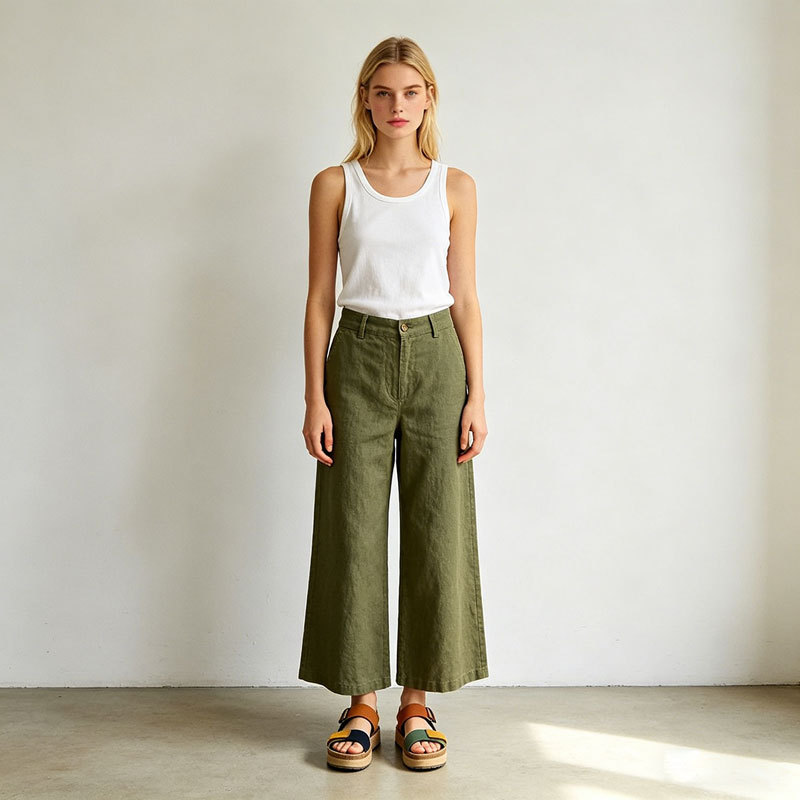
How to Build a Linen Capsule Wardrobe
A linen capsule wardrobe is a small, deliberate set of 12 to 15 linen pieces that mix and match into weeks of outfits — and it is one of the most practical clothing systems for anyone who wants to dress well in warm weather with less effort, less spending, and less waste. The idea is simple: instead of owning many clothes you rarely wear, you own fewer clothes you actually wear, and you choose linen because it breathes, softens with age, and works across casual, work, and evening settings. This guide walks through the whole process — the core piece list, how to choose each item, a colour palette that actually mixes, outfit formulas, seasonal rotation, travel, budgeting, and the care that keeps a linen capsule alive for years.
Written for women in Europe and North America who are tired of full wardrobes that somehow never have anything to wear. The approach here is practical and honest: you do not need to replace everything at once, and you do not need a specific budget. You need a plan, a short list, and the patience to buy well rather than often. Where numbers appear (fabric weights, shrinkage, cost ranges), they reflect standard industry ranges for linen clothing, not a single brand's claims.
What a Linen Capsule Wardrobe Is (and Is Not)
A capsule wardrobe is a small collection of clothes designed so that every piece works with most of the others. The classic idea comes from the 1970s and has been refined for decades: a limited palette, a core of versatile pieces, and a simple rule that every new item must earn its place by mixing with at least two or three things you already own.
An all-linen capsule is that same system with a single fabric throughout, and the fabric is the point. Linen has properties that make it unusually good for small wardrobes:
- It is seasonally wider than it looks. A mid-weight linen piece works from late spring to early autumn, and layers under a wool or cashmere layer in winter. One linen shirt can cover eight months of the year rather than a single season.
- It gets better with age. Most fabrics fade or pill; linen softens and gains character. A capsule is built to last years, and linen is one of the few fabrics that rewards that timescale.
- It dresses up and down. The same linen shirt can be worn untucked with sandals, tucked into tailored trousers for the office, or under a blazer for dinner. Few fabrics cross that many contexts.
- It forgives travel and packing. Linen wrinkles — and that is socially acceptable, even expected, for linen. A packed linen capsule arrives looking intentionally relaxed rather than ruined.
To be clear about what a linen capsule is not: it is not a uniform, not a minimalist competition, and not an all-or-nothing purge. It is a working core. Most people keep a few non-linen pieces (jeans, knitwear, outerwear, occasion wear) alongside the linen core. The capsule is the daily engine; the rest is the support system.
The Core List: 12–15 Linen Pieces
This is a starting list, not a law. Adjust by climate, workplace, and lifestyle — but keep the logic: each category covers a real use, and each piece must mix with several others. A balanced linen capsule for temperate weather looks roughly like this:
| Category | Recommended pieces | Weight range | Primary use |
|---|---|---|---|
| Tops | 2 shirts, 1 short-sleeve top, 1 tank or camisole | 140–180 gsm | Day-to-day base layer; office and casual |
| Bottoms | 1 pair trousers, 1 pair shorts (or culottes) | 170–220 gsm | Work and travel; warm-weather days |
| Dresses | 1 shirt dress, 1 midi dress | 150–200 gsm | One-piece outfits; evening and events |
| Layers | 1 oversized shirt or duster, 1 light cardigan or jacket | 180–230 gsm | Evening cover, office layers, shoulder-season |
| Accessories | 1 scarf or wrap, 1 tote or bag | — | Colour accents, travel, transition weather |
That is 12 pieces in the example. If you want a larger capsule, add a second pair of trousers or a linen blazer before adding novelty pieces — the goal is depth in basics, not variety in statement items.
Practical note: if you live somewhere hot, shift the balance toward tanks, shorts, and light dresses, and skip the jacket. If you live somewhere cool, add a second layer piece and treat the capsule as a spring-to-autumn system rather than a summer system.
How to Choose Each Piece
Not all linen is equal, and the wrong choice in one piece will frustrate you for years. These criteria apply to every purchase in the capsule:
- 100% linen or a well-chosen blend. For breathability and the signature linen feel, choose 100% linen for most pieces. A small percentage of viscose or cotton adds drape and reduces creasing if that matters to you — there is nothing wrong with a thoughtful blend, but know why you are choosing it.
- Pre-washed or garment-washed. Buy linen that has already been washed, or budget for one wash of your own. Pre-washed linen is soft from day one and will not shrink unexpectedly. If you buy unwashed linen, expect 3–8% shrinkage and choose a looser fit accordingly.
- Right weight for the piece. Light 140–180 gsm for tops and dresses; 170–220 gsm for trousers so they hold their shape; heavier 180–230 gsm for jackets and dusters so they keep structure.
- Fit with room to move. Linen is not a stretch fabric. A relaxed cut lets air circulate and looks intentional when it creases. A tight linen garment creases hard, pulls, and feels restrictive — buy linen with ease, not skin-tight.
- Colours from your palette. Every piece should sit inside the colour system you choose (next section). If it does not mix with at least three existing pieces, it is not a capsule piece.
- Details that age well. Check buttons, seams, and hems. Linen is strong, but cheap buttons and weak seams will end a garment long before the fabric wears out.
A Colour Palette That Actually Mixes
The capsule method lives or dies on colour. A disciplined palette is what makes 12 pieces feel like 30 outfits. The structure that works best for linen is simple: neutral bases plus two accent colours.
| Role | Example colours | Share of capsule |
|---|---|---|
| Base neutrals | Natural/off-white, sand, oatmeal, stone grey, black | 60–70% |
| Warm accent | Terracotta, rust, olive, camel | 15–20% |
| Cool or deep accent | Navy, slate blue, forest green, burgundy | 15–20% |
A few practical rules:
- Keep the base truly neutral. Undyed and near-white linens are the easiest to mix and also show linen's natural texture at its best.
- Pick accents that suit your colouring, then keep them consistent across the whole capsule. If terracotta is your accent, it should appear in tops, dresses, and accessories — not as a one-off.
- One loud piece maximum. A capsule can carry one statement colour or print. If you love a printed linen shirt, let it be the print, and keep everything else plain.
- Black linen is a choice, not a default. Black linen is beautiful but slightly more formal and shows creases differently. Many people prefer a deep navy or charcoal as the dark neutral for a warmer feel.
Five to Seven Outfit Formulas
Once the pieces exist, the outfits come from simple formulas. These are the formulas that cover most daily life:
- The classic: shirt + trousers. Buttoned or half-tucked, sleeves rolled or long. Add sandals or loafers. This is the capsule's workhorse — office, lunch, travel.
- The effortless dress: shirt dress, worn alone. Belted at the waist or left loose, with flat sandals. Add the scarf for evening. The one-piece outfit is the lowest-effort, highest-reward formula in the system.
- The layered: tank + open shirt + trousers or skirt. The open shirt adds coverage for air-conditioned rooms and sun, and pulls off at midday. This formula extends the tank into a three-season piece.
- The evening upgrade: midi dress + duster or jacket + dark accessories. Swapping sandals for low heels or adding the wrap turns a day dress into an evening outfit without buying evening-specific linen.
- The relaxed weekend: shorts or culottes + short-sleeve top. With a tote and sunglasses. Simple, and the creases look right by design.
- The transition: everything + the cardigan. Over a dress, over a shirt, over a tank — the layer piece is what makes the capsule work in spring and autumn.
- The travel uniform: trousers + two tops + one dress. Three pieces, four days, one carry-on. This formula is worth testing at home before you actually travel.
Write your formulas down once, and dressing stops being a daily decision. That is the quiet superpower of a capsule: the thinking is done in advance.
Seasonal Rotation: Making Linen Work Year-Round
Linen is unfairly labelled a summer fabric. With rotation, the same capsule covers most of the year. The trick is to think of the capsule as a core that stays constant, surrounded by a small seasonal ring of non-linen layers that change with the weather — tights and knitwear in autumn, a wool coat in winter, nothing but sunscreen in July.
- Late spring to early autumn: the full capsule in play — all tops, bottoms, dresses, and the layer pieces on cooler days.
- Autumn: keep the trousers, shirt dress, and layer pieces; add tights under dresses and a wool or knit layer over the linen cardigan. Linen under wool is a classic cold-weather combination.
- Winter: the capsule shrinks to trousers, long-sleeve shirts, and layers worn under heavy knits and coats. Linen's breathability matters less, but its durability and drape still earn it a place.
- Early spring: reverse the autumn transition. The first warm days bring back the light tops and dresses — and linen's crispness at the start of the season feels like a fresh start.
If you live somewhere genuinely hot year-round, the capsule stays in full summer mode and the layering pieces become evening-only. If you live somewhere cold, treat the linen core as the spring-to-autumn system and keep a separate winter layer wardrobe.
The Capsule in Practice: A Sample Week
To show how twelve pieces generate a real week, here is a worked example using the core list — two shirts, a short-sleeve top, a tank, trousers, shorts, two dresses, a duster, a cardigan, a scarf, and a tote. Across seven days, no outfit repeats:
- Monday (office): shirt + trousers, flat loafers, tote.
- Tuesday (office): tank + duster open over it + trousers — the same base, a completely different look.
- Wednesday (midweek dinner): midi dress + scarf, sandals or low heels.
- Thursday (office): short-sleeve top + trousers, cardigan over the shoulders for the commute.
- Friday (casual office): shirt dress alone, belt optional, tote.
- Saturday (weekend): shorts + tank + open shirt, hat, tote — relaxed and cool.
- Sunday (brunch): short-sleeve top + trousers again, but with the scarf as an accent and different accessories; it reads as a new outfit.
Notice what happened: only one piece was worn once (the midi dress), and the two dresses plus four tops plus three bottoms generated seven distinct outfits with no repetition of a full combination. That is the multiplier effect — and it is why a capsule feels abundant while owning little.
Travel and Packing With a Linen Capsule
Linen is one of the best travel fabrics in existence, and a capsule makes packing almost automatic:
- Pack the formula, not the outfits. Take trousers, two tops, one dress, and one layer piece (the travel uniform above). Everything else is negotiable.
- Roll or fold loosely. Linen creases; embrace it. Heavily compressed linen creases harder, so pack with room in the bag.
- Use the hotel steam. A bathroom steam session (hang garments while the shower runs) relaxes most travel creases in minutes — no iron needed.
- Linen dries fast. A hand-washed linen top dries overnight in most climates, which makes a 12-piece capsule stretch into an indefinite trip.
- It arrives looking right. The same relaxed creases that would ruin a cotton shirt look deliberate on linen. This single fact saves more travel stress than any packing hack.
A useful travel rule: if you can wear the outfit formula "trousers + two tops + one dress" at home for a full week without repeating a full combination, you can pack it for a week away with total confidence. The capsule that works at home always works on the road — which is exactly why travel is where capsule wardrobes prove themselves.
Budget and Building Gradually
You do not need to buy 15 linen pieces at once. The most successful capsules are built slowly, and there is a smart order for doing it:
- Start with the workhorses: one shirt and one pair of trousers. Wear them together and separately for a few weeks. Learn what you reach for.
- Add one dress — the shirt dress covers the most situations per garment of anything in the list.
- Add the second top and a bottom (shorts or a second pair of trousers). The capsule starts generating real combinations around 6–8 pieces.
- Finish with layers and accessories — the cardigan/duster and the scarf. These multiply outfits without adding complexity.
Money note: a quality linen piece costs more than a fast-fashion equivalent, but it outlasts several of them. If budget is tight, buy one excellent piece per season rather than several mediocre ones, and shop end-of-season sales for the previous year's colours — linen does not date quickly.
A 12-Piece Starter Checklist
If you want a single page to work from, here is the checklist version of the core list. Tick pieces off as you acquire them — there is no requirement to buy them in order, but the first four are the ones that unlock the system fastest:
- 1. Shirt (long-sleeve, neutral) — the workhorse. Wear it open, tucked, or untucked.
- 2. Trousers (mid-weight, neutral) — the second workhorse; pairs with every top.
- 3. Shirt dress — the one-piece outfit; the highest return per garment.
- 4. Tank or camisole — the layering base that extends every other piece.
- 5. Second shirt or short-sleeve top — rotation and variety.
- 6. Shorts or culottes — hot days and weekends.
- 7. Midi dress — evening and dressier occasions.
- 8. Cardigan or light jacket — the transition piece for spring and autumn.
- 9. Oversized shirt or duster — layering, sun protection, and a relaxed silhouette.
- 10. Scarf or wrap — colour, warmth, and evening polish.
- 11. Tote or bag — practical, and part of the look.
- 12. One accent piece — the single item you love that does not need to mix with everything; it just needs to mix with some things.
Print this list, keep it in your phone, and let it be the filter for every future purchase. If a piece is not on the list and does not obviously replace or upgrade something on it, it is probably not a capsule piece.
Common Mistakes When Building a Linen Capsule
Most failed capsules fail in the same few ways. Knowing them in advance saves money and frustration:
- Buying everything at once. A full capsule bought in one weekend is a shopping spree wearing a minimalist costume. Build it over months so each piece earns its place through actual wear.
- Ignoring your real life. If you work in an office, a capsule full of beach dresses is a vacation wardrobe, not a daily one. Design for your actual week, then adjust for special occasions.
- Choosing the wrong weight. Buying every piece in light 140 gsm linen sounds summery but leaves you cold in spring evenings and transparent in bright light. Match weight to the piece's job.
- Skipping the palette. A navy shirt, a terracotta shirt, and an olive shirt are three fine pieces — but they do not mix with each other. Palette discipline is what creates the multiplication effect.
- Forgetting pre-washed linen. Buying unwashed linen without allowing for 3–8% shrinkage is how a perfectly fitted shirt becomes a crop top after the first wash.
- Keeping pieces that never get worn. Review the capsule every season. If something has not been worn in a full season, it is either a bad fit for your life or a signal your palette is off. Let it go and replace it deliberately.
How to Shop Linen Online Without Touching the Fabric
Most capsule buying happens online, which makes the fabric-description skills from earlier even more important. A reliable routine:
- Read the fabric spec, not just the name. Look for the fibre breakdown (100% linen vs blends), the weight in gsm, and any finishing notes like "garment-washed" or "stone-washed". A product page that gives none of these is a warning sign.
- Check the care label photo. If the listing shows the care label, it tells you the fabric content and the washing instructions — both are strong signals about quality.
- Judge colour from multiple photos. Natural linen photographs differently under studio light, daylight, and model shots. Compare at least three photos before committing to a shade.
- Use size guides and the weight clue. Garment weight (how heavy the piece feels) is a proxy for fabric density. A listed 140 gsm top and a listed 230 gsm top are different garments even at the same size.
- Buy from brands that wash their linen. A brand that pre-washes or garment-washes its linen solves shrinkage and softness for you. This is worth paying for — it is the single best quality signal in online linen shopping.
- Plan the return. Until you know a brand's sizing, order with a return plan in mind and wash-test carefully: wash once before deciding to keep, because that is when shrinkage and softness reveal themselves.
Care That Keeps a Linen Capsule Alive
Linen is durable, but it has preferences. These habits make the difference between a capsule that lasts five years and one that lasts fifteen:
- Wash cool and gentle. Cold or lukewarm water, a mild detergent, and a gentle cycle protect the fibres. Hot water and harsh detergents are the main way linen garments die young.
- Air dry, ideally. Linen dries quickly on a line or flat. Tumble drying is possible but aggressive; if you must use it, use low heat and remove the garment slightly damp.
- Iron damp or skip it. Linen irons beautifully when slightly damp, but it also does not need ironing — the natural creases are part of the look. If you iron, do it on the linen setting while the fabric is still a little moist.
- Wash less than you think. Linen is naturally odour-resistant and breathes, so most pieces need washing after several wears, not every wear. This is also what protects the fabric longest.
- Store loosely. Hanging is fine for shirts and dresses; folded is fine for everything. Avoid crushing linen in drawers for months — it will hold the creases.
- Treat stains fast. Linen absorbs quickly but releases well. A fast cold-water rinse and mild soap before a full wash handles most stains.
Common Questions About Linen Capsules
How many pieces do I really need to start?
Six to eight well-chosen pieces are enough to feel the difference. Start with a shirt, trousers, a dress, a second top, a bottom, and a layer. The system compounds quickly — every added piece multiplies combinations.
Can I mix linen with other fabrics in a capsule?
Yes, and most people should. The linen core handles warm weather and daily wear; keep a few non-linen pieces — jeans, knitwear, outerwear, occasion pieces — alongside it. The capsule is a system, not a purity test.
Isn't linen too wrinkly for work?
For many workplaces, no — relaxed linen has become standard business-casual. If your office is formal, choose the heavier, crisper linen pieces, keep them neatly pressed, and reserve the most textured pieces for weekends. Fabric weight and ironing control most of the problem.
What if I live in a cold climate?
Treat the capsule as a spring-to-autumn system and build a winter layer wardrobe separately. Linen layers beautifully under knitwear and coats, and the capsule still covers six to eight months of the year.
Do I need to spend a lot to start?
No. Start with two or three good pieces and wear them hard for a month. Most people find that the first two or three quality pieces already reduce the urge to shop, because the outfit problem is partly solved. From there, add one piece per season and let the capsule grow with your taste.
Build Your Linen Capsule at KOSSR
Quality linen pieces that are garment-washed, breathable, and built to last years — explore the collection and start with the workhorses at www.kossr.com.