How to Choose Linen Clothing for Everyday Wear | KOSSR Buying Guide
- Share
- Issue Time
- Aug 19,2026
Summary
Learn how to choose linen clothing for everyday wear: fabric weight, weave and finish, fit, colour, and care. Practical ranges and buying checks for shirts, dresses, trousers, and sets.
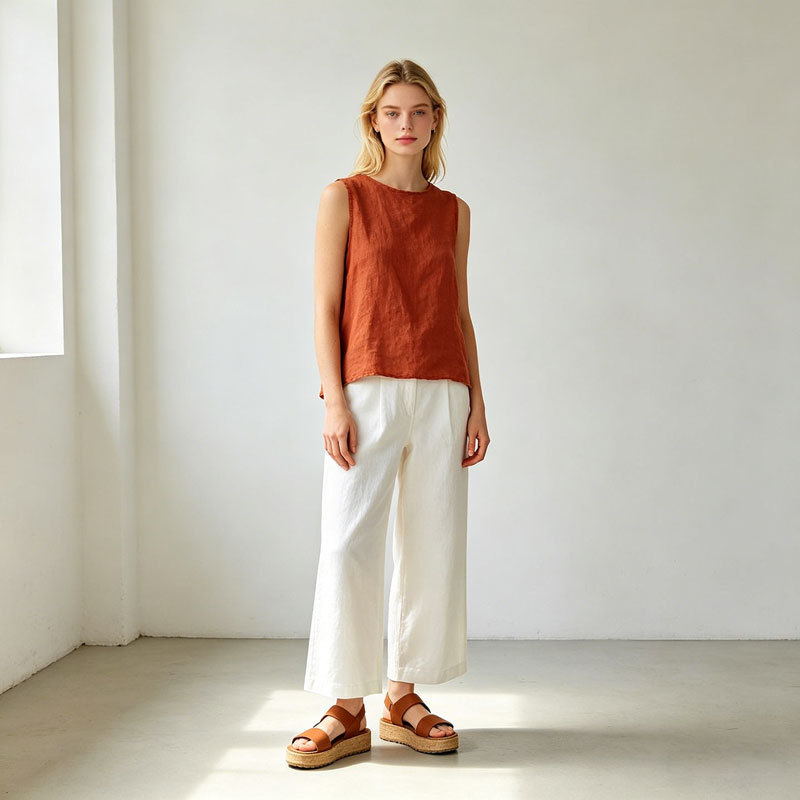
How to Choose Linen Clothing for Everyday Wear
Choosing linen for everyday wear comes down to four decisions: fabric weight, cut and fit, colour, and how the garment is finished — and getting those four right is what separates linen you reach for daily from linen that stays in the wardrobe. Linen is one of the most comfortable fabrics for warm weather, but the same word "linen" covers a huge range: fine 140 gsm shirting that drapes like silk, sturdy 220 gsm twill that holds its shape, crisp unwashed linen that softens over months, and garment-washed linen that is soft from the first wear. If you choose by habit or price alone, you can end up with a beautiful garment that wrinkles beyond your tolerance, shrinks on the first wash, or simply does not fit the way you live. This guide is written for women in Europe and North America who want linen as a reliable part of daily life — for work, weekends, travel, and home — and it walks through exactly what to check before you buy, with practical ranges you can use in any shop or online store.
This guide is practical, not promotional. It covers fabric weights (gsm), weave and finish types, fit rules for linen, colour choices that survive real life, common buying mistakes, and the care routine that keeps everyday linen looking good. Where numbers appear, they reflect standard industry ranges for linen clothing rather than any single brand's claims.
Why Linen Works for Everyday Wear
Before choosing, it is worth being clear about why linen deserves a daily place at all. Linen is made from flax, a plant fibre that has been used for clothing for thousands of years, and its everyday appeal comes from three physical properties that most synthetic and even cotton fabrics do not combine:
- Breathability. Linen lets air move through the weave and absorbs moisture quickly, then releases it to the air. On a warm day, a linen shirt keeps you cooler and drier than most other fabrics — which is why linen has been the default summer fabric in warm regions for centuries.
- Durability. Flax fibres are among the longest and strongest plant fibres used in clothing. A well-made linen garment, treated with reasonable care, lasts for years. That makes it a genuinely economical choice for daily wear, even when the initial price is higher than a fast-fashion alternative.
- Softness that improves. Linen starts crisp and becomes softer and more supple with every wash and wear. Most linen reaches its best feel after several washes, and it keeps improving — the opposite of fabrics that pill and fade.
There is also an honest caveat: linen wrinkles. That is not a defect — it is the fabric's signature — but it changes how you choose and wear linen. The rest of this guide treats wrinkles as a real consideration rather than pretending they do not exist, because your tolerance for creasing is one of the most personal factors in choosing everyday linen.
Step 1: Choose the Right Fabric Weight
Fabric weight, measured in grams per square metre (gsm), is the single most useful number when choosing linen for everyday wear, because it determines drape, structure, opacity, and how the garment behaves through a day. Here is how the ranges translate into everyday reality:
| Weight range | Feel and drape | Best for | Everyday notes |
|---|---|---|---|
| Under 140 gsm | Very light, airy, semi-sheer | Scarves, beach cover-ups, light blouses | Beautiful but delicate; can be translucent and creases the most. Choose only for pieces you treat gently. |
| 140–180 gsm | Light, fluid, soft drape | Shirts, blouses, dresses, tops | The everyday sweet spot for tops and dresses: breathable, comfortable, and dressy enough for work. |
| 180–220 gsm | Mid-weight, holds shape, more opaque | Trousers, skirts, sets, shirts needing structure | Best for bottoms and structured pieces; creases less aggressively and hangs well through the day. |
| Over 220 gsm | Heavy, firm, tailored | Jackets, outerwear, heavier trousers | More structure and fewer wrinkles, but less airy; choose for cooler days or more formal looks. |
A simple everyday rule: tops and dresses around 140–180 gsm, bottoms and structured pieces around 180–220 gsm. If you are only going to remember one number, remember that most comfortable everyday linen clothing sits between 150 and 200 gsm — heavy enough to hold shape and stay opaque, light enough to breathe.
Step 2: Understand Weave, Finish, and Washed vs Unwashed
Weight tells you how much fabric there is; weave and finish tell you how it behaves. Three distinctions matter for everyday wear:
- Plain weave vs twill. Most linen clothing uses a plain weave, which is light and breathable. Twill linen has a diagonal structure, is denser and more durable, and creases less — a good choice for everyday trousers and jackets.
- Washed vs unwashed linen. This is the most important finishing decision. Unwashed (or "dry") linen is crisp, stiff, and can feel rough at first; it softens over several washes but also shrinks — expect 3–8% on the first wash. Garment-washed or pre-washed linen has already been through its shrinking and softening, so it is soft from day one, has a relaxed texture, and will not surprise you in the wash. For everyday wear, washed linen is almost always the better choice: it is immediately comfortable and predictable.
- Stone-washed and enzyme-washed linen. These are heavier mechanical softening treatments that produce an especially soft, lived-in hand feel. They are lovely for casual everyday pieces, though the texture is less formal — keep that in mind if you need the piece for work.
Practical note: if you buy unwashed linen, size up or budget for shrinkage, wash it once before wearing, and accept that the first month is the "breaking-in" period. If you want linen that works from day one — the usual requirement for everyday wear — choose garment-washed linen.
Step 3: Get the Fit Right — Linen Is Not Stretch
Fit is where everyday linen succeeds or fails. Linen has almost no stretch, so it behaves differently from knit tops or stretch jeans. The rules that keep linen comfortable all day:
- Buy with ease, not tightness. Linen needs room to move and let air circulate. A relaxed or slightly oversized fit is both more comfortable and more flattering than a skin-tight one; tight linen creases hard, pulls at the seams, and feels restrictive by midday.
- Check the shoulder and armhole. Because linen does not stretch, a tight armhole or shoulder will pull every time you reach. Look for a cut that lets you move your arms freely — this matters more than the waist.
- Expect the fabric to relax. Washed linen drapes more loosely than the hanger suggests, and it softens further over time. A piece that feels slightly loose in the shop will feel right after a few wears; a piece that feels snug will only get tighter in your perception.
- Use the size guide, not your usual number. Linen cuts vary widely between brands. Measure yourself and compare with the garment's size chart before ordering, especially online. If you are between sizes in a non-stretch fabric, the larger size is usually the safer everyday choice.
- Think about how you will actually wear it. If you tuck your shirts in, check the length and hip room. If you wear trousers with movement — cycling, walking a lot — look for a wider leg or a pleated front rather than a narrow cut.
One more thing: linen garments often look best with a slightly undone attitude — a half-tuck, rolled sleeves, an open collar. When you shop, imagine the piece at 5 pm on a busy day, not fresh from the hanger. If it still looks intentional, the fit is right.
Step 4: Choose Colours That Survive Everyday Life
Colour affects how often you wear a piece, how it pairs with the rest of your wardrobe, and how it handles real life. Everyday linen colours should be chosen like a system, not one garment at a time:
| Colour role | Everyday examples | Why it works |
|---|---|---|
| Base neutrals | Natural/off-white, sand, oatmeal, stone grey, black | Mix with everything, hide light stains in mid-tones, and look intentional even when creased. |
| Warm accents | Terracotta, rust, olive, camel | Add warmth and personality while staying earthy enough to pair with all your neutrals. |
| Cool or deep accents | Navy, slate blue, forest green, burgundy | Give the wardrobe depth and work for slightly dressier everyday moments. |
| Patterns and prints | Stripes, small checks, subtle weaves | Prints camouflage creases and stains better than solid colours — useful for truly daily wear. |
- Build around neutrals. If most of your linen sits in the natural-to-sand range, every piece mixes with every other piece, and your morning decision becomes trivial. This is the single highest-leverage colour choice for everyday wear.
- Use one or two accent colours, consistently. Rather than a different colour per garment, pick two accents that suit you and repeat them across tops, bottoms, and accessories. The wardrobe looks cohesive without effort.
- Be honest about stains. Very light (white and near-white) linen is beautiful but merciless with coffee and food. If your days are messy, mid-tones and prints are the practical everyday choice; reserve the lightest pieces for occasions.
- Consider how colour fades. Deep, heavily dyed linen can fade over many washes. Natural and mid-tone linen fades gracefully and evenly; the colour simply softens. This matters if you expect to wear the piece for years.
Step 5: Check the Details That Decide Longevity
Everyday wear is hard on clothing — more washes, more movement, more friction — so construction details matter more than for occasional wear. Before buying any linen piece, check:
- Seams and stitching. Look at the seams inside out. Even, tight stitching with adequate seam allowance (about 1 cm or more) survives years of washing; narrow, loose, or skipped stitches fail early. Flat-felled or French seams are a strong sign of quality linen clothing.
- Buttons and buttonholes. Buttons should be firmly attached (reinforced, ideally), and buttonholes should be densely stitched. A missing or loose button on a new garment is a warning about the rest of the construction.
- Hems. A proper hem — double-folded or blind-stitched — lies flat and stays put. A single raw or overlocked edge can twist and fray with daily washing.
- Fabric opacity and evenness. Hold the fabric up to light. It should be reasonably opaque for its weight, with an even weave. Thin, patchy areas suggest low-grade fibre or poor weaving — and they will show wear first.
- Fibre content. For everyday wear, decide consciously: 100% linen gives maximum breathability and the authentic linen feel; a linen blend (for example with a little cotton or viscose) drapes more, creases less, and can be easier to care for. There is no wrong answer — just know what you are choosing and why.
Choosing by Everyday Scenario
The right everyday linen also depends on where you wear it. Here is how to adjust the same four decisions for different daily situations:
| Scenario | Weight | Finish | Fit and colour |
|---|---|---|---|
| Office / smart casual | 150–200 gsm | Washed or slightly crisp; well-pressed | Structured cuts, neutral and navy tones, polished but relaxed |
| Weekend / errands | 140–180 gsm | Garment-washed or stone-washed | Relaxed fit, mid-tones and prints that hide life's messes |
| Travel | 150–190 gsm, wrinkle-tolerant | Washed linen (recovers from packing) | Mix-and-match neutrals; pieces that work for day and evening |
| Hot weather days | 140–170 gsm | Washed, airy weave | Loose, breathable cuts; light and natural colours |
| Home / lounging | 140–180 gsm | Soft, washed or brushed | Easiest fits; any colour you enjoy |
Most people find that two or three well-chosen linen pieces — say a shirt, a pair of trousers, and a dress — cover most of their everyday scenarios, provided each piece was chosen with its real use in mind. You do not need a linen version of everything; you need the right linen for the days you actually have.
How to Judge Everyday Linen When Shopping Online
Most everyday linen is bought online, where you cannot touch the fabric. These signals will tell you more than the photos:
- Look for the gsm or weight in the description. A listing that states the fabric weight is usually honest about the product. If the weight is missing, ask — a vague "lightweight linen" can mean anything from 100 gsm to 180 gsm, and the difference matters for daily wear.
- Read the washing instructions carefully. The care label tells you whether the garment is pre-washed and how it should be maintained. "Machine washable, line dry" is the everyday-friendly norm; a garment that demands dry cleaning is not practical daily wear for most people.
- Check the fibre composition in the details, not the headline. "Linen shirt" can be 100% linen or a blend. Look for the exact percentage before you decide, so you know whether you are buying the authentic fabric or a convenience blend.
- Judge the photos for real context. Photos of a garment worn in daily situations — walking, sitting, moving — tell you more about drape and fit than hanger shots. If every photo is styled stiffly, ask yourself how it will look at the end of a real day.
- Use customer reviews for shrinkage and sizing truth. Reviewers usually report the two things listings hide: how much the piece shrank and whether the size runs small. Look for repeated mentions of "shrinks on first wash" or "size up" — they are the most honest data you will get.
- Prefer shops with clear size charts and easy returns. Because linen does not stretch and cuts vary, the ability to exchange sizes is genuinely valuable. A generous return policy is not a luxury; it is part of buying non-stretch fabric online safely.
The practical summary: a well-written online listing for everyday linen should tell you the weight, the exact fibre content, the washing instructions, and the pre-washing status. If a listing is vague on all four, the garment itself is probably vague on quality too. When in doubt, ask the seller — a brand that answers fabric questions honestly is usually a brand that stands behind its linen.
Common Buying Mistakes (and How to Avoid Them)
These are the mistakes that turn linen from a daily favourite into a wardrobe regret. They are easy to make and easy to avoid once you know them:
- Buying too light "because it is summer." Very light linen is lovely but delicate, translucent, and creases hard. For daily wear, a solid 150–180 gsm serves you better than a whisper-thin 120 gsm blouse.
- Ignoring the washed/unwashed question. The biggest single surprise is unwashed linen shrinking 3–8% on the first wash. If the listing does not say pre-washed or garment-washed, ask — or plan for shrinkage.
- Choosing a tight fit because it looks neater on the hanger. Linen without stretch will pull and crease across the body. Everyday linen needs ease; a relaxed fit looks intentional and feels far better by evening.
- Judging the garment only when freshly ironed. Imagine it at the end of a long day. If the creases would bother you, choose a heavier weight, a twill weave, or a print — or decide that creases are part of the look you are buying.
- Buying one dramatic piece instead of two workhorses. A printed statement dress is fun, but two neutral, well-fitted basics will be worn ten times more often. Build the daily foundation first.
- Skipping care instructions. Linen is easy to care for, but it has rules — cool or warm gentle wash, mild detergent, air dry or low tumble, iron damp. Ignoring them is how linen garments die young.
The Care Routine That Keeps Everyday Linen Going
Everyday linen gets washed more than occasional linen, so a simple, consistent care routine is part of the purchase decision. The good news: linen is one of the easiest natural fabrics to maintain.
- Wash only when needed. Linen breathes and resists odours, so most pieces need washing after several wears rather than every wear. This is also the single best thing you can do for the fabric's lifespan.
- Wash cool or warm, on gentle. 30–40°C with a mild detergent protects the fibres and colour. Linen can take hotter water, but everyday garments rarely need it.
- Air dry whenever possible. Line-dry linen; it dries quickly and the result is less creased than tumble drying. If you use a dryer, choose low heat and remove the garment slightly damp.
- Iron damp — or don't. Linen irons beautifully when slightly damp, but the relaxed natural creases are also part of the look. For everyday wear, most people iron selectively: collars, cuffs, and the front of a shirt, or nothing at all.
- Treat stains fast. Linen absorbs quickly but releases well. A fast rinse and a little mild soap before a full wash handles most everyday stains.
- Store loosely. Hang shirts and dresses; fold knit-like or very soft pieces. Avoid crushing linen in overfull drawers for months — it will hold the creases.
Honest expectation: linen will crease, and if you choose garment-washed linen it will arrive with a soft, relaxed texture that shows creases less. Over years, the fabric softens and the garment becomes more comfortable — most people find their favourite everyday linen is the one they have owned longest.
Common Questions About Everyday Linen
Is linen suitable for everyday wear, or only for holidays?
Linen is perfectly suited to everyday wear — it has been daily clothing in warm regions for centuries. The key is choosing the right weight and finish for your life: washed mid-weight linen in a relaxed fit is comfortable, durable, and presentable for work, weekends, and travel alike.
How do I keep linen from looking wrinkled all day?
Three levers: choose heavier linen (180 gsm and up creases less), choose twill or printed weaves that hide creases, and press the garment while slightly damp. Beyond that, relaxed linen creases are socially accepted as part of the fabric's character — most people adjust within a week.
Should I buy 100% linen or a linen blend for daily wear?
It depends on your priority. 100% linen is the most breathable and authentic, and it softens beautifully with age. A blend with cotton or viscose drapes more, creases less, and can be easier to care for. If you want the classic linen experience, choose pure linen; if convenience matters more to you, a thoughtful blend is a legitimate everyday choice.
How much should I expect to spend on good everyday linen?
Quality linen costs more than fast-fashion cotton because the raw fibre and processing are more expensive. As a rough guide, a well-made linen shirt or dress typically costs more than a basic cotton equivalent, but the garment's lifespan — years rather than months — usually makes the cost per wear lower. Very cheap linen is very often coarse or thinly woven.
Will linen shrink in the wash?
Unwashed linen can shrink roughly 3–8% on the first wash. Pre-washed or garment-washed linen has already shrunk in production, so it stays stable. If you buy unwashed linen, wash it once before wearing and choose a size with that in mind.
Where to Start: A Small Everyday Linen Foundation
If you are new to everyday linen, do not replace your whole wardrobe. Start with a small foundation of pieces chosen by the rules above, wear them for a month, and let experience guide the next purchase:
- One linen shirt — garment-washed, 150–180 gsm, in a neutral tone. This is the most versatile single linen piece: work, weekend, travel.
- One pair of linen trousers — 180–220 gsm, relaxed or straight leg, a mid-tone neutral. Comfortable, presentable, and surprisingly easy to style.
- One linen dress — 150–190 gsm, a cut you can wear alone or layer. The lowest-effort outfit in your wardrobe.
- Optional: one linen set or a second top — once the first three work for you, add depth with a set or another top in your accent colour.
This four-piece foundation covers most everyday scenarios for most of the year, and it teaches you exactly what you like and do not like about linen before you invest further. From there, expand piece by piece — with the same four decisions (weight, fit, colour, finish) guiding every purchase.
Related Reading
These guides cover the details behind the choices above, from fabric quality to care and styling:
- Linen Dresses — browse the everyday dress collection.
- Linen Tops — shirts and tops chosen for daily wear.
- Linen Bottoms — trousers and bottoms with structure for real days.
- Linen Sets — coordinated pieces that make dressing effortless.
- How Do I Wash Linen Clothing? — the care routine that keeps everyday linen alive.
- Does Linen Shrink After Washing? — what to expect and how to plan for it.
- How Do I Style Linen Clothing? — outfit ideas for daily linen.
- Is Linen a Sustainable Fabric? — the environmental case for choosing linen daily.
Find Your Everyday Linen at KOSSR
Quality linen clothing that is garment-washed, breathable, and built for daily wear — explore the collection and start with the pieces you will actually wear. Questions about fit, weight, or care? Our team is happy to help before you buy.