What to Know Before Buying Linen Clothing
- Share
- Issue Time
- Jul 8,2026
Summary
Everything you need to know before buying linen clothing ??from fibre quality and fabric weight to weave types, fit expectations, price brackets, and how to spot quality linen online.
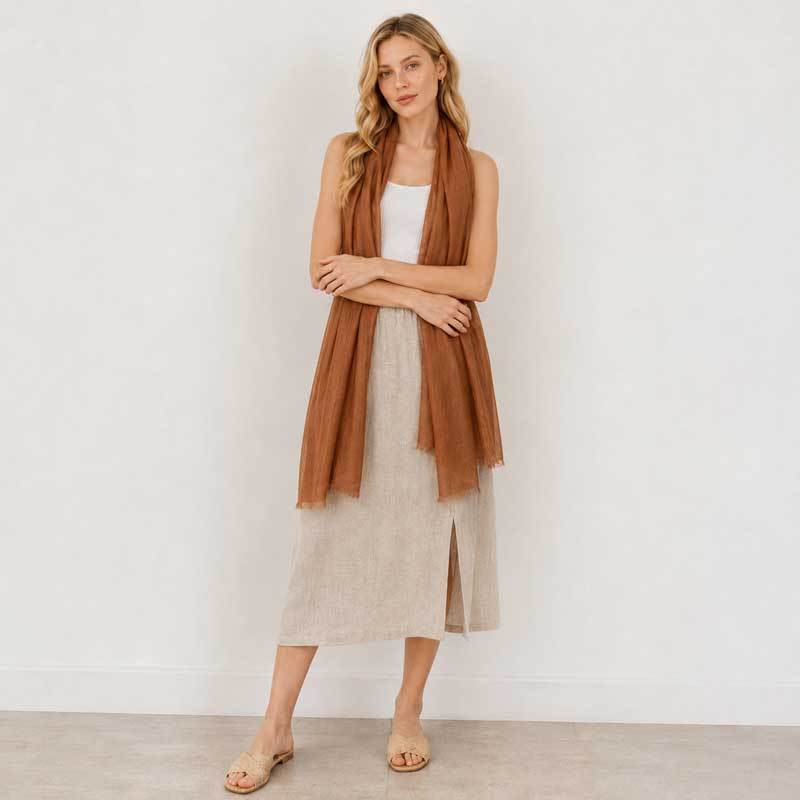
What to Know Before Buying Linen Clothing
A complete buying guide covering linen quality, fabric weight, weave types, fit considerations, price expectations, and how to choose the right linen pieces for your wardrobe.
Why Linen Deserves a Place in Your Wardrobe
Linen has moved beyond its old reputation as a wrinkly, stiff fabric reserved for elderly summer wardrobes. Over the past five years, it has become one of the most sought-after natural fibres in fashion, driven by the rise of slow fashion, climate-conscious shopping, and a renewed appreciation for materials that perform without relying on synthetic chemistry.
But buying linen is not as straightforward as buying cotton or polyester. The quality spectrum is wider than most shoppers realise. A $30 linen shirt from a fast-fashion retailer and a $150 linen shirt from a dedicated linen brand like KOSSR differ not just in price, but in fibre origin, weave quality, garment construction, and ??most importantly ??how they feel, fit, and last after the first few washes.
This guide walks through everything you need to know before making your next linen purchase. Whether you are buying your first linen dress or adding to an established collection of natural-fibre garments, understanding these factors will help you choose pieces that serve you well for years.
[IMAGE_PLACEHOLDER] img prompt: A carefully arranged flat lay of various linen garments ??a white linen shirt, beige linen pants, a natural-colour linen dress ??on a light wooden surface, soft morning light from a window, clean Nordic minimalism style
Understanding Linen Quality: What Separates Good From Great
Not all linen is equal. The quality of a linen garment is determined by several factors that start at the farming stage and end at the sewing table.
1. Fibre Origin: European Flax vs. Asian Flax
The flax plant grows in many parts of the world, but the highest quality fibre comes from Western Europe ??specifically Northern France, Belgium, and the Netherlands. The cool, humid climate produces flax with longer, finer, and stronger fibres. European flax grown under the European Flax Standard (certified traceability from seed to fibre) represents the gold standard in linen production.
Asian flax, particularly from China, is generally coarser, with shorter fibres that produce a rougher hand feel. While Chinese flax cultivation has improved significantly, the fibre quality still does not match European long-staple flax for softness and durability. High-end linen brands predominantly source their raw material from Europe for this reason.
2. Fibre Length: Long-Staple vs. Short-Staple (Tow Linen)
During the hackling process, flax fibres are separated into long "line" fibres and shorter "tow" fibres. This distinction is critical for linen quality:
- Long-staple (line) linen: Made from the longest fibres (60-90 cm). Produces finer, smoother, stronger yarns. Garments made from long-staple linen feel softer, wrinkle less aggressively, and last significantly longer. This is what premium linen brands use.
- Short-staple (tow) linen: Uses the leftover shorter fibres. The yarns are thicker, more uneven, and weaker. Tow linen feels rougher against the skin, creates more lint in the wash, and wears out faster. Budget-friendly linen garments almost always use tow fibres.
How can you tell the difference? There is no labelling requirement for fibre length, so you must rely on the brand's transparency. Reputable linen brands will specify "long-staple European flax" or "100% European flax" on their product pages. If a linen product does not mention its origin or fibre quality, it is likely using lower-grade tow fibres.
3. Yarn Count and Fabric Density
Just like cotton sheets, linen quality can be gauged by yarn count ??though the terminology differs. Linen is typically measured by the weight of the fabric rather than thread count:
- Lightweight linen (100-150 gsm): Sheer, airy, ideal for scarves, lightweight blouses, and summer shirts. Less durable, prone to showing every wrinkle.
- Mid-weight linen (150-200 gsm): The most versatile range. Suitable for dresses, shirts, pants, and skirts. Good balance of drape, durability, and breathability. Most KOSSR garments fall into this category.
- Heavyweight linen (200-300 gsm): Structured, durable, ideal for blazers, jackets, trousers, and home textiles. Less breathable but holds its shape better.
A higher-quality fabric also has a tighter, more consistent weave, which you can assess visually by holding the fabric up to the light ??fewer gaps between threads indicates better quality.
[IMAGE_PLACEHOLDER] img prompt: Close-up macro shot showing the weave of high-quality long-staple European linen fabric, backlit to reveal consistent thread density and minimal gaps, natural daylight, laboratory-style documentation
Weave Types: How Linen Fabric Is Constructed
The way linen yarns are woven affects the fabric's appearance, texture, drape, and performance. Three main weave types dominate the linen clothing market:
Plain Weave (Linen Tabby)
The simplest and most common weave. Warp and weft threads cross in a simple over-under pattern. Plain-weave linen is crisp, lightweight, and breathable ??ideal for summer shirts, simple dresses, and lightweight tops. The texture is slightly irregular, which is part of linen's natural charm. This weave shows wrinkles most prominently because the fibres are not locked into a structured pattern.
Linen Twill
Diagonal parallel ribs characterise twill-weave linen. The structure is denser, softer, and drapes better than plain weave. Twill linen wrinkles less and has a subtle lustre. It is commonly used for pants, blazers, and structured dresses. The diagonal weave also hides stains and wear better than plain weave, making it a practical choice for high-use garments.
Linen Blend Weaves
Many modern linen garments blend flax with other natural or synthetic fibres to modify the fabric's properties:
- Linen-cotton (linen-cot): Softer, less wrinkly, but loses some of linen's crisp structure and moisture-wicking speed. A good compromise for first-time linen buyers.
- Linen-rayon (linen-viscose): Very soft drape, almost silky. However, rayon is semi-synthetic and does not offer linen's biodegradability or breathability advantages.
- Linen-wool: Warm, breathable, and textured. Used primarily for autumn and winter garments.
- Linen-silk: Luxurious sheen with natural breathability. Expensive but exquisite for special-occasion wear.
When buying blended linen, check the percentage. European regulations require at least 50% flax fibre to label a garment as "linen." Blends under 50% flax often sacrifice the benefits that make linen desirable in the first place.
[IMAGE_PLACEHOLDER] img prompt: Three fabric swatches side by side showing plain weave, twill weave, and a linen-cotton blend, lying on a clean white surface, clear labelling tags, soft studio lighting showing texture differences
Fit and Sizing: How Linen Should Fit
Linen fits differently from other fabrics because of how the material behaves on the body. Understanding the right fit philosophy will save you the frustration of ordering the wrong size.
Relaxed Fit Is the Default
Linen is not designed for a snug, body-hugging fit. The fabric's magic lies in the air gap between the garment and your skin ??this pocket of air is what creates the cooling effect. A fitted linen garment pressed against your skin defeats its primary thermal advantage. When buying linen, expect a relaxed, slightly generous silhouette. This is not poor sizing; it is intentional design.
Account for Shrinkage
High-quality pre-washed linen shrinks 2-4% after the first wash. Reputable brands account for this by cutting garments slightly larger. If you are between sizes, consider the following rule: for woven linen (shirts, dresses with structure), size up if you are between sizes; for knit linen, your normal size is usually fine. Always check the brand's care instructions and whether the garment is pre-washed or not.
Measuring Yourself for Linen
Use a fabric measuring tape and take these measurements over your underwear, not over bulky clothing:
- Bust/Chest: Measure around the fullest part, keeping the tape parallel to the floor.
- Waist: Measure at your natural waistline, usually the narrowest point between ribs and hips.
- Hips: Measure around the fullest part of your hips, about 20 cm below your waist.
- Shoulder to Hem: For dresses and tops, measure from the top of your shoulder to your desired hem length.
Compare your measurements against the brand's size chart. If a brand does not provide detailed garment measurements (not just generic S/M/L), consider that a red flag for quality commitment.
[IMAGE_PLACEHOLDER] img prompt: A woman in a relaxed-fit natural linen midi dress standing in a bright airy room with large windows, soft sunlight streaming in, the dress showing a gentle A-line silhouette, warm relaxed summer styling
Price Expectations: What Should You Pay for Good Linen?
Linen pricing reflects raw material costs, manufacturing quality, and brand transparency. Understanding the price brackets helps you make informed trade-offs:
| Price Range | Typical Quality | Fibre Source | What to Expect |
|---|---|---|---|
| $20 - $40 | Budget / Fast Fashion | Short-staple Asian tow, unknown origin | Rough texture, high shrinkage (5-8%), fades quickly, pills or frays within 6 months |
| $40 - $80 | Mid-Range | Mixed Asian or lower-grade European, no traceability | Moderate softness, acceptable construction, 3-5% shrinkage, lasts 1-2 seasons with care |
| $80 - $150 | Good Quality | European flax, often certified, long-staple fibres | Smooth texture, pre-washed for minimal shrinkage, durable seams, lasts 3-5+ years |
| $150+ | Premium | Long-staple European flax, European Flax Standard, traceable supply chain | Exceptional softness, hand-finished details, precise fit, heirloom quality (10+ years) |
KOSSR garments sit in the good-to-premium quality range, sourced from long-staple European flax with full supply chain transparency. The higher upfront cost reflects fibre quality, garment construction, and sustainability practices that lower-cost linen cannot match.
How to Verify Linen Quality Before Buying Online
When shopping online, you cannot touch the fabric before purchasing. Here are practical signals to evaluate linen quality from product pages alone:
- Check the fibre origin. Look for "European flax," "Belgian flax," "French linen," or "European Flax Standard certification." If the fibre source is not mentioned, assume the lowest quality tier.
- Read fabric weight information. Brands transparent about GSM (grams per square metre) are generally more serious about quality. A 160-190 GSM linen dress will feel substantial without being heavy.
- Examine the care instructions. Quality linen brands provide detailed care guidance, not just "machine wash cold." They will mention pre-washing, expected shrinkage, and ironing recommendations.
- Look for pre-washed or stone-washed descriptions. Pre-washed linen has already undergone its initial shrinkage cycle, so the garment you receive will not shrink dramatically on first wash.
- Review the seam construction. Photos showing inside seams, French seams, or flat-felled seams indicate higher manufacturing standards. Single-stitched, unfinished seams are a warning sign.
- Check return policy length. Brands confident in their linen quality typically offer 30-day or longer return windows. A very short or no-return policy suggests they expect quality complaints.
- Search for real customer photos. Review sections with customer-submitted photos showing the fabric after washes provide the most honest quality assessment.
[IMAGE_PLACEHOLDER] img prompt: A laptop showing a linen product detail page alongside the actual garment laid on a table, concept of online shopping vs reality, warm home office setting, a cup of tea beside the laptop
First-Time Linen Buyer: Which Pieces to Start With
If you are new to linen, starting with the right pieces increases the likelihood that you will enjoy the experience and build confidence to expand your collection:
- A linen shirt (button-down or relaxed tee): The most versatile starting point. Wear it tucked into high-waisted trousers for a polished look or untucked over jeans for casual days. A neutral white, cream, or light blue linen shirt goes with almost everything.
- Linen pants (wide-leg or straight): Once you experience how breezy linen trousers feel compared to denim in summer, you will understand the appeal. Wide-leg cuts offer the most airflow. Choose a mid-weight linen (170-190 GSM) for the right balance of drape and opacity.
- A-line linen midi dress: The one-piece answer to summer dressing. A midi length is universally flattering, and the A-line cut accommodates linen's natural tendency to relax at the hem. Look for a dress with functional pockets ??a hallmark of thoughtful linen design.
KOSSR offers all three starter pieces in our linen collection, each made from long-staple European flax and pre-washed for immediate comfort.
[IMAGE_PLACEHOLDER] img prompt: Three linen starter pieces displayed on a clean wooden hanger rail ??a cream linen shirt, wide-leg beige linen pants, and a light brown A-line midi dress ??shown in a bright minimalist boutique setting
Mistakes to Avoid When Buying Linen
??Buying the cheapest linen you can find ??Budget linen uses short tow fibres that will feel rough, shrink unevenly, and likely pill or develop thin spots within a few washes. A $25 linen dress is almost certainly a disappointment waiting to happen. The cost-per-wear of a quality $120 linen dress that lasts five years ($24/year) is actually lower than a $40 dress that disintegrates after one summer.
??Choosing the wrong size based on your synthetic-fabric size ??Linen is meant to be relaxed. If you order your usual slim-fit polyester size, the garment will likely feel too tight, restrict airflow, and defeat the purpose of buying linen. Measure yourself and compare to the brand's garment measurements.
??Expecting linen to look like cotton ??Linen has a distinct, slightly textured appearance with natural slubs (tiny thicker spots in the yarn). These are not flaws; they are authentic characteristics of flax fibre. If you prefer a perfectly smooth, uniform fabric, linen may not be your textile.
??Ignoring care requirements ??Linen is not high-maintenance, but it does require different care than synthetic blends. Tumble drying on high heat, bleach, and fabric softeners are all damaging to linen fibres. Read the care label before purchasing and be honest about whether you are willing to follow the care instructions.
??Buying based on brand name alone ??Many fashion brands slap "linen" on a tag without specifying fibre origin, quality grade, or construction standards. Look for transparent brands that tell you where their flax is grown and how their garments are made.
Reading Linen Labels: What the Certifications Mean
Linen products may carry several certifications. Understanding them helps you evaluate claims at a glance:
| Certification | What It Guarantees | Why It Matters |
|---|---|---|
| European Flax Standard | 100% European flax, fully traceable from seed to fibre, no GMOs | The most reliable indicator of high-quality raw material. Non-European flax cannot receive this certification. |
| OEKO-TEX Standard 100 | No harmful chemicals in the finished textile | Important for garments worn against the skin. Linen processing sometimes uses chemical softeners ??this certifies they are safe. |
| Global Organic Textile Standard (GOTS) | Organic flax farming + environmentally and socially responsible manufacturing | Relevant for organic linen. GOTS certification covers the entire supply chain, not just raw fibre. |
| Masters of Linen | European flax, European spinning, European weaving and finishing | Full European supply chain guarantee. Rarer than the European Flax Standard but more comprehensive for finished garments. |
KOSSR garments use European Flax Standard certified raw material and are OEKO-TEX Standard 100 certified for consumer safety.
Linen vs. Other Natural Fabrics: Quick Comparison
If you are deciding between linen and another natural fabric, here is how they compare across the dimensions that matter for clothing:
| Property | Linen | Cotton | Hemp | Tencel (Lyocell) |
|---|---|---|---|---|
| Breathability | Excellent | Good | Excellent | Good |
| Moisture Wicking | Superior | Moderate | Superior | Good |
| Durability | Highest | Moderate | Very High | Moderate |
| Softness (new) | Structured | Soft | Stiff | Very Soft |
| Softness (aged) | Very Soft | Stable | Moderate | Stable |
| Wrinkle Resistance | Low | Moderate | Moderate | High |
| Biodegradability | 100% (weeks) | 100% (months) | 100% (weeks) | 100% (months) |
| Water Footprint | Very Low | Very High | Low | Low |
| Cost | $$$ | $-$$ | $$ | $$ |
Each fabric has its strengths. Linen excels where temperature regulation, moisture management, and long-term durability are priorities ??which is why it remains the gold standard for summer and travel wardrobes.
Frequently Asked Questions About Buying Linen
Does linen shrink? Yes ??high-quality pre-washed linen shrinks 2-4% on first wash. Budget linen can shrink 5-8%. Always buy pre-washed linen from reputable brands and follow care instructions.
Is linen only for summer? No. Mid-weight (170+ GSM) and heavyweight linen works well in spring and autumn, especially in twill weaves. Layered under a blazer or cardigan, linen transitions comfortably into cooler months.
Can I wear linen to work? Absolutely. A well-fitted linen shirt or blazer paired with tailored trousers creates a polished, office-appropriate look. Many professional settings now embrace natural-fibre dressing, especially in creative and relaxed-office environments.
How do I remove wrinkles from linen? Steam ironing while damp is the most effective method. A handheld steamer works well for quick touch-ups. Some people embrace the wrinkles as part of linen's aesthetic ??acceptable for casual settings and beach destinations.
Is linen suitable for sensitive skin? Yes. Linen is naturally hypoallergenic, resistant to dust mites and bacteria, and does not irritate most skin types. Its moisture-wicking property also reduces skin irritation from sweat buildup.
Final Thoughts: Buy Less, Choose Better Linen
The most important thing to know before buying linen is that it is a long-term material. Unlike fast-fashion synthetics designed for a single season, linen rewards patience. A high-quality linen garment will feel better after its tenth wash than it did on day one. It will soften, conform to your body, and develop a personalised patina that no other fabric can replicate.
Before clicking "add to cart," ask yourself: Does this piece use long-staple European flax? Is the fabric weight appropriate for my climate? Will the fit remain comfortable after the first wash? Does the brand offer transparency about its materials and construction? If the answer to most of these questions is yes, you are likely making a wise investment.
For more guidance, explore the KOSSR Linen Guides series, where we cover specific product categories, fabric comparisons, and seasonal styling tips in greater depth.
Explore KOSSR's European Linen Collection
Every KOSSR garment begins with long-staple European flax, certified under the European Flax Standard. From everyday linen shirts to wardrobe-defining dresses and relaxed trousers, our collection is designed to serve you for years ??not just a season.