Why Does Linen Clothing Cost More? | KOSSR Buying Guide
- Share
- Issue Time
- Aug 12,2026
Summary
Why does linen clothing cost more? Explore the real cost structure — flax growing, processing, weaving, finishing, labour, and brand — plus typical price ranges and cost-per-wear value.
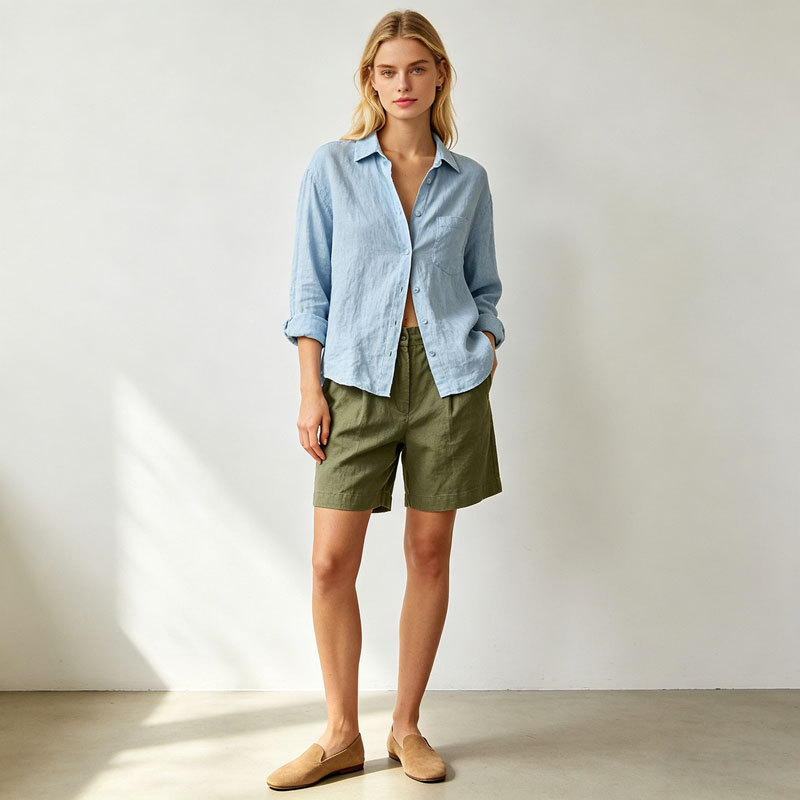
Linen clothing costs more because every step of its supply chain is genuinely more expensive than cotton or polyester — from a low-yield, labour-intensive crop to slow weaving, careful finishing, and smaller production batches. Polyester is made from oil in high-volume factories; conventional cotton is a mass-produced global commodity; linen is a specialty natural fibre grown mainly in a narrow band of temperate Europe, harvested by hand, processed slowly, and made into garments with far more care per metre of fabric. The price difference is not branding markup — it is the real cost of a fabric that is stronger, cooler, and longer-lasting than the alternatives. This guide breaks down exactly where the money goes, shows typical price ranges so you can recognise a fair price, runs the cost-per-wear math that explains why quality linen is often the cheaper choice over time, and gives you a checklist for judging whether any linen garment is worth its price.
This guide is written for shoppers in Europe and North America comparing linen prices and deciding whether the premium is justified. It uses general industry facts about flax growing and processing, typical market price ranges, and illustrative cost-per-wear examples you can adapt to your own numbers. Nothing here is a quote from a specific brand — prices vary with fibre origin, fabric weight, finishing, and where the garment was made.
1. Raw Material: Why Flax Is Inherently More Expensive
The price difference starts on the farm, long before any garment exists. Flax, the plant linen is made from, is a fundamentally different crop from cotton — and it is more expensive at almost every point of production.
Flax is a low-yield, climate-limited crop. Most of the world's flax for high-quality textile linen is grown in a narrow band of north-western Europe — primarily France, Belgium, and the Netherlands — where the cool, humid climate suits the plant. The crop yields far less fibre per hectare than cotton: a flax field produces only a fraction of the textile fibre that the same area of cotton would, which means the raw material cost per kilogram of usable fibre is structurally higher before any processing begins.
Only part of the plant becomes textile fibre. In flax, the valuable part is the long bast fibre running through the stem. The plant must be pulled from the ground rather than cut, because cutting shortens the fibres; then the fibres must be separated from the woody core, a process that discards a large share of the harvested plant. Much of what a flax field grows never becomes fabric at all. Cotton, by contrast, is a seed fibre that can be harvested mechanically at scale, and polyester is extruded continuously from petroleum — there is no harvest loss at all.
There is no synthetic shortcut for flax. Polyester starts as petroleum, which is abundant, cheap, and processed in enormous continuous runs. Cotton is grown on a global scale with heavy mechanisation and deep, liquid markets. Flax remains a comparatively small crop with a short growing window, a labour-heavy harvest, and no industrial substitute. When a fabric starts from a scarcer, slower, more labour-intensive raw material, the finished product simply cannot match the rock-bottom prices of oil-based or mass-farmed fibres.
The result at the top of the chain: flax fibre is a premium raw material compared with cotton fibre, and an entirely different economic universe from polyester. This is the first and largest reason linen clothing costs more — the cost is baked in before a single thread is spun.
2. Growing: Climate, Labour, and Weather Risk
Between the seed and the fibre sits one of the most time-sensitive, weather-dependent processes in the textile industry. Flax is not a crop you can rush, and its quality varies from year to year.
Flax grows slowly and demands specific conditions. The crop cycle runs roughly one hundred days from sowing to harvest, and quality depends on a delicate balance of moisture and temperature. Too much rain at the wrong moment, a drought during fibre development, or an early frost can all reduce fibre quality for an entire harvest. Farmers in the main European growing regions plant flax as part of a rotation that keeps soil healthy, which is good for the environment but means each field produces flax only once every several years — the land cannot be farmed for flax continuously.
Harvesting is partly manual and precisely timed. The plants are pulled, not cut, to preserve the full length of the fibre. This is slower and more labour-intensive than mechanised cotton picking, and it must happen at the exact point of maturity. After pulling, the flax is laid in the field for retting — a natural process in which dew and micro-organisms break down the pectin that binds the fibres to the stem. Dew retting typically takes several weeks, during which the crop sits in the field exposed to the weather. In a bad year, retting goes too far or not far enough, and the fibre quality drops.
Then the fibre must be separated and combed. After retting, the dried stems go through scutching to break away the woody core and heckling to comb the fibres into parallel, usable lengths. These are mechanical steps, but they require careful equipment and skilled operators to protect fibre length — and long, unbroken fibres are exactly what makes linen strong and smooth. Short, broken fibres produce weaker, rougher fabric.
Add it together: a slow crop, manual harvesting, weeks of weather-exposed retting, and skilled processing — all with year-to-year quality risk. Every one of these steps costs more than the equivalent step for cotton or polyester, and each one is a reason the raw material price stays high.
3. Spinning and Weaving: Slow Work With a Demanding Fibre
Once the flax fibre exists, turning it into fabric is slower and more technically demanding than weaving cotton or knitting polyester. This is where a lot of people assume linen should become cheap — it does not.
Flax yarn is harder to spin than cotton. Linen fibres are long and relatively inelastic, which makes them strong but difficult to twist into fine, even yarn. Spinning flax to a high count — fine, dense yarn — requires slower machinery and more careful tension control than cotton spinning. The fibre's lack of elasticity means a single weak spot is more likely to break during spinning, so production runs at lower speeds with more supervision and more rejected yarn.
Weaving linen is slower than weaving cotton. Because linen yarn has almost no stretch, looms must run at lower speeds to avoid tension problems and broken threads. The fabric is woven on specialised looms with careful settings, and any inconsistency in the yarn shows up immediately in the cloth. All of this means fewer metres of fabric per hour per loom compared with cotton or polyester — and the weaving cost is spread over that smaller output.
Quality control is continuous, not occasional. A fabric that wrinkles, slubs, or tears unevenly is worthless to a quality garment maker, so linen production is checked constantly for evenness, density, and surface defects. Between slower machinery, higher breakage rates, and tighter inspection, the manufacturing cost per metre of linen fabric sits well above cotton and far above polyester. This is simply the price of a strong, irregular, natural fibre — the same properties that make linen durable are the properties that make it slow to process.
4. Finishing: Pre-Washing and Softening Cost Real Money
Raw linen straight off the loom is stiff, scratchy, and prone to heavy shrinkage — which is why most quality linen today goes through finishing steps that add cost but transform the wearing experience. These are not optional luxuries; they are what separates a garment you want to wear from a board you want to return.
Pre-washing or garment-washing is the big one. Unwashed linen can shrink 5–8% in the first wash, and it arrives stiff as cardboard. Pre-washed linen has already been washed, softened, and stabilised at the factory, so it shrinks only about 1–3% afterwards and is comfortable from the first wear. Every pre-washed garment you buy carries the cost of that factory washing, drying, and handling — and it is worth it, because it removes the two biggest disappointments new linen owners face.
Softening and enzyme treatments add more steps. Many quality linen mills use enzyme washes or bio-polishing to break down loose surface fibres and give the fabric a softer hand-feel without harsh chemicals. These processes take time, water, and energy, and they are repeated in batches rather than run at continuous high speed. Some finishes also add stain resistance, wrinkle resistance, or natural dyes — each one a separate treatment with its own cost.
Colour and print quality cost money too. Natural, undyed linen is the cheapest to finish; dyed, printed, or garment-dyed linen requires colourfastness testing and careful process control so the shade is even across batches. A seller that guarantees colourfastness and low shrinkage has paid for testing and quality assurance — and that shows up in the price.
When a linen shirt is described as pre-washed, garment-washed, or bio-polished, you are not paying for a buzzword; you are paying for the difference between an uncomfortable, shrinking fabric and a soft, stable garment that behaves predictably for years.
5. Labour and Construction: Linen Demands Skilled Hands
The fabric is only half the story. Making a linen garment that lasts five to ten years requires more skilled labour and stricter construction standards than making a fast-fashion top — and labour is one of the largest cost items in any garment.
Cutting and sewing linen is genuinely harder. Linen has no stretch, so pattern pieces must be cut and sewn with precision — there is no forgiving elasticity to hide a misaligned seam. The fabric frays more readily than cotton, which is why quality linen garments use French seams, flat-felled seams, or overlocked edges that protect the raw edges from unravelling. Each of these techniques takes more time per seam than a simple straight stitch.
Details cost time. A quality linen shirt has neatly finished buttonholes, reinforced stress points at the shoulders and pockets, matched plackets, and even stitching tension along the full length of every seam. These details are invisible in product photos but they are exactly what keeps a garment from falling apart at seam number fifty. They also double or triple the sewing time compared with a basic garment, and time is money.
Quality control happens at multiple stages. Garments are checked after cutting, after sewing, and again before packing — loose threads trimmed, seams inspected, measurements verified against the spec sheet. Linen's natural irregularities mean more decisions per garment, and experienced inspectors do not come cheap. Add to that the fact that most quality linen is produced in smaller batches than mass-market cotton or polyester, and the fixed costs of patternmaking, sampling, and setup are spread over fewer units — raising the cost of every single piece.
6. Brand, Certification, and Service: The Visible and Invisible Extras
The last layer of cost sits between the factory and your wardrobe. It is the part buyers see least and complain about most, but it is real money with a real function.
Design and development. Before a linen garment exists, someone designed the cut, chose the weight, tested the drape, and approved samples. For a brand that cares about fit — which is everything in a non-stretch fabric — this means multiple rounds of sampling and fitting, each with costs attached. These development costs are amortised over production runs, and for linen's smaller runs they are a larger share of each garment's price.
Certification and testing. Trustworthy linen brands pay for testing and certification. OEKO-TEX Standard 100 verifies that the finished product is free of harmful substances; European flax programs certify the origin and traceability of the fibre; some brands add organic certification for the crop itself. Every certificate involves audits, lab tests, and administrative fees. You cannot see these costs on the garment, but they are part of why certified linen costs more than uncertified linen of similar weight.
Service and accountability. A brand that answers questions, publishes fibre origin and fabric weight, handles returns fairly, and stands behind its sizing is paying for people, systems, and logistics that a faceless marketplace listing does not. If you value being able to ask "is this pre-washed?" and get a real answer before you buy — and most people buying linen should — that service is part of the price too.
The honest version: not every euro of a high linen price is justified, and section 9 gives you the checklist to spot the difference. But the bundle of design, certification, and service that protects you from a bad purchase is a legitimate cost — and it is one of the reasons cheap linen is often not a bargain at all.
7. Typical Price Ranges: What a Fair Price Looks Like
With the cost structure clear, the practical question is: what should quality linen actually cost? The ranges below are typical market observations for EU and US retail in recent seasons — they are indicative, not exact quotes. Prices vary with fibre origin, fabric weight, finishing, production country, and brand position, so treat these as orientation, not a price list.
| Category | Typical entry-level range | Typical quality range (EU/US retail) | What the quality range usually includes |
|---|---|---|---|
| Linen shirt | €45–€70 / $50–$78 | €70–€130 / $78–$145 | 100% linen or a clearly stated blend, mid-weight, pre-washed |
| Linen trousers | €50–€80 / $55–$90 | €80–€150 / $90–$168 | Quality seams, proper waistband construction, pre-washed fabric |
| Linen dress | €60–€90 / $68–$100 | €90–€170 / $100–$190 | More fabric and construction time than a shirt, lining or opacity checks |
| Linen set (top + pants) | €70–€110 / $78–$123 | €110–€200 / $123–$224 | Two matched garments, coordinated dye lot, extra quality control |
| Linen blazer or overshirt | €80–€120 / $90–$134 | €120–€220 / $134–$246 | Structured tailoring, interlining, more finishing hours per piece |
Three patterns are worth noticing. First, price rises with fabric weight and finishing: a heavier, pre-washed, bio-polished garment legitimately costs more than a light, unprocessed one. Second, entry-level linen usually cuts corners somewhere — a blend with synthetic fibres, no pre-washing, or simpler construction — and those corners are exactly the ones that shorten a garment's life. Third, the gap between entry-level and quality linen is often smaller than the gap between quality linen and a fast-fashion top, which means the upgrade from "cheap linen" to "good linen" is usually the best-value step in the whole market.
If you are comparing across currencies and countries, note that European-made or European-flax linen tends to sit at the upper end of these ranges, and linen produced in countries with lower labour costs can sit at the lower end — sometimes with equal quality, sometimes not. The checklist in section 9 tells you how to tell the difference.
8. Why the Premium Is Worth It: The Cost-per-Wear Math
The fairest way to judge linen's price is not per garment — it is per wear. Cost per wear is simply the price divided by the number of times you actually wear the item. The example below is illustrative: the figures use typical prices and realistic wear counts so you can see the pattern, and you should substitute your own numbers before making a decision.
| Scenario (illustrative) | Typical price | Realistic wears | Cost per wear |
|---|---|---|---|
| Fast-fashion polyester top | €20 / $22 | ~15 wears before pilling, fading, or losing shape | ~€1.33 / $1.47 |
| Cotton shirt, mass-market | €35 / $39 | ~40 wears over 2 years with regular washing | ~€0.88 / $0.98 |
| Quality 100% linen shirt, pre-washed | €90 / $100 | ~150 wears over 5+ years with normal care | ~€0.60 / $0.67 |
| Quality linen shirt worn weekly, 3 seasons | €90 / $100 | ~250 wears over 6+ years | ~€0.36 / $0.40 |
Read the pattern, not the exact numbers: the most expensive garment on the shelf is frequently the cheapest one you own. A linen shirt that costs two and a half times as much as a cotton shirt can still cost less per wear, because it is worn three or four times as often and lasts two or three times as long. The same logic works in reverse for cheap garments: a top that costs €20 but dies after 15 wears is paying its owner more than €1.30 for every single wear.
Where the savings actually come from: two forces — lifespan and wear frequency. Flax's fibre strength extends the lifespan, and linen's comfort and versatility raise the wear frequency. Either one alone improves the math; together, they are why quality linen usually beats cheap alternatives on value even though it loses on price. The catch is real too: the math only works if you actually wear the garment, so buy linen you can picture wearing, not linen that merely looks good in a photo.
There is an environmental version of the same calculation. The largest share of a garment's footprint comes from producing it, so spreading that footprint over 150 wears instead of 15 cuts the per-wear impact dramatically — which is why durability is the most important sustainability feature a fabric can have, and why the linen premium is often described as an investment rather than an expense.
9. Buying Advice: How to Judge Whether Linen Is Overpriced
A higher price is only justified when the extra money buys a better garment. Before you pay a linen premium — or, equally important, before you buy cheap linen expecting a bargain — check these quality markers:
- Composition: 100% linen, or a blend you can explain. Pure linen gives you the full benefit set — strength, breathability, biodegradability. A small percentage of elastane in trousers is a legitimate comfort trade; heavy polyester or viscose in a "linen" shirt is usually a way to lower cost at the expense of everything linen is known for. The composition label is the first test of whether the price is honest.
- Fibre origin: European flax is a premium signal. Flax from France, Belgium, and the Netherlands is known for long, strong fibres, and certified European flax programs verify origin and traceability. If the listing does not say where the flax is from, that is information you are not being given.
- Fabric weight: 140–180 gsm is the everyday sweet spot. Below about 90 gsm, linen tends to be translucent and fragile; above 220 gsm it drapes stiffly. A seller that states the weight is giving you verifiable information — a seller that does not may not want you comparing.
- Pre-washed or garment-washed finish. Pre-washed linen shrinks about 1–3% instead of 5–8%, and it is soft from the first wear. This single detail explains much of the price difference between "cheap linen" and "good linen", and it is worth paying for.
- Construction details. French seams or flat-felled seams, dense even stitching, properly finished buttonholes, reinforced stress points. You cannot always see these in photos, so read the description or ask — a brand that answers is a brand that stands behind the garment.
- Certifications. OEKO-TEX Standard 100 means the finished product was tested for harmful substances; European flax certification verifies fibre origin. Certifications do not guarantee durability, but they remove one category of risk.
- Price sanity check. Compare against the typical ranges in section 7. Well below the range usually means a corner was cut somewhere; far above it usually means you are paying for the brand's name rather than the fabric. Both can be fine — just know which one you are buying.
Where can you genuinely save? Buy sets and multi-piece styles, which spread development and finishing costs across more garment. Buy off-season, when last summer's linen is discounted. And consider mid-weight rather than heavy linen if you do not need the structure — the fabric weight alone can move a garment between price bands. What rarely saves money is buying cheap linen hoping it will behave like quality linen; the checklist above is exactly why it will not.
At KOSSR, every product page states the composition, fabric weight, and whether the style is pre-washed, and our size questions FAQ explains how linen's lack of stretch affects sizing. Our linen care FAQ shows how to protect your investment, and the styling FAQ helps you get enough wears out of each piece to make the cost-per-wear math work in your favour.
Frequently Asked Questions About Linen Pricing
Why is linen more expensive than cotton?
Because the supply chain is more expensive at every stage: flax is a low-yield, climate-limited crop harvested partly by hand; the fibres require slow processing; weaving is slower; finishing such as pre-washing adds steps; and linen is usually made in smaller batches with more quality control. Cotton benefits from mechanisation, scale, and deep commodity markets; linen has none of those advantages.
Is European linen worth the higher price?
Usually, yes — when the premium is for verified origin. European flax, particularly from France, Belgium, and the Netherlands, is known for long, strong fibres that make more durable fabric, and certified programs verify traceability. The strength difference is meaningful for a garment you plan to own for years. Just make sure the origin is stated and certified, not just implied by the brand's story.
Is linen actually worth the money?
Measured per wear, quality linen is frequently the cheapest option. A pre-washed linen shirt at €90 worn 150 times costs about €0.60 per wear, while a €20 fast-fashion top worn 15 times costs about €1.33 per wear. The premium is justified when the linen is well made, pre-washed, and actually worn — the cost-per-wear examples in section 8 are illustrative, so run your own numbers.
How can I tell if a linen garment is overpriced?
Compare it against the quality markers: composition, fibre origin, fabric weight, pre-washing, construction, and certification. If the listing will not state these details, you are being asked to pay a premium without the information that justifies it. Compare the price against the typical ranges in section 7 — well above the range usually means you are paying for brand name; well below it usually means a corner was cut.
Does linen last longer than cotton?
Generally yes. Flax fibres are commonly cited as about twice as strong as cotton, which translates into better resistance to abrasion and repeated washing. A well-made mid-weight linen garment typically lasts five to ten years with proper care, while typical cotton fast-fashion items wear out in months to a couple of years. Fibre quality and care matter more than the fibre type alone.
Is cheap linen ever a good deal?
Rarely, once you check what was cut to reach the price: synthetic blends, no pre-washing, light fragile weights, or simple construction that will not survive repeated washing. A cheap linen garment that shrinks 5–8% and wears through in a season is the most expensive option available on a per-wear basis. If your budget is tight, buy fewer pieces at the quality level rather than more pieces below it.
Why is polyester so much cheaper than linen?
Polyester starts as petroleum, an abundant commodity converted into fibre by continuous high-volume industrial processes with almost no labour or weather risk, no harvest, no retting, and no slow weaving. It is one of the cheapest textiles ever invented. What you save in price, you trade in breathability, moisture management, biodegradability, and — for many wearers — comfort in warm weather.
A Fair-Price Summary You Can Use Today
Put the whole picture into one practical sequence. When you see a linen garment, ask four questions in order. First, what is it made of — 100% linen or a blend, and is the blend explained? Second, is the flax European and is the weight stated? Third, is it pre-washed? Fourth, does the construction show the care that matches the price? If the answers are honest, the premium is buying you a garment that lasts five to ten years, is worn often because it is comfortable, and ends up costing less per wear than the alternatives. If the answers are vague, the price is not justified — no matter how good the photos look.
Linen costs more because it is made differently: a scarce crop, a slow process, skilled hands, and honest finishing. That is exactly why it performs differently — cooler in heat, stronger over time, softer with every wash, and biodegradable at the end of its life. The premium is not a marketing invention; it is the price of a fabric that does not need replacing every season.
If you are ready to judge linen by its cost per wear, browse the KOSSR linen collection — every product page states the composition, fabric weight, and whether the style is pre-washed, so the information you need for a fair-price decision is available before you order. Start with the linen dresses or linen sets for the best value per garment, read more linen guides on care and styling, or contact our team if you want help choosing linen that will still be in your wardrobe years from now.