How Should Men's Linen Shirts Fit? | KOSSR Size & Fit Guide
- Share
- Issue Time
- Jun 22,2026
How Should Men's Linen Shirts Fit?
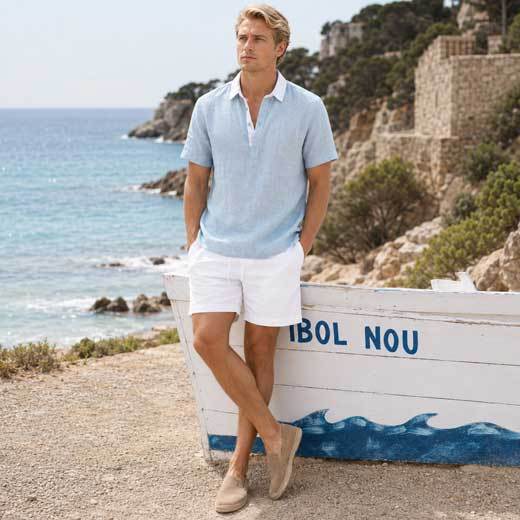
A men’s linen shirt should fit comfortably across the shoulders and chest, allow easy movement through the arms, and fall cleanly over the body without pulling or looking excessively oversized. Because linen is naturally breathable and works best with airflow, the ideal fit is usually relaxed but intentional rather than tight or shapeless.
The shoulder seams should sit close to the natural edge of the shoulders without pulling or dropping too far down the arms.
The shirt should allow comfortable movement and airflow without creating large folds of excess fabric.
The hem should be long enough to wear comfortably but balanced for either tucked or untucked styling.
How Should Men's Linen Shirts Fit?
Men’s linen shirts should generally have a relaxed, breathable fit that follows the body without clinging to it. The shirt should sit neatly across the shoulders, offer enough room through the chest and upper back, and allow the wearer to raise, bend, and move the arms without restriction.
Linen performs best when it has a little space around the body. A shirt that is too tight may pull at the buttons, restrict movement, reduce airflow, and place unnecessary stress on the fabric. A shirt that is too oversized may lose its shape and make the outfit appear untidy.
The ideal linen shirt fit depends on the intended style. A classic button-up should look clean and relaxed. A resort shirt can be slightly looser. An overshirt should have enough room for layering. An intentionally oversized shirt may have dropped shoulders and a longer body, but the proportions should still look balanced.
Men’s Linen Shirt Fit at a Glance
| Fit Area | Ideal Fit | Signs the Shirt Is Too Small | Signs the Shirt Is Too Large |
|---|---|---|---|
| Shoulders | Seams sit near the natural shoulder edge. | Seams pull inward and fabric feels tight across the upper back. | Seams drop far down the upper arms unless the style is intentionally oversized. |
| Chest | Enough room to move without excessive fabric. | Buttons pull, gaps appear, or the fabric stretches across the chest. | Large folds form around the chest and sides. |
| Waist | Falls naturally without clinging or ballooning. | Shirt pulls around the stomach or waist. | Too much fabric gathers around the midsection. |
| Sleeves | Allow comfortable arm movement and end near the wrist bone for long sleeves. | Sleeves pull at the elbow or finish too high. | Sleeves cover much of the hand or feel excessively wide. |
| Collar | Comfortable around the neck with no pressure or large gap. | Feels restrictive when buttoned. | Stands far away from the neck or looks loose and uneven. |
| Length | Balanced for the intended tucked or untucked style. | Rides up easily or exposes the waist when moving. | Extends too far down the thighs and overwhelms the body. |
How Should the Shoulders Fit?
The shoulders are one of the most important areas to check when choosing a men’s linen shirt. On a standard-fit button-up, the shoulder seam should sit close to the point where the shoulder naturally ends and the upper arm begins.
A slightly relaxed linen shirt may have a seam that sits just beyond the natural shoulder edge. However, it should not drop excessively unless the shirt is specifically designed as an oversized or dropped-shoulder style.
Signs of a good shoulder fit:
- The shirt lies smoothly across the upper back.
- The shoulder seams sit near the natural shoulder points.
- There is no pulling when reaching forward.
- The armholes do not cut into the underarms.
- The collar stays in place when the arms move.
Signs the shoulders are too tight:
- Horizontal lines appear across the upper back.
- The fabric pulls when the arms are raised.
- The shoulder seams sit noticeably inside the natural shoulder points.
- The armholes feel restrictive.
- The front buttons shift or pull when moving.
How Should a Linen Shirt Fit Across the Chest?
A men’s linen shirt should have enough room across the chest to support airflow and movement. The fabric should not stretch tightly between the buttons, and the button placket should lie reasonably flat.
A small amount of extra space is desirable because linen is often worn in warm weather. However, the shirt should not create large folds under the arms or across the sides of the chest.
- Button the shirt fully.
- Stand naturally without pulling the stomach inward.
- Move both arms forward and then raise them.
- Check whether the buttons pull or gaps appear.
- Confirm that you can move without the shirt feeling restrictive.
If the shirt pulls across the chest or creates gaps between buttons, choose a larger size or a roomier fit. If there is substantial excess fabric, a smaller size or more tailored silhouette may be more suitable.
How Should a Men’s Linen Shirt Fit Around the Waist?
The body of the shirt should fall naturally from the chest toward the waist. Linen shirts usually look best when they skim the midsection rather than cling to it.
A regular or relaxed-fit linen shirt may have a nearly straight side seam, while a tailored linen shirt may narrow slightly toward the waist. Neither style should pull across the stomach when sitting or moving.
A good waist fit should:
- Allow comfortable sitting and bending.
- Leave some space between the shirt and body.
- Avoid tight horizontal lines across the stomach.
- Fall cleanly without forming excessive side folds.
- Remain balanced when worn tucked or untucked.
Men who prefer a relaxed summer look may choose slightly more room through the waist. Men who want a smart casual appearance may prefer a cleaner fit with less excess fabric.
How Should the Sleeves Fit?
The sleeves of a men’s linen shirt should allow natural movement without pulling at the shoulders or elbows. The correct sleeve fit depends on whether the shirt is long-sleeved, short-sleeved, relaxed, tailored, or designed as an overshirt.
For long-sleeve linen shirts:
- The cuff should usually finish near the wrist bone.
- The sleeve should not pull tightly around the upper arm or elbow.
- There should be enough room to roll the sleeves comfortably.
- The cuff should not cover most of the hand.
- The sleeve should not ride far up the forearm when the arms move naturally.
For short-sleeve linen shirts:
- The sleeve should sit comfortably around the upper arm.
- It should not cut tightly into the arm.
- A relaxed sleeve opening supports airflow.
- The length should feel balanced with the body of the shirt.
- Resort shirts may have wider and slightly longer sleeves than classic short-sleeve shirts.
How Should the Collar Fit?
The collar should sit comfortably around the neck without pressing tightly or standing too far away from the body. For a formal button-up, the collar should remain comfortable when the top button is fastened. For most casual linen styling, the top one or two buttons are often left open.
A collar that is too tight can feel uncomfortable and cause the shirt to pull upward. A collar that is too loose may collapse, spread unevenly, or create an untidy neckline.
Common men’s linen collar styles include:
- Classic point collar
- Spread collar
- Button-down collar
- Band or grandad collar
- Camp or resort collar
Camp and resort collars are designed to sit more openly and should not be judged by the same standards as a formal point collar. They should lie naturally against the upper chest without twisting or pulling backward.
How Long Should a Men’s Linen Shirt Be?
The ideal shirt length depends on whether the shirt is intended to be worn tucked, untucked, or both. Many men’s linen shirts are designed for relaxed untucked styling, but some longer button-ups can also be tucked into trousers.
| Wearing Style | Recommended Length | What to Avoid |
|---|---|---|
| Untucked | The hem should usually cover the waistband and fall around the upper to mid-hip area. | A hem that is so long it resembles a tunic or so short it exposes the waist when moving. |
| Tucked | The shirt should be long enough to remain inside the trousers when sitting and moving. | A short hem that repeatedly comes untucked. |
| Resort shirt | Usually straight and slightly shorter for relaxed untucked wear. | An excessively long rounded hem that disrupts the casual silhouette. |
| Overshirt | May be slightly longer to create balanced layering over a T-shirt or tank. | A length that overwhelms the wearer or extends too far down the thighs. |
Body proportions also matter. Taller men may need more body and sleeve length, while shorter men may benefit from shirts with a cleaner, slightly shorter hem.
Should a Men’s Linen Shirt Be Loose?
A men’s linen shirt should usually be relaxed, but it does not need to be extremely loose. Some space around the body helps airflow, comfort, and natural drape. Too much fabric, however, can make the shirt appear shapeless.
The best fit is often described as relaxed but controlled. The shirt should move easily with the wearer while maintaining a clear shoulder line, balanced sleeve length, and an appropriate body length.
Regular Fit vs Slim Fit vs Relaxed Fit
| Fit Type | Characteristics | Best For |
|---|---|---|
| Slim fit | Closer through the chest, waist, and sleeves with less excess fabric. | Polished outfits and men who prefer a defined silhouette. |
| Regular fit | Balanced room through the chest and waist without appearing oversized. | Versatile everyday wear, work, travel, and smart casual styling. |
| Relaxed fit | More room through the shoulders, chest, waist, and sleeves. | Hot weather, vacation, resort wear, weekends, and casual summer outfits. |
| Oversized fit | Intentional volume, dropped shoulders, longer sleeves, or a wider body. | Contemporary styling, layering, and loose casual outfits. |
The right choice depends on personal style and how the shirt will be worn. A regular fit is usually the most versatile. A relaxed fit provides more summer airflow. A slim fit can look polished but should never restrict movement.
How Should an Oversized Men’s Linen Shirt Fit?
An oversized linen shirt should look intentionally loose rather than accidentally too large. The shoulders may drop beyond the natural shoulder points, the body may be wider, and the sleeves may have more volume. However, the shirt should still have balanced proportions.
A well-fitting oversized linen shirt should:
- Have deliberate rather than uneven shoulder placement.
- Maintain a clean collar shape.
- Allow the sleeves to be rolled without excessive bulk.
- Fall evenly across the front and back.
- Pair well with straighter or more fitted bottoms.
- Avoid overwhelming the wearer’s height and frame.
When wearing an oversized linen shirt, balance the outfit with linen shorts, straight pants, tailored trousers, or a simple fitted T-shirt underneath.
How Should a Men’s Linen Overshirt Fit?
A linen overshirt should be roomier than a standard button-up because it is designed to be layered over another top. There should be enough space for a T-shirt, tank, or lightweight knit without causing pulling across the chest or shoulders.
An overshirt should have:
- Slightly more room through the chest and upper arms.
- Comfortable armholes that allow layering.
- A hem that falls cleanly over the layer underneath.
- Sleeves that can be worn down or rolled.
- A collar that stays balanced when worn open.
Avoid sizing up excessively unless the product is cut close to the body. Check the product measurements because an overshirt may already include additional ease.
How Should Linen Resort Shirts Fit?
A men’s linen resort shirt should have a relaxed, easy silhouette with comfortable room through the chest, waist, and sleeves. Resort shirts often feature an open camp collar, straight hem, and shorter untucked length.
The shirt should fall naturally rather than cling to the body. The open collar should lie flat against the upper chest, and the sleeves should provide airflow without appearing excessively wide.
A good resort-shirt fit is:
- Relaxed through the torso
- Comfortable at the shoulders
- Slightly boxy but proportionate
- Easy to wear untucked
- Suitable with linen shorts, pants, or swimwear
Should You Size Up or Down in a Men’s Linen Shirt?
In most cases, begin with your usual size and compare your body measurements with the product size chart. Linen shirts are often already designed with enough ease for comfort, so automatically sizing up may create too much fabric.
Consider sizing up when:
- Your chest or shoulder measurement is close to the upper limit of the size.
- You are between sizes and prefer a relaxed fit.
- You plan to wear the shirt as an overshirt.
- You prefer more room through the stomach or upper arms.
- The product description identifies the style as slim or close fitting.
Consider the smaller size when:
- You are between sizes and prefer a cleaner fit.
- The shirt is described as oversized or generously cut.
- The garment measurements show more ease than you need.
- You mainly plan to tuck the shirt into trousers.
Do not size down if doing so causes pulling at the shoulders, chest, buttons, or armholes. Comfort and movement should remain the priority.
How to Use Body and Garment Measurements
Choosing the right linen shirt size is easier when you understand the difference between body measurements and garment measurements.
- Body measurements describe the circumference or dimensions of your body.
- Garment measurements describe the actual finished dimensions of the shirt.
- The difference between the two is called ease.
A shirt needs positive ease so you can move and breathe comfortably. The amount of ease varies by fit. Slim shirts have less ease, while relaxed and oversized shirts have more.
Measurements to review:
- Chest circumference or pit-to-pit width
- Shoulder width
- Body length
- Sleeve length
- Upper-arm width
- Collar or neck measurement
- Hem width
How to Measure a Shirt You Already Own
- Button the shirt and lay it flat on a smooth surface.
- Measure from one underarm seam to the other for the chest width.
- Measure between the shoulder seams across the back.
- Measure from the highest shoulder point to the bottom hem for body length.
- Measure from the shoulder seam to the cuff for sleeve length.
- Measure the hem from side to side.
- Compare these measurements with the product chart rather than relying only on the size label.
Measurements may vary slightly depending on how the garment is positioned and measured. Use the same method when comparing shirts to improve accuracy.
How Linen Fabric Affects Shirt Fit
Linen has a natural texture and relaxed drape that influence how a shirt looks and feels. It may feel slightly crisp when new, then become softer and more relaxed with wear and gentle washing.
Linen does not usually behave like highly elastic fabric. It should not be expected to stretch significantly to accommodate a shirt that is too tight. Choosing enough room at the shoulders, chest, arms, and waist is therefore important.
Fit factors to remember:
- Natural wrinkles may make the shirt appear slightly shorter during wear.
- Softened linen may drape more fluidly over time.
- High heat can affect dimensions and should be avoided.
- Fabric weight influences structure and drape.
- Lightweight linen may appear more fluid than medium-weight linen.
- Always follow the garment care instructions.
How Should Linen Shirts Fit for Different Occasions?
| Occasion | Recommended Fit | Styling Suggestion |
|---|---|---|
| Everyday casual | Regular or relaxed fit | Wear untucked with shorts, chinos, or relaxed pants. |
| Work or smart casual | Regular or slightly tailored fit | Tuck into trousers and pair with loafers or clean sneakers. |
| Vacation | Relaxed or resort fit | Wear open over a T-shirt or pair with linen shorts. |
| Dinner | Clean regular fit | Choose darker colors and pair with linen pants or tailored trousers. |
| Beach | Relaxed fit | Wear open over swimwear with sleeves rolled. |
| Layering | Roomy regular fit or overshirt fit | Wear over a plain T-shirt or lightweight tank. |
How to Tell If a Men’s Linen Shirt Is Too Tight
- The buttons pull apart or create visible gaps.
- The fabric stretches across the chest or stomach.
- Horizontal tension lines appear across the upper back.
- The shoulders feel restricted when reaching forward.
- The armholes press into the underarms.
- The sleeves pull at the elbows when bending the arms.
- The collar feels uncomfortable when buttoned.
- The shirt rides upward during normal movement.
A shirt that is too tight will not become properly fitting through wear. Linen may soften, but it should not be expected to stretch enough to correct an undersized garment.
How to Tell If a Men’s Linen Shirt Is Too Large
- The shoulder seams drop far below the natural shoulders.
- Large folds collect around the chest, waist, or underarms.
- The sleeves cover much of the hands.
- The shirt appears disproportionately long.
- The collar stands far away from the neck.
- The body billows excessively when tucked.
- The shirt overwhelms the wearer’s frame.
Some of these features may be intentional in an oversized design. Always compare the actual silhouette with the product description before deciding the shirt is too large.
Common Men’s Linen Shirt Fit Mistakes
| Common Mistake | Better Approach |
|---|---|
| Choosing a tight fit to look more tailored | Select a clean fit with enough room for movement and airflow. |
| Automatically sizing up because linen is casual | Check the garment measurements because the design may already be relaxed. |
| Ignoring shoulder fit | Prioritize shoulder comfort before evaluating the waist or length. |
| Using only the size label | Compare chest, shoulder, sleeve, and length measurements. |
| Expecting linen to stretch significantly | Choose sufficient ease from the beginning. |
| Choosing the same fit for every occasion | Select tailored, regular, relaxed, or oversized fits according to use. |
| Ignoring the intended styling | Consider whether the shirt will be tucked, untucked, layered, or worn open. |
Men’s Linen Shirt Fit Checklist
- The shoulder seams sit correctly for the intended fit.
- The shirt does not pull across the chest or upper back.
- The button placket stays reasonably flat.
- You can raise and move your arms comfortably.
- The collar feels comfortable.
- The sleeves finish at an appropriate point.
- The body has enough ease without excessive volume.
- The hem length works for tucked or untucked styling.
- The fit matches the product description.
- The garment measurements are close to a shirt you already enjoy wearing.
Frequently Asked Questions About Men’s Linen Shirt Fit
Men’s linen shirts should fit comfortably across the shoulders and chest, provide room for movement and airflow, and fall neatly over the body without pulling or creating excessive bulk.
It should usually be relaxed rather than tight. The shirt should leave some space around the body while maintaining balanced shoulders, sleeves, and length.
Not automatically. Begin with your usual size and check the product measurements. Consider sizing up when between sizes, layering, or choosing a shirt described as slim fitting.
On a standard fit, the seam should sit close to the natural end of the shoulder. Relaxed and oversized styles may place it slightly or intentionally lower.
It should normally cover the waistband and fall around the upper to mid-hip area without extending so far that it overwhelms the wearer’s proportions.
Linen often becomes softer and drapes more naturally with wear, but it should not be expected to stretch enough to correct a shirt that is too small.
Compare your body measurements and the listed garment measurements with a shirt you already own. Review the product fit description before selecting a size.
Yes, provided the length is balanced. A versatile shirt should be long enough to remain tucked but not so long that it looks disproportionate when worn untucked.
Final Answer
A men’s linen shirt should fit comfortably across the shoulders, chest, waist, and arms while leaving enough room for airflow and natural movement. It should not pull at the buttons, restrict the upper back, press into the armholes, or cling tightly to the body.
For most men, a regular or relaxed fit provides the best balance of comfort and style. Slim fits can work for polished outfits when they still allow movement, while oversized shirts should have deliberate proportions rather than simply appearing too large.
Check the shoulder seams first, then evaluate the chest, sleeves, collar, waist, and body length. Use garment measurements whenever possible and compare them with a shirt you already wear comfortably. The best linen shirt should feel breathable, move easily, and look relaxed without losing its shape.
Find Your Ideal Men’s Linen Shirt
Explore KOSSR men’s linen shirts designed with breathable fabrics, comfortable silhouettes, and versatile fits for summer, travel, vacation, work, and everyday wear.
Shop Linen Shirts for Men