Is Linen Made From Natural Fibers? | KOSSR Linen Fabric Guide
- Share
- Issue Time
- Jun 28,2026
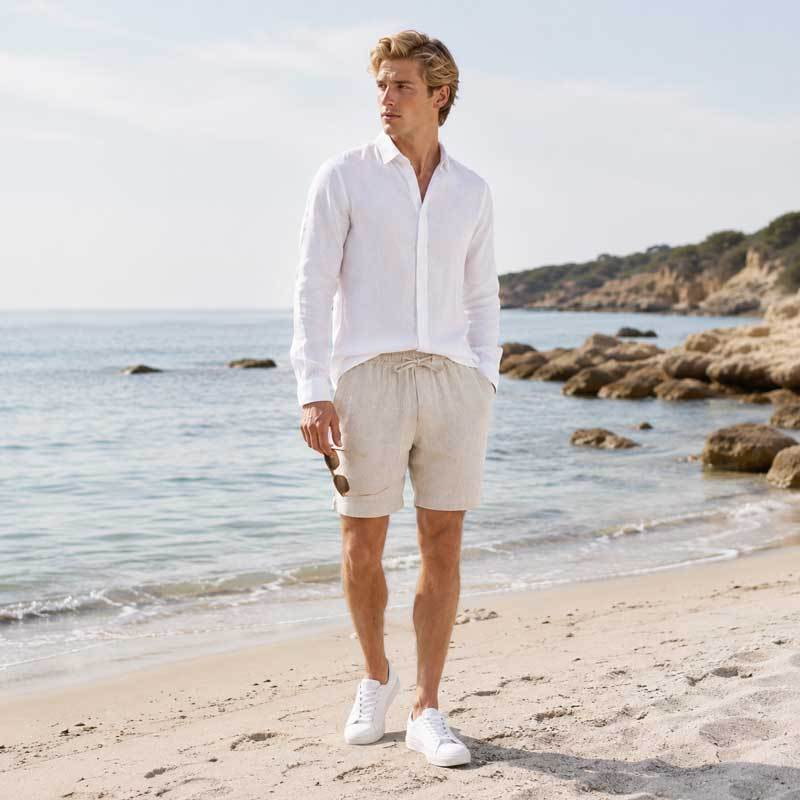
Is Linen Made From Natural Fibers?
Yes, linen is made from natural fibers obtained from the flax plant. The fibers are taken from the plant’s stem, processed, spun into yarn, and woven into linen fabric. Pure linen is therefore a plant-based textile, although finished linen clothing may also contain blended fibers, synthetic sewing threads, elastic, linings, coatings, or other added materials.
Linen begins with flax, a flowering plant grown for its long, strong stem fibers.
Flax fibers are composed mainly of cellulose, the structural material found in plant cell walls.
A garment labeled linen may be pure linen or a blend, so always review the fiber-content label.
Is Linen Made From Natural Fibers?
Yes. Linen is made from natural fibers extracted from the stems of the flax plant. Flax is a plant-based raw material, and its long bast fibers can be separated, cleaned, spun into yarn, and woven into fabric.
Because linen originates from a plant rather than a petroleum-based polymer, it is classified as a natural cellulose fiber. This places it in the same broad natural-fiber family as cotton and hemp, although each fiber comes from a different part of a different plant and has its own structure, texture, performance, and production process.
Pure linen fabric contains flax fiber. However, a finished linen garment may include more than the main fabric. Sewing thread, labels, elastic waistbands, linings, zippers, buttons, interfacing, coatings, and decorative elements may be made from natural or synthetic materials.
What Plant Does Linen Come From?
Linen comes from the flax plant. Flax is cultivated for several purposes, including fiber, seed, and oil. The textile fiber used to make linen is found in the outer portion of the plant’s stem.
These stem fibers are known as bast fibers. Bast fibers are long structural fibers that help support the plant. Their length and strength make them suitable for spinning into linen yarn.
| Flax Plant Part | Common Use |
|---|---|
| Stem fibers | Processed into linen yarn and fabric. |
| Seeds | Used for food products and flaxseed applications. |
| Seed oil | Used in food, finishes, paints, and other industrial applications. |
| Short fiber and processing residue | May be used in lower-grade textiles, paper, composites, or other products depending on processing. |
Linen clothing is therefore connected directly to a plant-based agricultural material rather than being created from a fully synthetic polymer.
What Is a Natural Fiber?
A natural fiber is a textile fiber that comes from a plant, animal, or mineral source rather than being created entirely through synthetic polymer production.
Plant fibers are generally cellulose-based. Animal fibers are generally protein-based. Each natural fiber has a different structure, appearance, performance profile, and care requirement.
| Fiber Category | Examples | Source |
|---|---|---|
| Plant-based natural fibers | Linen, cotton, hemp, jute, ramie | Plant stems, seeds, leaves, or other plant structures |
| Animal-based natural fibers | Wool, silk, cashmere, alpaca | Animal hair, fleece, or protein filaments |
| Regenerated cellulose fibers | Viscose, modal, lyocell | Plant-derived cellulose chemically dissolved and reformed into fiber |
| Synthetic fibers | Polyester, nylon, acrylic, elastane | Manufactured polymers, often derived from fossil-fuel feedstocks |
Linen is a natural fiber because the usable textile fiber already exists in the flax stem. It is separated and refined, but it is not dissolved and regenerated into an entirely new filament in the same way as viscose or lyocell.
How Is Flax Turned Into Linen Fabric?
The transformation from flax plant to linen fabric involves several stages. Methods vary depending on region, quality target, machinery, and desired fabric characteristics, but the general process follows a recognizable sequence.
- Growing: Flax plants are cultivated until the stems develop suitable fiber length and maturity.
- Harvesting: Plants may be pulled rather than cut to preserve more of the stem length.
- Retting: Moisture and biological activity help loosen the fibrous bundles from surrounding plant tissue.
- Drying: The retted plants are dried before further mechanical processing.
- Breaking: Woody stem material is broken into smaller pieces.
- Scutching: Remaining woody material is removed from the long fibers.
- Hackling: Fibers are combed, separated, aligned, and graded.
- Spinning: Prepared fibers are spun into linen yarn.
- Weaving or knitting: Yarn is formed into fabric.
- Finishing: Fabric may be washed, softened, dyed, bleached, printed, or otherwise treated.
- Garment production: Finished fabric is cut and sewn into dresses, shirts, pants, skirts, shorts, sets, and other products.
Linen’s final feel depends not only on the natural fiber but also on fiber quality, yarn thickness, weave, fabric weight, washing, dyeing, and finishing.
Is Linen Always 100% Natural?
Pure linen fiber is natural, but not every fabric or garment sold as linen contains only flax fiber. Some products are linen blends designed to change the feel, cost, stretch, drape, wrinkle behavior, or care requirements.
A garment may also use 100% linen main fabric while including synthetic or mixed-material components elsewhere in its construction.
Additional garment materials may include:
- Polyester sewing thread
- Elastane in waistbands or fabric blends
- Synthetic linings
- Plastic buttons
- Nylon zippers
- Polyester care labels
- Fusible interfacing
- Shoulder pads
- Coatings or wrinkle-resistant finishes
- Printed synthetic decoration
What Does 100% Linen Mean?
A label stating “100% linen” generally means that the textile fiber content of the listed fabric is entirely flax-derived linen rather than a blend with cotton, polyester, viscose, elastane, or another fiber.
This label usually describes the fabric composition. It does not always describe every trim or construction element in the finished garment. For example, a 100% linen shirt may still use polyester sewing thread or plastic buttons.
- The main fabric composition
- The lining composition
- Any contrast fabric or trim composition
- Whether elastic or stretch fiber is present
- Whether the garment has coatings or special finishes
- The care label and product description
A 100% linen label is the clearest way to confirm that the main textile is made entirely from flax fiber.
What Is a Linen Blend?
A linen blend combines flax fiber with one or more additional textile fibers. Blending can alter how the fabric feels, drapes, wrinkles, stretches, washes, or performs.
| Common Blend | Possible Effect on Fabric | Is It Fully Natural? |
|---|---|---|
| Linen and cotton | May feel softer or more familiar while retaining some linen texture. | Both fibers are natural and plant based. |
| Linen and hemp | Can create a textured, durable plant-fiber fabric. | Both fibers are natural and plant based. |
| Linen and wool | May add warmth, softness, or structure. | Both fibers are natural, but one is plant based and one animal based. |
| Linen and viscose | May create softer drape and smoother movement. | Viscose is regenerated cellulose, not a direct natural fiber in the same sense as flax. |
| Linen and polyester | May reduce cost, alter wrinkle behavior, or increase dimensional stability. | No. Polyester is synthetic. |
| Linen and elastane | Adds stretch and recovery. | No. Elastane is synthetic. |
Linen blends are not automatically poor quality. The best choice depends on the wearer’s priorities. However, shoppers seeking a fully plant-based fabric should look for 100% linen or linen blended only with another plant-based natural fiber.
Is Linen the Same as Flax?
Flax is the plant and raw fiber source, while linen is the textile produced from processed flax fiber. The terms are closely connected but refer to different stages.
| Term | Meaning |
|---|---|
| Flax | The plant from which linen textile fibers are obtained. |
| Flax fiber | The bast fiber separated from the plant stem. |
| Linen yarn | Processed flax fibers spun into yarn. |
| Linen fabric | Fabric woven or knitted from linen yarn. |
| Linen clothing | Garments made from linen fabric or a fabric containing linen. |
Is Linen a Plant-Based Fabric?
Yes. Linen is a plant-based fabric because its fibers come from the flax plant. It does not come from animal hair or petroleum-based synthetic polymers.
This plant origin is one reason linen is often associated with natural clothing, summer wardrobes, slow fashion, and more mindful material choices.
Plant-based linen is commonly used for:
- Linen dresses
- Linen shirts and blouses
- Linen pants and shorts
- Linen skirts
- Linen sets
- Linen loungewear
- Linen jackets and lightweight layers
- Linen scarves and accessories
- Bed linen and home textiles
Its plant-based origin does not determine every aspect of quality. Fabric construction, fiber length, spinning, weaving, dyeing, finishing, and garment workmanship all influence the final product.
Is Linen a Cellulose Fiber?
Yes. Linen is a cellulose-based fiber. Cellulose is the main structural substance found in plant cell walls, and it gives flax fibers much of their strength and textile value.
Cotton, hemp, jute, and ramie are also cellulose-based natural fibers. Viscose, modal, and lyocell also begin with cellulose, but they are classified as regenerated fibers because the cellulose is dissolved and reformed into filaments.
| Fiber | Cellulose-Based? | Fiber Type |
|---|---|---|
| Linen | Yes | Natural bast fiber from flax stems |
| Cotton | Yes | Natural seed fiber |
| Hemp | Yes | Natural bast fiber |
| Viscose | Yes | Regenerated cellulose fiber |
| Polyester | No | Synthetic polymer fiber |
| Wool | No | Natural animal protein fiber |
How Is Linen Different From Synthetic Fibers?
Linen differs from conventional synthetic fibers mainly in raw-material source and fiber structure. Linen comes from flax stems, while fibers such as polyester, nylon, acrylic, and elastane are manufactured from synthetic polymers.
| Characteristic | Linen | Conventional Synthetic Fibers |
|---|---|---|
| Source | Flax plant | Manufactured polymers, often fossil-fuel derived |
| Fiber category | Natural cellulose fiber | Synthetic fiber |
| Texture | Naturally textured, crisp or softly washed | Can be engineered for many different surfaces |
| Stretch | Limited natural stretch | Varies; some synthetics offer high stretch |
| Wrinkles | Wrinkles naturally | Many synthetics resist wrinkles more strongly |
| Biodegradability | Pure untreated linen is generally biodegradable | Most conventional synthetics are not readily biodegradable |
Neither category is defined by one performance feature alone. The right fabric depends on the product, wearer, climate, intended use, care habits, and desired feel.
How Is Linen Different From Cotton?
Linen and cotton are both natural plant-based cellulose fibers, but they come from different parts of different plants.
Linen comes from the stem of the flax plant. Cotton comes from the soft fibers surrounding cotton seeds. This difference contributes to their distinct texture, drape, wrinkle behavior, and feel.
| Feature | Linen | Cotton |
|---|---|---|
| Plant source | Flax stem | Cotton seed fiber |
| Fiber type | Bast fiber | Seed fiber |
| Typical texture | Crisp, textured, and increasingly soft with wear | Often soft and familiar from the beginning |
| Wrinkle tendency | Wrinkles readily | Wrinkles, but usually with a different crease pattern |
| Common clothing uses | Summer shirts, dresses, pants, skirts, sets, and resort wear | T-shirts, shirts, denim, underwear, dresses, and many everyday garments |
Both can support natural-fiber wardrobes. Linen is often selected when shoppers want a more textured, airy, relaxed appearance.
Is Viscose a Natural Fiber Like Linen?
Not exactly. Viscose begins with plant-derived cellulose, but the cellulose is chemically dissolved and regenerated into new fibers. It is therefore usually categorized as a regenerated or manufactured cellulose fiber rather than a direct natural fiber.
Linen fiber already exists within the flax stem and is mechanically and biologically separated from the surrounding plant tissue. It is then prepared and spun without dissolving the cellulose into a new filament.
| Fiber | Raw Material | Classification |
|---|---|---|
| Linen | Flax stem fiber | Natural plant fiber |
| Viscose | Plant-derived cellulose pulp | Regenerated cellulose fiber |
| Lyocell | Plant-derived cellulose pulp | Regenerated cellulose fiber |
| Polyester | Synthetic polymer feedstock | Synthetic fiber |
Does Natural Mean Untreated?
No. “Natural fiber” describes the origin of the fiber, not every process applied to it afterward.
Linen may be bleached, dyed, printed, washed, softened, coated, resin treated, or finished for a specific appearance or performance. The fiber can remain natural in origin even when the fabric has undergone extensive processing.
Common linen finishing processes include:
- Washing and softening
- Bleaching
- Garment dyeing
- Piece dyeing
- Printing
- Enzyme treatment
- Mechanical softening
- Wrinkle-control treatment
- Water-repellent treatment
- Coating or bonding
Shoppers who want minimally processed linen should look for clear information about fiber content, dyeing, finishing, and certification rather than relying only on the word “natural.”
Does Natural Linen Have a Specific Color?
Unbleached and undyed linen commonly appears in natural shades ranging from pale oatmeal and warm beige to grayish taupe or muted brown. The exact color depends on the flax variety, retting, processing, fiber quality, and finishing.
White linen has usually been bleached or whitened. Colored linen has been dyed or printed. These processes do not change the fact that the underlying linen fiber comes from flax, but they do affect the final textile’s appearance and processing history.
Common linen color categories include:
- Natural flax
- Oatmeal
- Beige
- Ivory
- Bleached white
- Garment-dyed earth tones
- Dark neutral shades
- Seasonal fashion colors
Why Does Linen Have Natural Slubs?
Linen fabric may contain small thick-and-thin variations known as slubs. These can occur because flax fibers vary naturally and because yarn spinning may retain some irregularity.
Slubs are not automatically defects. In many linen fabrics, they are considered part of the material’s natural texture and visual character. The degree of variation depends on fiber preparation, yarn quality, spinning method, weave, and finishing.
Is Natural Linen Always Sustainable?
Linen’s plant-based origin is a meaningful environmental characteristic, but natural does not automatically mean fully sustainable.
A garment’s environmental profile also depends on cultivation, retting, water use, energy, processing, dyeing, finishing, manufacturing quality, transport, packaging, garment lifespan, care, and end-of-life handling.
Questions to consider include:
- How was the flax cultivated?
- How was the fiber retted and processed?
- What dyes and finishes were used?
- Is the garment durable?
- Will it be worn frequently?
- Can it be repaired?
- Does it contain synthetic blends or trims?
- How will it be washed and dried?
- What options exist at the end of its useful life?
The greatest value often comes from choosing a well-made linen garment, wearing it repeatedly, caring for it gently, and keeping it in use for many seasons.
Why Do People Choose Natural Linen Clothing?
People choose linen clothing for a combination of material, comfort, appearance, and lifestyle reasons. Its plant-based origin is only one part of its appeal.
Common reasons include:
- Breathable warm-weather comfort
- Natural texture
- Relaxed drape
- Timeless styling
- Compatibility with slow-fashion wardrobes
- Ability to soften with wear
- Suitability for travel and vacation clothing
- Versatility across dresses, shirts, pants, skirts, shorts, and sets
- Plant-based fiber content
- Potential biodegradability in pure, untreated form
Linen is especially useful for wardrobes built around comfortable silhouettes, neutral colors, repeated outfits, and natural materials.
How Can You Tell Whether Clothing Is Made From Real Linen?
The most reliable method is to read the fiber-content label and product description. Visual appearance or touch alone cannot always confirm linen because many fabrics are designed to imitate its texture.
- Whether the label says 100% linen or lists a linen percentage
- Whether other fibers are included
- The product’s fabric description
- Close-up fabric photos
- Garment weight and opacity notes
- Care instructions
- Whether a lining or stretch component is present
- Whether the retailer clearly distinguishes pure linen from linen-look fabric
Terms such as “linen look,” “linen touch,” or “linen style” may describe appearance rather than actual flax-fiber content. Always confirm the stated fiber composition.
What Is Linen-Look Fabric?
Linen-look fabric is designed to imitate linen’s texture, slubs, weave, or relaxed appearance. It may contain little or no actual linen.
Linen-look textiles can be made from polyester, viscose, cotton, synthetic blends, or combinations of several fibers. They may offer different wrinkle resistance, price, drape, or care properties.
| Label Wording | What It Usually Means |
|---|---|
| 100% linen | The stated textile fiber content is entirely linen. |
| Linen blend | Linen is combined with one or more other fibers. |
| Contains linen | Linen is present, but the percentage should be checked. |
| Linen look | Describes appearance and may contain no linen. |
| Linen effect | Describes texture or visual character rather than fiber content. |
Which KOSSR Clothing Categories Use Linen?
Linen is well suited to many clothing categories because it can be woven in different weights and finished for crisp structure or a softer, more relaxed drape.
| Product Category | Why Linen Works Well |
|---|---|
| Linen dresses | Breathable silhouettes for summer, vacation, daily wear, and occasion styling. |
| Linen shirts and tops | Natural texture, easy layering, and versatile warm-weather styling. |
| Linen pants | Relaxed coverage with an airy feel and timeless appearance. |
| Linen shorts | Comfortable for hot weather, travel, beach, and casual outfits. |
| Linen skirts | Natural drape for feminine everyday and vacation styling. |
| Linen sets | Coordinated outfits that can often be mixed and matched. |
| Linen loungewear | Relaxed silhouettes and breathable comfort for home and daily routines. |
| Men’s linen clothing | Breathable shirts, pants, shorts, and sets for summer and travel. |
How Should Natural Linen Clothing Be Cared For?
Natural linen clothing benefits from gentle care. Always follow the specific garment label because care requirements can vary according to dye, construction, finishing, lining, and trims.
| Care Step | General Recommendation |
|---|---|
| Washing | Use cool or lukewarm water and mild detergent. |
| Machine cycle | Choose a gentle cycle when machine washing is permitted. |
| Loading | Avoid overcrowding so the garment can move freely. |
| Drying | Air dry when practical and avoid excessive heat. |
| Wrinkle care | Steam or iron while slightly damp if a smoother finish is preferred. |
| Storage | Store clean and dry in a breathable space. |
Linen often becomes softer and more relaxed through regular wear and careful washing. Its natural wrinkles are part of the fabric’s character.
Common Misunderstandings About Natural Linen
| Misunderstanding | More Accurate Explanation |
|---|---|
| All products called linen are 100% flax. | Some are blends, and linen-look fabrics may contain no flax at all. |
| Natural fiber means completely untreated. | Linen can be dyed, washed, bleached, coated, or otherwise finished. |
| A 100% linen garment contains no synthetic material. | The main fabric may be linen while thread, labels, elastic, or trims are synthetic. |
| Natural automatically means sustainable. | Production, processing, quality, care, durability, and end-of-life all matter. |
| Linen and viscose are the same type of fiber. | Linen is a direct natural flax fiber; viscose is regenerated cellulose. |
| Slubs always indicate poor quality. | Natural thick-and-thin variation can be a normal characteristic of linen yarn. |
Frequently Asked Questions About Linen and Natural Fibers
Yes. Linen is made from natural flax fibers extracted from the plant’s stem. It is classified as a natural plant-based cellulose fiber.
Yes. Linen comes from the flax plant and does not originate from animal hair or synthetic plastic polymers.
Pure linen fiber is natural, but finished garments may contain blended fibers, synthetic thread, elastic, linings, labels, coatings, buttons, or zippers.
Flax is the plant and raw fiber source. Linen is the yarn, fabric, or textile product made from processed flax fibers.
Yes. Linen is primarily composed of cellulose, the structural material found in plant cell walls.
No. Both are natural plant fibers, but linen comes from flax stems while cotton comes from fibers surrounding cotton seeds.
Viscose begins with plant cellulose but is chemically dissolved and regenerated. It is classified as a manufactured cellulose fiber rather than a direct natural fiber like linen.
Check the fiber-content label and product description. Do not rely only on appearance, because linen-look fabrics may imitate linen without containing flax fiber.
It depends on the added fiber. Linen-cotton and linen-hemp blends use natural plant fibers, while linen-polyester and linen-elastane blends contain synthetic fibers.
Yes. Linen wrinkles naturally because its fibers have limited elasticity. These wrinkles are widely considered part of linen’s relaxed character.
Pure untreated linen fiber is generally biodegradable under suitable conditions. The full garment may not be completely biodegradable if it contains synthetic blends, threads, coatings, or trims.
Final Answer
Linen is made from natural fibers obtained from the stem of the flax plant. These long plant fibers are separated, cleaned, combed, spun into yarn, and woven or knitted into linen fabric.
Pure linen is therefore a natural, plant-based cellulose textile. However, not every product described as linen is made from 100% flax. Some fabrics are blended with cotton, viscose, polyester, elastane, or other fibers, while some linen-look materials contain no linen at all.
To confirm what you are buying, check the full fiber-content label rather than relying only on the product name or appearance. Also remember that a garment made from 100% linen fabric may still contain synthetic sewing thread, labels, elastic, zippers, buttons, lining, or finishing treatments.
Linen’s natural origin is one of its most valued qualities, but material source is only part of a thoughtful wardrobe. Quality construction, responsible care, repeated wear, repair, and long garment life are equally important.
Explore Natural Linen Clothing
Discover KOSSR linen dresses, shirts, pants, skirts, shorts, sets, and everyday essentials designed around breathable comfort, natural texture, and timeless styling.
Explore Linen Clothing