What is linen fabric?
- Share
- Issue Time
- Jul 9,2026
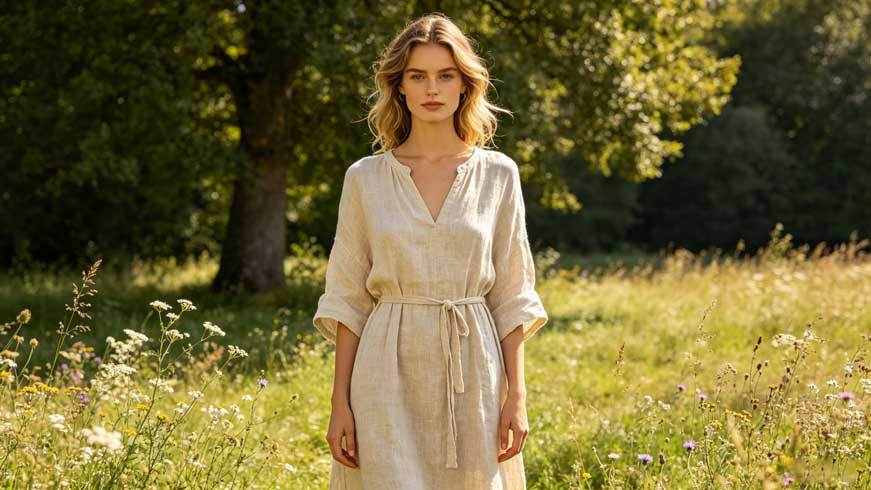
What Is Linen Fabric?
Linen is a natural textile made from the fibers of the flax plant (Linum usitatissimum). It is one of the oldest known fabrics in human history, valued for its exceptional breathability, moisture-wicking properties, durability, and biodegradability. Linen is produced through a multi-step process that includes harvesting, retting, breaking, scutching, hackling, spinning, weaving, and finishing — and the best linen comes from regions such as Normandy (France), Belgium, and the Netherlands.
Where Does Linen Fabric Come From?
Linen fabric comes from the flax plant, an annual crop that has been cultivated for fiber for over 30,000 years. Unlike cotton, which requires large amounts of water and pesticides, flax is a remarkably low-impact crop:
- Grown primarily in Western Europe — France (particularly Normandy), Belgium, and the Netherlands produce the world's finest linen fibers. The cool, humid maritime climate of these regions creates longer, stronger flax fibers.
- Rain-fed, not irrigated — Flax requires virtually no irrigation. It relies entirely on natural rainfall, making it one of the most water-efficient natural fibers in the world. A flax plant uses roughly 6.4 liters of water per kilogram of fiber, compared to cotton's 10,000–20,000 liters per kilogram.
- No chemical fertilizers needed — Flax grows well in poor soil conditions and does not require synthetic fertilizers or heavy chemical inputs. Farmers have cultivated flax organically for centuries.
- Every part of the plant is used — Flax is a zero-waste crop. The seeds produce linseed oil for paints, varnishes, and nutritional products. The short fibers (tow) are used for paper, insulation, and composite materials. The woody core (shive) becomes particleboard, animal bedding, or biofuel.
At KOSSR, we source our linen primarily from European flax farms that follow sustainable agricultural practices. The flax grown in these regions produces longer, finer fibers that result in softer yet more durable linen fabric — exactly what our customers expect from quality linen clothing.
How Is Linen Fabric Made?
The journey from flax plant to wearable linen fabric involves several carefully controlled steps. Each stage affects the final quality, texture, and performance of the fabric.
- Growing and Harvesting — Flax is sown in March or April and harvested about 100 days later (July-August). The plants are pulled from the ground by the roots rather than cut, preserving the full length of the fiber. At KOSSR, we work with growers who use traditional pulling methods to maximize fiber quality.
- Retting — This is the most critical step for fiber quality. The harvested flax stalks are laid in fields for 2–4 weeks, where dew, rain, and microbial action break down the pectin that binds fibers to the woody core. Consistent European climate conditions produce the most uniform retting results.
- Breaking and Scutching — The dried stalks are mechanically broken to separate the outer woody bark from the inner fibers. Scutching then scrapes away remaining bark fragments, leaving only the long, silky bast fibers.
- Hackling — The fibers are combed through progressively finer steel combs to separate long line fibers (used for fine linen) from shorter tow fibers (used for heavier, more textured linen). Hackling aligns the fibers parallel to each other for spinning.
- Spinning — The hackled fibers are twisted into yarn. Wet spinning (where fibers are passed through hot water during twisting) produces the smoothest, strongest linen yarn — this is the method preferred by premium linen producers and the standard we require for KOSSR's clothing.
- Weaving — The yarn is woven into fabric on looms. Common weaves include plain weave (the most common, producing crisp linen), twill weave (softer, drapes better), and damask weave (decorative patterns for table linens). Most KOSSR clothing uses plain weave linen for its classic structure and durability.
- Finishing — The raw fabric is washed, bleached (if needed), dyed, and sometimes stone-washed or enzyme-washed for softness. KOSSR uses OEKO-TEX-certified dyes and low-impact finishing processes to minimize environmental footprint.
What Are the Key Characteristics of Linen Fabric?
The unique structure of flax fibers gives linen a set of properties that distinguish it from cotton, hemp, bamboo, or synthetic fabrics:
Breathability
Linen is 2–3 times more breathable than cotton. The hollow, multi-layered structure of flax fibers allows air to circulate freely through the fabric, keeping the body cool in hot weather. This is why linen has been the preferred fabric for summer clothing in warm climates for millennia.
Moisture Wicking
Linen can absorb up to 20% of its weight in moisture before feeling damp — significantly more than cotton (7-8%). It wicks moisture away from the skin and releases it quickly to evaporate, keeping you dry and comfortable even on humid days.
Durability
Linen is 2–3 times stronger than cotton. The molecular structure of flax fibers gives linen exceptional tensile strength, especially when wet (it becomes stronger wet than dry). This is why linen garments can last for decades with proper care.
Thermal Regulation
Linen acts as a natural insulator — it keeps you cool in summer and warm in cooler weather by trapping air within its fiber structure. This makes it a true four-season fabric.
Antibacterial & Hypoallergenic
The natural structure of flax fibers resists bacterial growth and fungal development. Linen is naturally hypoallergenic, making it an excellent choice for sensitive skin, allergy sufferers, and babies. It does not irritate skin or attract dust mites.
Biodegradable & Sustainable
Linen is fully biodegradable — a linen garment left in soil will decompose within a few weeks to months, returning nutrients to the earth. Combined with the low water and chemical requirements of flax farming, linen is one of the most environmentally responsible textiles available.
What Are the Different Types of Linen Fabric?
Not all linen is the same. The quality, feel, and performance of linen fabric vary significantly depending on the fiber origin, processing method, and weave. Here is a practical breakdown of the types you will encounter when shopping for linen clothing:
| Type | Fiber Source | Texture | Best For | KOSSR Uses |
|---|---|---|---|---|
| European Linen | Flax from France, Belgium, Netherlands | Fine, smooth, consistent | Premium apparel, dresses, shirts | Primary source for all KOSSR linen |
| Stonewashed Linen | European flax, stone-washed post-weave | Ultra-soft, lived-in feel | Everyday casual wear, travel clothing | KOSSR travel-friendly collections |
| Irish Linen | Historically Irish-grown flax | Fine, crisp, lustrous | Formal shirts, handkerchiefs | Special limited releases |
| Belgian Linen | Flax grown in Belgium | Exceptionally long fibers, smooth | High-end fashion, luxury home textiles | Selected premium garments |
| Linen Blends | Linen + cotton, rayon, silk, or TENCEL | Varies; generally softer, less wrinkle-prone | Garments needing high drape or stretch | KOSSR focuses on 100% linen |
| Raw Linen (Greige) | Unbleached, undyed flax | Crisp, stiff, natural beige | Home textiles, rustic designs | Natural-finish collections |
| Heavyweight Linen | European flax, thicker yarn | Sturdy, structured | Blazers, outerwear, pants | KOSSR structured pant styles |
Important note for shoppers: When a product label says "100% linen," it refers to the fiber content, not the origin. Always check whether the flax was grown in Europe (premium), China (mid-range, variable quality), or other regions. At KOSSR, every product page clearly states our linen source so you know exactly what you are buying.
What Is the Difference Between Linen and Cotton?
This is one of the most common questions we receive. While both linen and cotton are natural fibers, they have fundamentally different structures and performance profiles:
| Property | Linen | Cotton |
|---|---|---|
| Fiber origin | Flax plant stem (bast fiber) | Cotton plant boll (seed fiber) |
| Fiber length | 12–36 inches (long, continuous) | 0.5–2 inches (short, staple) |
| Tensile strength | 2–3× stronger than cotton | Moderate |
| Moisture absorption | Up to 20% before feeling damp | 7–8% before feeling damp |
| Drying speed | Fast — releases moisture quickly | Moderate |
| Breathability | Excellent (2–3× cotton) | Good |
| Wrinkle resistance | Wrinkles easily (natural characteristic) | Moderate |
| Water usage (crop) | ~6.4 L/kg fiber (rain-fed) | 10,000–20,000 L/kg fiber (irrigated) |
| Pesticide use | Minimal (flax is naturally resistant) | High (cotton uses ~16% of global insecticides) |
| Durability | Improves with washing; lasts decades | Moderate; degrades over time |
| Price | Higher (labor-intensive, limited growing regions) | Lower (mass-produced globally) |
The bottom line: linen outperforms cotton in almost every sustainability and performance metric — it uses ~1% of the water, requires virtually no pesticides, lasts longer, breathes better, and is fully biodegradable. The tradeoff is higher initial cost and its characteristic wrinkle-prone nature, which many linen wearers consider part of its charm.
Does Linen Wrinkle Easily? (And Should You Care?)
Yes, linen wrinkles — this is a natural property of flax fibers, not a flaw or defect. Unlike synthetic fibers or cotton, flax fibers have low elasticity, which means they hold creases and wrinkles from wear and washing.
However, here is what many linen wearers learn over time:
- Stonewashed linen wrinkles less — The stonewashing process pre-softens the fibers, making them more pliable and reducing the appearance of sharp creases. KOSSR's stonewashed linen garments are designed for travelers who want to look polished without ironing.
- Wrinkling is part of linen's aesthetic — In fashion and lifestyle contexts, linen wrinkles are increasingly seen as a mark of natural, effortless style rather than untidiness. High-end linen brands actively embrace the natural texture.
- Proper care reduces wrinkles — Removing linen from the dryer while slightly damp and hanging immediately significantly reduces creasing. Light steaming is faster than ironing and equally effective.
- Heavier-weight linen holds fewer wrinkles — Garments made from 160–200 gsm linen will show fewer wrinkles than lightweight 120–140 gsm linen.
At KOSSR, we believe linen's wrinkles are a feature, not a bug. If you want wrinkle-free clothing, synthetic blends or chemical-treated cotton are better choices. But if you want a fabric that breathes, lasts, and ages beautifully — linen's wrinkles are part of its character.
Is Linen Suitable for All Seasons?
While linen is most commonly associated with summer clothing, its thermoregulating properties make it wearable year-round. Here is how linen performs across seasons:
| Season | How Linen Performs | Best KOSSR Picks |
|---|---|---|
| Spring | Lightweight yet warm enough for layering over tees or turtlenecks | Linen shirts, light dresses, layering pieces |
| Summer | Maximum breathability and moisture wicking; keeps body 3–4°F cooler than cotton | Linen dresses, shorts, tank tops, sets |
| Fall | Pairs well with blazers, cardigans, and light jackets for transitional weather | Linen pants, long-sleeve shirts, structured blazers |
| Winter | Traps insulating air layer; wear under wool coats or heavy outerwear | Heavyweight linen pants, lined dresses |
The key is fabric weight: lightweight linen (120–140 gsm) for summer, mid-weight (150–170 gsm) for spring and fall, and heavyweight (180–200+ gsm) for winter layering. At KOSSR, each product clearly lists its fabric weight so you can choose the right piece for your climate.
How Should I Care for Linen Fabric?
Proper care dramatically extends the life of linen garments. Here is our recommended care routine based on years of experience with linen clothing:
- Washing — Machine wash on gentle cycle with cold or lukewarm water (max 30°C / 86°F). Use mild liquid detergent. Avoid bleach and fabric softener — softener coats the fibers and reduces breathability.
- Drying — Air drying is best. If using a dryer, use low heat and remove while slightly damp to minimize wrinkles. Direct sunlight can weaken fibers over time, so dry in shade when possible.
- Ironing — Iron while still damp on high heat (cotton/linen setting). Steam ironing is most effective. For a relaxed look, skip ironing altogether — the natural wrinkles are part of the aesthetic.
- Storage — Store linen in a cool, dry place. Avoid plastic bags — linen needs to breathe. Folded storage works better than hanging for knits and heavy garments to prevent stretching.
For detailed care instructions, visit our Linen Care Guide page.
Why Choose KOSSR Linen?
At KOSSR, we are dedicated to providing high-quality 100% European linen clothing that combines sustainability, comfort, and timeless style. Here is what sets our linen apart:
- Traceable European Flax — All KOSSR linen is sourced from French and Belgian flax farms with full supply chain transparency.
- OEKO-TEX Certified — Our dyes and finishing processes are certified safe for skin and the environment.
- Pre-Washed for Comfort — Every KOSSR garment is pre-washed so it arrives soft and ready to wear, with minimal further shrinkage.
- Designed for Real Life — From travel-friendly sets to everyday dresses, our linen is designed to be worn, packed, washed, and loved repeatedly.
- Fair Production — We partner with factories that provide fair wages, safe working conditions, and ethical labor practices.
Whether you are buying your first linen piece or expanding your collection, KOSSR makes it easy to choose quality linen that aligns with your values. Browse our full linen collection to find your perfect match.
Still have questions? Contact our team at any time — we are happy to help you choose the right linen for your lifestyle. Get in touch or send us your questions.