Sustainability FAQ · Slow Fashion
Is Linen a Good Fabric for Slow Fashion?
Yes — linen is one of the most slow-fashion-friendly fabrics available, because it is durable, biodegradable, made from a low-input plant, and improves with age instead of wearing out quickly. Slow fashion is not a single material, though: it is a set of principles — buy less, choose better, wear longer, and design out waste. Linen fits those principles unusually well when it is grown, woven, and cared for thoughtfully, and it fails them just as quickly when it is made cheaply, dyed heavily, or treated as a disposable trend. This guide explains what slow fashion actually asks of a fabric, where linen genuinely delivers, where its limits are, and how to buy and care for linen so it earns its place in a slower wardrobe.
Written for shoppers in Europe and North America who want to dress more responsibly without relying on marketing claims. The answer is practical and honest: linen can be a cornerstone of slow fashion, but only if you choose the right linen and treat it as a long-term garment. Where numbers appear in this guide, they reflect standard industry ranges for flax and linen production, not a single brand's promises.
Built to Last, Not to Trend
Flax fibres are among the longest and strongest plant fibres used in clothing. A well-made linen garment can be worn for years, which is exactly what slow fashion asks for.
Low-Input by Nature
Most of the world's flax is rain-fed and needs little irrigation and fewer pesticides than many other fibre crops. The raw material starts with a lighter footprint.
Gets Better With Age
Unlike many fabrics that fade and pill, linen softens and gains character with every wash. A garment that improves over time is one you are far more likely to keep.
What Slow Fashion Actually Asks of a Fabric
Before judging linen, it helps to define the standard. Slow fashion is often described as the opposite of fast fashion: instead of chasing low prices, rapid trends, and constant replacement, it values quality, longevity, and fairness across the whole lifecycle. In practical terms, slow fashion asks a garment — and the fabric it is made from — to meet several tests:
- Durability. The fabric must survive years of regular wear and washing, not a season or two. A garment that fails early is waste no matter how it was produced.
- Timelessness. The fabric and cut should not look dated after one trend cycle. Slow fashion favours pieces that still feel right five years later.
- Lower environmental pressure at the source. Growing and processing the fibre should use less water, energy, and chemistry than conventional alternatives wherever possible.
- Biodegradability or genuine recyclability. At the end of its long life, the material should not linger as permanent waste or shed microplastics.
- Repairability and maintainability. The fabric must tolerate normal care — washing, ironing, mending — so the wearer can keep it alive rather than replace it.
No fabric is perfect on all five tests, and linen is no exception. But as the rest of this guide shows, linen scores strongly on most of them — and its weaknesses are mostly things that happen to linen after it leaves the loom, which means they are within a buyer's control.
How Linen Measures Up Against Each Principle
Here is the honest scorecard. Each row looks at one slow-fashion principle and explains what linen actually delivers, along with the conditions that make it true:
| Slow fashion principle |
How linen performs |
What makes it true |
| Durability |
Very strong fibre with a long service life |
Flax fibres are long and strong; woven linen resists abrasion well. A mid-weight, well-constructed linen garment typically lasts years with normal care. |
| Timelessness |
Strong — linen reads as classic, not seasonal |
Natural, slightly textured linen in neutral tones does not follow trend cycles; it is the same fabric worn decades ago and still worn today. |
| Lower source impact |
Generally good, with caveats |
Most flax is rain-fed in temperate regions, needing little irrigation and fewer pesticides than cotton. Caveats: heavy dyeing, bleaching, and finishing add water and chemistry after the fibre stage. |
| Biodegradability |
Excellent when pure |
100% linen is a cellulose fibre that biodegrades in reasonable time and releases no microplastics. Blends with synthetics change this — check the label. |
| Repairability and care |
Good — easy to wash, iron, and mend |
Linen tolerates hot washing and ironing well, softens over time, and mends cleanly. It creases easily, which is a care quirk, not a durability problem. |
The pattern is clear: linen performs best on the principles that matter most for long-term wardrobes — durability, timelessness, and a clean end of life. Its weaker moments come from processing choices and blends, which brings us to the honest limits.
Where Linen's Slow-Fashion Case Is Weaker
It would be misleading to say "linen is automatically slow fashion." The fabric's credentials depend heavily on how it is made and bought. These are the real limits:
- Finishing can erase the natural advantages. The flax plant is low-input, but the journey from fibre to garment adds water, energy, and chemistry. Heavy dyeing, bleaching, and chemical softening treatments increase the footprint and can add effluent to waterways. Undyed, naturally coloured, or lightly dyed linen keeps more of the fabric's inherent benefit.
- Blends change the story. "Linen-blend" garments often mix linen with polyester, nylon, or elastane for easy care or stretch. That improves convenience but weakens biodegradability and can introduce microplastic shedding at end of life. If slow fashion matters to you, read the fibre composition before you buy.
- Cheap linen is often fast fashion in disguise. Low-cost linen garments are frequently made from short, coarse fibre with thin fabric and loose construction. They wrinkle hard, wear thin, and fail early — turning a "sustainable" material into a short-lived product. Material alone does not make a garment slow fashion; construction and weight do.
- Longevity only happens if you keep the garment. The single biggest environmental factor in clothing is how long it is worn. Even the most responsibly made linen contributes nothing if it is bought for one event and discarded. Slow fashion is a behaviour as much as a fabric choice.
The honest summary: linen is a fabric with excellent slow-fashion potential, not a guarantee. The same flax fibre can become either a ten-year wardrobe staple or a one-summer throwaway — the difference is fibre grade, fabric weight, construction, finishing, and your own decision to keep and care for it.
How to Buy Linen the Slow-Fashion Way
If you want linen to work as slow fashion, these checks will separate the keepers from the disposables. This is a practical checklist you can use before any purchase:
- Check the fibre composition first. For a slow-fashion piece, prefer 100% linen, or a blend you have chosen deliberately (for example a small cotton or viscose share for drape). Be aware of what any synthetic share means for end of life.
- Look at the fabric weight. A garment that should last needs substance. For clothing, roughly 140–200 gsm is the versatile everyday range; very thin, translucent linen below that range is more fragile and less likely to survive years of wear.
- Read the construction. Check seam allowances, stitching, buttons, and hems. Linen is strong, but cheap trims and weak seams end a garment early. Well-finished seams and a generous cut are signs the maker expects the garment to be worn a long time.
- Prefer pre-washed or garment-washed linen. Pre-washed linen is soft from the first wear and will not shrink unexpectedly. If you buy unwashed linen, expect 3–8% shrinkage on the first wash and choose the size accordingly.
- Choose colours that last. Natural, undyed, or lightly dyed linen keeps more of the fabric's environmental benefit, and neutral tones are far easier to wear for years than a colour tied to this season's trend.
- Buy fewer, wear longer. The slow-fashion calculation is simple: one well-made linen shirt worn a hundred times has a lower impact than five cheap shirts worn ten times each. Count wears, not purchases.
Care Is Half of the Slow-Fashion Equation
How you care for linen determines how long it lasts — and therefore how sustainable it really is. The good news is that linen is one of the easier natural fabrics to maintain:
- Wash only when needed. Linen is naturally breathable and odour-resistant, so most garments need washing after several wears, not every wear. Fewer washes mean less water, energy, and wear on the fabric.
- Wash cool or warm, gently. A gentle machine cycle at 30–40°C with mild detergent protects the fibres. Linen can take hot water, but there is rarely a reason to use it for everyday garments.
- Air dry when possible. Linen dries quickly on a line. Tumble drying is hard on the fabric and causes creasing; if you must use a dryer, choose low heat and remove the garment slightly damp.
- Iron damp or embrace the creases. Linen irons beautifully when slightly damp, but the relaxed creases are part of the fabric's character. Both approaches are legitimate — the point is that you are in control.
- Mend instead of discard. A small tear or a loose button is repairable in minutes. Mending is the most literal expression of slow fashion: it keeps a good garment in use.
There is one genuine care trade-off to accept: linen creases. If you find heavy creasing stressful, choose slightly heavier linen, which creases less, or accept the texture as part of the aesthetic. Creasing is a care quirk, not a flaw — and it is one of the reasons linen feels honest and alive compared with wrinkle-free synthetics.
Linen vs Other Fabrics in a Slow-Fashion Wardrobe
To put linen in context, here is how it compares with the other fabrics most often chosen for everyday clothing. This is a general comparison — individual products vary widely within each category:
| Fabric |
Durability |
Source impact |
End of life |
Slow-fashion verdict |
| Linen |
High — long, strong fibres |
Low-to-moderate: rain-fed flax, little irrigation |
Biodegradable when 100% linen |
One of the best all-round choices |
| Conventional cotton |
Medium |
Higher: heavy water and pesticide use |
Biodegradable |
Good only when organic or long-wearing |
| Organic cotton |
Medium |
Lower than conventional cotton |
Biodegradable |
Good, similar niche to linen |
| Polyester |
High in one sense, but sheds microfibres |
Fossil-fuel based, energy-intensive |
Effectively non-biodegradable |
Weak for slow fashion |
| Wool |
High when well made |
Depends on farming practices |
Biodegradable |
Excellent — but a warm-weather fabric, not a linen replacement |
The fair reading of this table is not that linen is "the only" slow-fashion fabric. Wool and organic cotton also have strong cases. But for warm-weather, everyday clothing — shirts, dresses, trousers, sets — linen combines durability, low source impact, and clean biodegradability better than any synthetic and with a longer service life than most cotton garments of the same price.
Common Questions About Linen and Slow Fashion
Is all linen automatically sustainable?
No. The flax plant is low-input and linen is biodegradable, but heavy dyeing, synthetic blends, and poor construction can cancel much of the benefit. Choose pure or deliberately blended linen, look at weight and finishing, and plan to wear it for years.
Does linen shed microplastics?
100% linen does not — it is a plant fibre and releases no microplastics. Linen blended with polyester or nylon can shed microfibres from the synthetic share, so the fibre composition on the label matters.
Is linen better for the environment than cotton?
In most comparisons, yes on the growing side: flax needs far less water and fewer pesticides than conventional cotton. The full answer depends on processing and how long each garment is worn — see the dedicated comparison in our FAQ library.
Can one linen garment really last years?
Yes, when the fabric weight, construction, and care are right. A mid-weight, well-sewn linen garment worn and washed gently can comfortably serve for several years and softens rather than degrades over time.
How do I know if my linen will biodegrade?
Check the label. 100% linen biodegrades in reasonable conditions without leaving permanent waste. Any synthetic content changes that, so pure linen is the safest choice if end-of-life matters to you.
Related Reading
Linen and slow fashion connect to several other questions shoppers often ask. These related guides cover the details behind the summary above:
Build a Slower Wardrobe With Linen
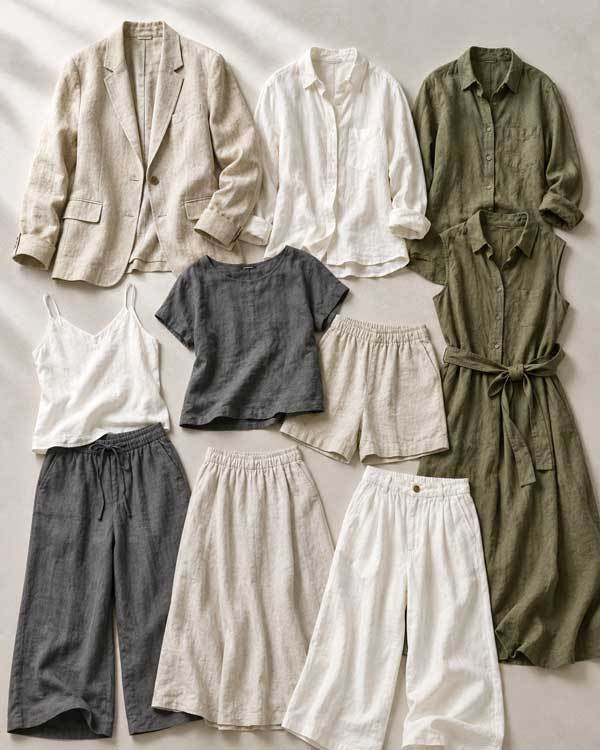
Explore 100% linen clothing designed to be worn and kept — breathable, garment-washed, and made to soften with time. Browse the collection or ask us anything about fabric, fit, or care before you buy.
View the linen collection · Contact us with questions