How to Choose Linen Clothing for Summer | KOSSR Buying Guide
- Share
- Issue Time
- Aug 24,2026
Summary
How to choose linen clothing for summer: fabric weight, weave openness, washed finish, fit and colour — with honest notes on wrinkles, sun protection and care, plus a before-you-buy checklist.
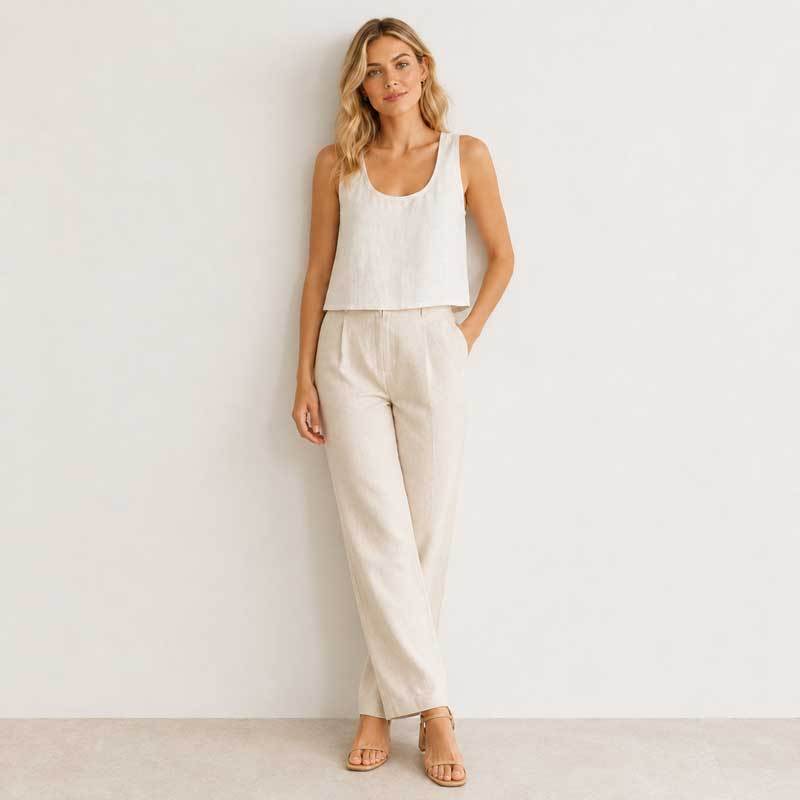
How to Choose Linen Clothing for Summer
Choosing summer linen comes down to five decisions — fabric weight, weave openness, finish, fit, and colour — and getting those right matters more than the brand or the price. Linen is the fabric people reach for when the temperature rises, but not all linen is the same, and the difference between a summer linen piece you love and one you abandon is decided before you buy: the weight of the cloth, how openly it is woven, whether it has been garment-washed, how it is cut, and which colour you choose for sun and heat. This guide walks through each decision in order, explains what to check on a product page or in a shop, adds the honest limits you should know before you pay — wrinkles, sun protection, shrinkage, and care — and closes with a checklist you can take shopping with you.
This is a practical buying guide, not a promotional list. It explains how to evaluate linen clothing for warm weather, with fabric facts consistent with how flax fibre and linen textiles are described across the industry. It is written for women in Europe and North America planning a summer wardrobe — city heat, holidays, and everything between.
Why Summer Changes How You Should Choose Linen
Linen is a year-round fabric, but the buying criteria shift in summer, and this is the first thing to understand. In cooler months you might prioritise weight, warmth, and layering. In summer, the same fabric is being asked to do a different job, and you should choose accordingly:
- Heat management. The cloth should let body heat escape and let air move against the skin. This is decided mainly by weight and weave — the first two decisions in this guide.
- Moisture handling. Summer means sweat, and a good summer fabric moves moisture away from the skin and dries fast. Linen's hollow flax fibres absorb moisture without feeling damp, which is why it outperforms cotton in humid conditions.
- Sun exposure. Summer means more skin on show for longer. Fabric weight, weave density, and colour all affect how much UV reaches the skin — worth thinking about even though clothing is rarely labelled with a certified UPF rating.
- Washing frequency. Summer linen gets washed more than any other season's clothing. The fabric needs to survive frequent gentle washing, dry reasonably fast, and not require constant ironing to look acceptable.
- Comfort in motion. Summer is movement — walking, carrying, sitting outside, moving between shade and sun. The cut matters as much as the cloth: a relaxed silhouette with air circulation will always feel cooler than a fitted one.
If you keep those five demands in mind, every decision below becomes easier, because each one maps to a specific summer problem. The fabric weight handles heat. The weave handles airflow. The finish handles comfort and care. The fit handles movement. The colour handles sun. Choose each one deliberately and the garment works as a system.
In short: a summer linen purchase is five small decisions, not one big one. This guide takes them in the order that matters most.
Decision 1 — Fabric Weight: The Most Useful Number on Any Product Page
Fabric weight, measured in grams per square metre (gsm), is the single most useful specification for choosing summer linen. It tells you more about how the garment will feel and behave than almost anything else, and it is usually listed on quality product pages — or available on request.
| Weight | Feel & Behaviour | Best For | Watch Out For |
|---|---|---|---|
| Very light (under approx. 120 gsm) | Feather-light and airy; can be semi-sheer | Loose summer tops, beach cover-ups, scarves | Sheerness, creasing more easily, less structure |
| Light (approx. 120–160 gsm) | Fine, breathable, quick-drying; softens fast | Summer blouses, lightweight dresses, shirts | May wrinkle visibly; needs a relaxed fit to drape well |
| Mid-weight (approx. 160–200 gsm) | Balanced body and drape; the classic shirt-and-dress weight | Everyday dresses, shirts, trousers, sets | Slightly warmer than light linen; still fully breathable |
| Heavyweight (approx. 200 gsm and above) | Substantial and structured; holds its shape strongly | Summer jackets, structured trousers, travel blazers | Warmest option; choose it for evening or air-conditioned settings |
There is no universally "right" weight — there is the right weight for your climate and your day. In a hot, dry summer, light cloth is your friend: it moves air, dries fast, and feels barely there. In humid heat, mid-weight linen often performs better because it holds its shape without clinging while still breathing. If a product page does not list gsm, ask the seller — a brand that knows its fabric will tell you. And if you are comparing, remember that the same design in two different weights is effectively two different garments.
Decision 2 — Weave and Openness: How Air Actually Moves
Weight tells you how much cloth there is; the weave tells you how the cloth breathes. Two fabrics of identical weight can perform very differently in summer heat because of how openly they are woven.
- Open plain weave. The classic linen structure — warp and weft crossing simply, with small visible gaps between yarns. Air passes through easily, which is why most summer linen is plain-weave. The openness also means the fabric softens and drapes quickly.
- Slubby or irregular yarns. Natural linen yarns are never perfectly even; the slight irregularities create micro-gaps and a textured surface that lifts the cloth slightly off the skin. This is a feature, not a flaw — it improves airflow and reduces the sticky feeling in humidity.
- Denser weaves. Tighter cloth — sometimes labelled "crisp" or "structured" — blocks more wind and sun but moves less air. It suits evenings, air-conditioned offices, or travellers who want a smarter look, but it will feel warmer on a 35 °C afternoon.
- Fancy weaves (herringbone, twill, jacquard). These add texture and structure at the cost of some airflow. They are beautiful choices for trousers and jackets, less ideal for the hottest days.
The practical check in a shop: hold the garment up to the light. If you can see pinpricks of light through the cloth, air will move through it. If the fabric reads opaque and dense, expect it to be warmer and more structured. For a deeper look at how the fibre itself moves air, our is linen fabric breathable explainer covers the fibre-level science.
Decision 3 — Washed or Unwashed: The Finish Decision
The finish — whether the fabric has been garment-washed in production — is the biggest single factor in how summer linen feels on day one and how it behaves in the wash. It is also the easiest decision to make once you know what to look for.
| Comparison | Garment-Washed Linen | Unwashed Linen |
|---|---|---|
| Comfort at first wear | Soft, relaxed, comfortable immediately — ready to wear out of the bag | Crisp and stiff until the first several washes; needs a break-in period |
| Shrinkage | Pre-shrunk in production; minimal further shrinkage | May shrink roughly 3–5% in the first wash — account for it when choosing size |
| Wrinkle character | Softer creases, a relaxed lived-in look from the start | Crisper creases; wrinkles more visibly until the fabric softens |
| Care after purchase | Straightforward — wash gently and wear; low maintenance | Requires the first washes to be done thoughtfully, with size and care in mind |
| Best for | Most summer shoppers: immediate comfort, travel, gifts, busy routines | People who love the crisp start and enjoy watching fabric break in |
For summer specifically, garment-washed linen has a practical advantage beyond comfort: it arrives pre-shrunk, so the fit you buy is the fit you keep. With unwashed linen, the first wash can change the size — which matters when you are buying for a hot-weather holiday and need the garment to work from day one. Most of the linen sold today for everyday summer wear is garment-washed for exactly this reason. If you do buy unwashed linen, our guide to whether linen shrinks after washing tells you exactly what to expect.
Decision 4 — Fit and Silhouette: Cut Is a Cooling Feature
How a linen garment is cut affects how cool it feels almost as much as the fabric does. A fitted linen dress in light cloth can feel warmer than a relaxed linen shirt in mid-weight cloth, because trapped air is what makes the difference. In summer, choose cut deliberately:
- Relaxed and loose where it matters. Sleeves, arms, and the torso benefit from ease. Air circulating between cloth and skin is the entire point of summer linen — a loose sleeve moves air that a tight one simply traps.
- Avoid cling. Linen has no stretch, and a cut that clings in humidity defeats its moisture management. If the fabric sits against damp skin, it feels sticky even though the fibre is doing its job.
- Consider the garment type. Dresses and shirt dresses give the most airflow per garment. Tops and loose shirts are close behind. Trousers are cooler with a wider leg — the leg opening lets air rise through the cloth. Sets give you both pieces working together.
- Check the size guidance. Linen sizing varies, and the relaxed fit is intentional. Measure yourself against the size chart rather than guessing from a size label, and if you are between sizes, consider the cut: looser styles can be sized down, fitted styles may need sizing up for summer comfort.
If you are unsure where to start, the category pages give a good sense of what each cut looks like: linen dresses, linen tops, linen bottoms, and linen sets each suit a different summer situation — and mixing a couple of pieces usually covers more of the season than one statement garment.
Decision 5 — Colour, Sun, and the Honest UPF Story
Colour in summer linen is partly style and partly physics. Light colours reflect sunlight; dark colours absorb it. On a hot, sunny day, a white or sand linen top will feel cooler on the skin than the same top in black or navy — the difference is real, though modest once the fabric is light and open.
On sun protection, be honest about what linen can and cannot do. A tightly woven, mid-weight linen typically blocks a meaningful share of UV — industry descriptions often cite around UPF 20 or better for dense cloth — which is genuinely useful protection compared with very light, sheer fabrics. But linen sold as clothing is rarely tested and certified with a UPF rating, so treat "UPF 20+" as a reasonable rule of thumb for tightly woven cloth, not a guarantee. Three practical rules follow:
- Dense beats sheer. A tight mid-weight weave protects more than an open light one. If sun protection matters for a beach cover-up, choose denser cloth.
- Coverage beats fabric alone. A long-sleeved light linen shirt protects more skin than a short-sleeved heavy one. On days of intense sun, coverage is the stronger lever.
- Wet fabric protects less. Wet cloth lets more UV through than dry cloth, so do not rely on a damp linen cover-up as your only sun defence.
None of this makes linen a "sun-protective" product in the certified sense — it is a sensible, breathable summer layer that happens to offer useful UV resistance when densely woven. Choose colour for heat, density for sun, and keep sunscreen for the rest.
Wrinkles: Choose With Your Eyes Open
Every honest linen buying guide has to address wrinkles, because linen wrinkles — it is a property of the flax fibre, and no finish removes it permanently. The useful part is knowing what the wrinkles will be like and what you can do about them:
- Wrinkles are soft, not sharp. Garment-washed linen creases gently and the creases fall out more easily than crisp unwashed linen. Most summer linen looks intentionally relaxed rather than crumpled.
- Damp ironing or steaming fixes them fast. Linen is the easiest fabric to press — a quick steam or an iron over slightly damp cloth restores a crisp finish in minutes. For the routine, our how to remove wrinkles from linen guide walks through it step by step.
- Packing trick. Rolling linen instead of folding, and hanging it in the bathroom while you shower, relaxes most travel wrinkles without an iron.
- Accept the character. A little linen wrinkle is part of the fabric's identity. If you want zero wrinkles, linen is not the fabric for you — but the relaxed look is exactly what most summer shoppers are buying.
Choose linen knowing it will wrinkle, choose the washed version if you want softer creases, and you will never be surprised by it. The fabric's breathability and comfort are the trade for its texture — most people consider it a good one.
Care That Keeps Summer Linen Alive
Summer linen is washed more than any other seasonal fabric, and how you care for it decides whether it improves with the season or fades early. The good news: the care routine is short, and it protects both the fabric and your budget:
- Wash at 30 °C on a gentle cycle, or hand wash. Cool water cleans summer linen without shrinking or stiffening it. Hot water is the main risk factor for shrinkage and fibre damage.
- Use a mild liquid detergent, sparingly. Harsh detergents and bleach strip flax fibres and can make the fabric feel rougher over time.
- Skip fabric softener. It coats the fibres and reduces the breathability and absorbency that make linen valuable in summer. Linen softens naturally with washing and wear.
- Dry on a line, or tumble on low briefly. Line drying is ideal for summer linen. If you use a dryer, keep it short and low — never high heat.
- Iron damp or steam if you want a crisp finish. Pressing linen while slightly damp gives the smoothest result and relaxes the weave into a better drape.
Frequent summer washing is exactly what linen handles well — it softens and improves with every gentle cycle. The full step-by-step routine is in our how to wash linen clothing guide, including what to do about stains and hard water.
One summer-specific note: sweaty days mean more washing, and more washing means more opportunity for the fabric to soften — which is exactly what you want. A linen garment that starts the season slightly crisp often ends it at its most comfortable, so the care routine is not just maintenance; it is the finishing process the fabric would otherwise do slowly on its own.
Summer rule of thumb: if you wash linen the way you would wash a delicate blouse — cool, gentle, mild — it will look better at the end of August than it did in June.
Budget and Quality: What You Are Actually Paying For
Linen prices range widely, and it helps to know what a higher price is actually buying. In our experience across linen clothing, the price signal is usually built from four things:
- Fibre purity and quality. 100% linen costs more than a linen blend, and longer, finer flax fibres make smoother, more durable cloth. A product labelled "100% linen" with a stated weight is usually more transparent — and more predictable — than a vague "linen fabric" label.
- Weight and density. More cloth per square metre costs more. A 180 gsm linen shirt has more substance than a 130 gsm one, and the difference is visible in how it drapes and how long it lasts.
- Finish. Garment washing adds a production step, which is part of why washed linen can cost a little more — you are paying for the pre-shrinking and the immediate comfort.
- Construction. Look at seams, hems, and buttons. Clean, even seams, finished hems, and well-attached buttons are the quickest quality checks that have nothing to do with the fabric at all.
Two honest caveats. First, price is not quality: a cheap, loosely woven linen can feel soft immediately and wear out fast, while a crisp, dense one softens into a better fabric. Second, blends are not worse — a small cotton or viscose content adds softness and reduces wrinkles at the cost of some of linen's breathability and durability. For the full quality picture, our guide to whether linen clothing is good quality explains how to tell what you are actually getting.
The Before-You-Buy Summer Linen Checklist
Bring this checklist with you — to the shop or to the product page — and you will cover every decision in this guide in under a minute:
- Weight (gsm). Is the weight listed? Does it match the garment's job — light for hot dry days, mid-weight for everyday, heavy only for evening or structured pieces?
- Weave. Hold it to the light (or zoom the photo). Can you see gaps between yarns? Open = airy; dense = structured and warmer.
- Finish. Garment-washed? Then it is soft, pre-shrunk, and ready from day one. Unwashed? Budget for a break-in period and possible first-wash shrinkage.
- Fit. Is the cut relaxed enough for air circulation? Check the size chart against your measurements, and decide between sizes based on the cut.
- Colour and sun. Light colours for hot, sunny days; denser weave if sun protection matters; coverage over fabric alone in intense sun.
- Wrinkle expectations. You are buying linen — you are buying wrinkles. Washed linen wrinkles softly; unwashed wrinkles crisply.
- Care label. Can you wash it at 30 °C? Will it survive your summer washing routine? If the care label demands dry cleaning, think twice about an everyday summer piece.
- Construction. Even seams, finished hems, secure buttons. The fabric may be beautiful; the garment is only as good as its make.
If a product answers all eight, it will almost certainly earn its place in your summer rotation. If it answers most of them, you know exactly what you are trading off — and that knowledge is worth more than a discounted price.
Quick Answers: Summer Linen Questions
Is linen actually cooler than cotton in summer?
In most summer conditions, yes. Linen's hollow flax fibres move air and release heat more effectively than cotton, and it absorbs moisture without feeling damp — which is why it stays comfortable in both dry and humid heat. Cotton is soft and familiar, but linen manages heat and humidity better overall. Our is linen good for hot weather guide goes into the comparison in detail.
Should I size up in linen?
It depends on the cut, not the fabric. Relaxed linen styles are designed with ease and can be bought in your normal size or sized down. Fitted styles may need sizing up for summer comfort. Always check the size chart against your measurements — and remember that garment-washed linen is pre-shrunk, while unwashed linen may shrink 3–5% in the first wash.
How many linen pieces do I need for summer?
Three to five well-chosen pieces cover most summer routines: one dress or shirt dress, one or two tops, one pair of trousers or shorts, and one set for travel or easy days. Choose pieces that mix, in colours that work together, and you will reach for them all season. If you want a structured approach, our how to build a linen capsule wardrobe guide is the step-by-step version.
Is linen good for travel in summer?
Yes — light and mid-weight linen packs small, dries quickly, and looks intentional even after a day in a suitcase. Garment-washed linen is the best travel choice because it is soft and pre-shrunk from day one. For packing and outfit planning, our best linen clothing for travel guide covers the practical details.
Putting It All Together: Your Summer Linen Strategy
The five decisions work together, and most successful summer linen wardrobes follow the same pattern. Start with a mid-weight, garment-washed piece in a light colour for everyday wear — a dress or a shirt that covers most situations. Add a lighter-weight piece for the hottest days, and one relaxed, open-weave piece for humid weather where airflow matters most. Choose one or two colours that mix, accept the wrinkles, wash gently, and the wardrobe will carry you through the season.
If you are travelling, add a set — matching pieces pack small and give you two outfits from one bag. If you are building slowly, start with the piece you will wear most, and let the rest follow. Linen rewards this approach: the fabric improves with wear, so a small, well-chosen collection outperforms a large, impulsive one.
And when a piece does wear out or stops fitting, remember that linen is one of the most recyclable fabrics in your wardrobe — flax fibre can be respun or composted at the end of its life. Choosing well and wearing long is the most sustainable part of any summer wardrobe, and linen makes that easier than most fabrics.
The fabric itself does the heavy lifting. Your job is simply to choose the right cloth, the right finish, and the right cut for your summer — and the checklist above makes that a ten-minute decision instead of a gamble.
Choose Linen That Matches Your Summer
Weight, weave, finish, fit, and colour — decide those five things and you will buy summer linen you actually wear. KOSSR's range is garment-washed and offered in light to mid-weight cloth, so the pieces arrive soft, pre-shrunk, and ready for the season. Browse the collection, or ask us to help you match the right weight and cut to your climate and routine.