Is Linen a Renewable Material? | KOSSR Sustainability Guide
- Share
- Issue Time
- Aug 22,2026
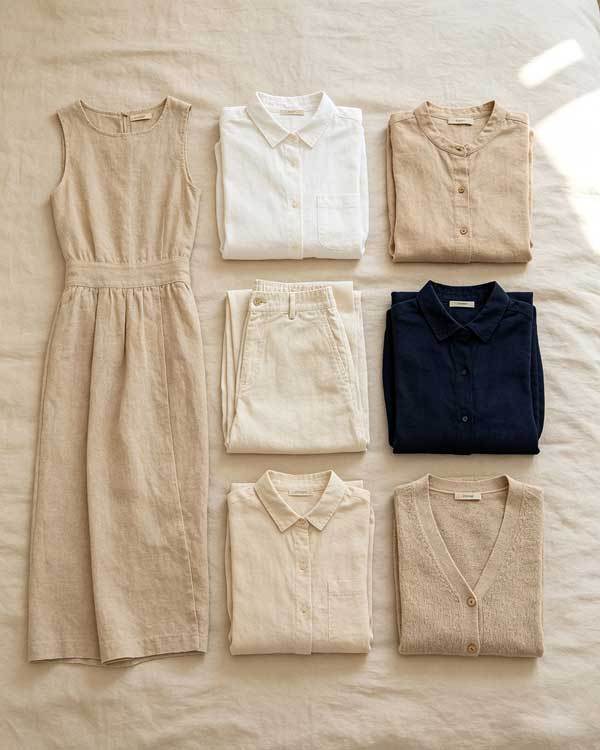
Yes — linen is a renewable material because it is made from flax, a plant that is sown, harvested, and re-planted every year. A flax crop completes its full cycle in about 100 days, it regenerates naturally through agriculture rather than being mined or extracted, and at the end of its life pure linen returns to the soil as biodegradable plant fibre. This puts linen in a different resource category from synthetic fibres such as polyester and nylon, which are manufactured from fossil fuels that took millions of years to form and cannot be re-grown. Renewable does not mean zero-impact, and this guide explains exactly what renewable means for flax, how linen compares with cotton and other plant fibres, where the limits are, and what to check when you buy so the claim is real. Written for shoppers in Europe and North America who are choosing between natural and synthetic fabrics and want to understand what "renewable" actually means on a label. The facts below describe flax as it is grown and processed across the industry, with figures drawn from commonly cited agricultural and textile sources rather than invented for this page. Where a number varies by region or method, the range is stated. Flax is an annual crop: planted in spring, harvested in summer, and re-planted the following year. The cycle repeats indefinitely without depleting the plant itself. Unlike polyester or nylon, linen does not depend on oil, gas, or coal extraction. Its raw material is sunlight, water, and soil — resources that renew every season. Flax is renewable, but growing and processing it still use land, water, energy, and transport. Renewable describes the resource base, not the whole footprint. A material is renewable when its source can be regenerated within a human timescale — typically within a single growing season or a few years. Renewable resources include crops, forests, and animal products. Non-renewable resources, by contrast, exist in a fixed quantity: once extracted and used, they are gone for practical purposes. Fossil fuels are the defining example, because petroleum, coal, and natural gas formed over geological time and cannot be re-created at the rate we consume them. When this definition is applied to clothing, the fibre world splits into two clear groups. Plant and animal fibres — flax, cotton, hemp, wool, silk, bamboo — come from living systems that regenerate. Synthetic fibres — polyester, nylon, acrylic, elastane — come almost entirely from petroleum feedstocks. A garment made from 100% linen is therefore made from a renewable raw material, while a garment made from polyester is made from a finite one, regardless of how it is marketed. This is the core answer to the question: linen is renewable because flax is a plant that regrows every year. The rest of this guide explains how that renewability works in practice, how it compares with other fibres, and the honest boundaries of the claim. Linen is the textile made from the flax plant (Linum usitatissimum). Flax is an annual crop, which means its entire life cycle — from seed to harvest — happens within one growing season. This single fact is the foundation of linen's renewability: This is why "linen is renewable" is not a marketing slogan but a botanical and agricultural fact. The plant that becomes linen is grown anew every season, in quantities that expand or contract with demand, without drawing down a finite stock. Linen is not the only renewable fibre, and "renewable" alone does not rank fibres against each other. The table below compares flax with other common renewable fibres on the traits that matter most — renewability speed, land use, water, and durability: What the table shows is that flax is one of the fastest-regenerating renewable fibres — its full cycle fits inside a single summer — and one of the least demanding at the farming stage. It also has an unusually strong claim to "renewable in practice" because the whole plant is used: long fibres for clothing, short fibres for coarser textiles, seeds for food and oil, and shives for building materials. A field of flax does not produce one renewable product; it produces several. The clearest way to see why renewable matters is to compare linen with the fibres that dominate fast fashion. Polyester, nylon, and acrylic are produced from petroleum — the same finite feedstock as fuel. Producing them is energy-intensive and chemical-intensive, and the raw material itself is non-renewable: every kilogram of polyester uses fossil resources that will not regenerate on any human timescale. None of this makes synthetics useless — they have real roles in sportswear, outerwear, and technical textiles where stretch, waterproofing, or extreme durability are required. But it does mean that for everyday clothing, choosing linen instead of polyester replaces a finite resource with a renewable one, without giving up comfort or longevity. Renewability is easiest to see at the farming stage, but the concept runs through the whole life of a linen garment. Following a linen shirt from field to wardrobe shows how the renewable story holds up at every step: The key phrase in that cycle is "100% linen." Blends change the end-of-life story, and heavily finished or coated fabrics behave differently from plain woven linen. Renewability is a property of the fibre — and it is fully realised only when the fibre is pure. Because "sustainable" and "renewable" are used loosely across the industry, a few checks let you verify a claim instead of trusting it. These are the signals that mean a linen product's renewability is real and traceable: At KOSSR we apply this same standard to our own range: every product page states the fibre composition, the fabric weight, and whether the style is pre-washed, and our linen is made from 100% European flax. You can see this information in practice across the KOSSR linen collection. A responsible answer to "is linen renewable?" also has to say what the word does not promise. Renewable describes the resource base; it does not erase the rest of the footprint: The fair conclusion: linen is genuinely renewable, and it is one of the few common fibres that is renewable at the source and biodegradable at the end of life. The remaining impacts come from processing, transport, and use — which is true of every fabric — and linen's renewable foundation is strong enough to survive that honest accounting. [IMAGE_PLACEHOLDER] img prompt: A woman holding a linen shirt and reading its composition label in a bright clothing store, natural daylight, candid lifestyle photography For a shopper, the practical translation of all this is simple. When a label says linen, ask two questions: is it 100% linen, and can the seller show where the flax came from? If both answers are yes, you are buying a garment made from a material that regenerates every year, replaces a finite petroleum-based alternative, and returns to the earth when its useful life is over. If the answer to the first question is no — if it is a blend with polyester — the renewable story weakens in exact proportion to the synthetic content. Choosing renewable fibres is one part of a larger picture that also includes durability, care, and how long a garment stays in rotation. The most renewable fibre in the world does not help if the garment is worn once. That is why linen pairs so naturally with a slower approach to fashion — the fabric rewards the same behaviour that makes renewable materials valuable. If you want to explore the wider sustainability story of flax, our guide to what makes flax a sustainable plant covers water, chemicals, soil, and waste in depth, and our article on linen and slow fashion explains how renewable materials fit into a slower wardrobe. Yes — linen is the fabric made from the flax plant (Linum usitatissimum). "Flax" refers to the plant and its fibre; "linen" refers to the yarn, fabric, and finished products made from that fibre. They describe the same renewable material at different stages. Both are renewable, because both are annual crops. Flax generally needs less water and fewer chemicals than cotton at the farming stage, and its fibre is stronger, so a well-made linen garment can last longer — which stretches the renewable resource across more wears. Cotton is renewable; flax is typically the more resource-efficient of the two. Only partially. The renewable share of a blend is proportional to the natural-fibre content. A 55% linen, 45% polyester garment is about half renewable, and the polyester half will not biodegrade and will shed microplastics. For full renewability and biodegradability, choose 100% linen. No. Renewable describes where a material comes from — flax regrows every year. Sustainable is a broader judgement that also includes water, chemicals, energy, transport, labour, durability, and end of life. Linen scores well on many of those measures, but "renewable" alone does not make a garment sustainable. Roughly 90 to 120 days from sowing to harvest, depending on climate and region. In Western Europe, flax is typically sown in spring and harvested in summer, and the field then rotates to other crops — a cycle that repeats every year without depleting the plant. In principle, yes — 100% linen is biodegradable plant fibre. In practice, home composting of a woven garment is slow, and dyes, finishes, and labels can interfere. The realistic end-of-life options are reuse, textile recycling, or industrial composting; what matters is that pure linen will break down naturally rather than persisting like plastic. Linen is renewable at the source and biodegradable at the end — but the benefit only compounds when the garment is worn for years. Browse the KOSSR linen collection to see 100% European flax garments with composition, weight, and care details stated on every page, or talk to our team if you have questions about sourcing, certification, or blends.Is Linen a Renewable Material?
What "Renewable" Actually Means for a Fabric
Where Linen's Renewability Comes From
Flax vs Other Renewable Fibres: A Fair Comparison
Fibre
Renewable?
Regrowth cycle
Water need at farm stage
Typical garment life
Flax (linen)
Yes
~100 days, annual
Mostly rain-fed; low
Years to a decade with care
Cotton
Yes
~5–7 months, annual
High; often irrigated
Months to years depending on quality
Hemp
Yes
~100 days, annual
Low; largely rain-fed
Very long; strong fibre
Bamboo (as fibre)
Yes (plant)
3–5 years to maturity, then regrows
Low to moderate
Depends heavily on processing
Wool
Yes (animal)
Annual shearing cycle
Low (grazing)
Years to decades
Polyester
No
Not applicable
Low on the farm — but made from petroleum
Long, but non-renewable feedstock
Linen vs Synthetic Fibres: The Non-Renewable Comparison
Renewability Across the Full Life Cycle
Certifications and How to Verify a Renewable Claim
The Honest Limits: What Renewable Does Not Mean
What This Means When You Buy
Frequently Asked Questions About Linen and Renewability
Is flax the same as linen?
Is linen more renewable than cotton?
Is a linen–polyester blend still renewable?
Does renewable mean the same as sustainable?
How long does a flax crop take to grow?
Can I compost linen at home?
Choose a Material That Regrows