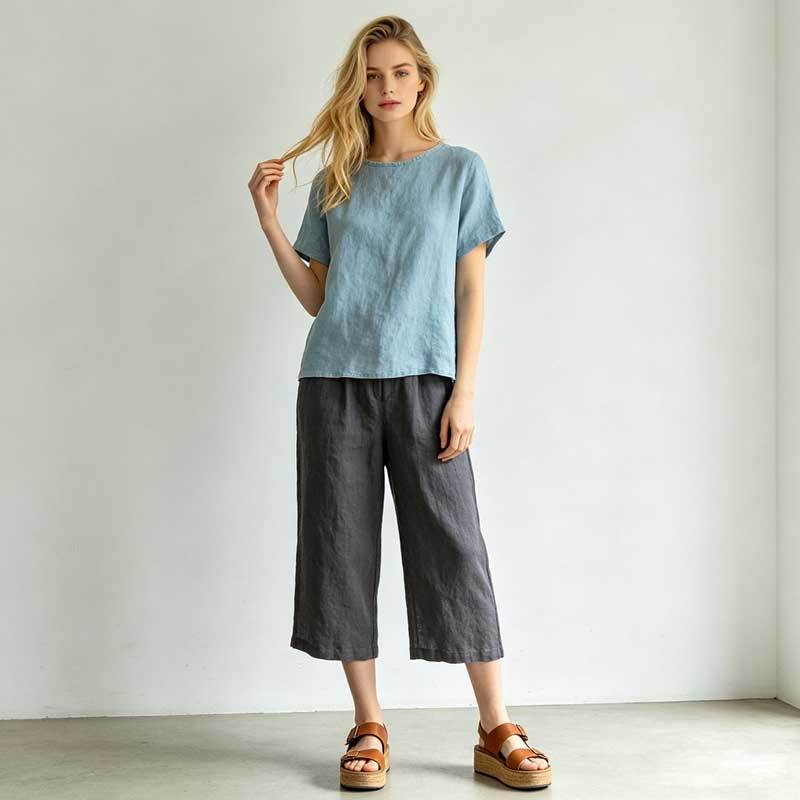
Linen Clothing FAQ · Budget College Wardrobe
How Do I Build a College Wardrobe with Linen on a Budget?
The direct answer: yes — you can build a functional linen wardrobe on a student budget by starting with a five-piece core in one colour story, rather than buying a full range at once. A realistic first kit is one linen button-up shirt, one pair of linen pants, one pair of linen shorts, one tank or camisole, and one two-piece set or dress. Bought in the same neutral family — natural, sand, olive or ink — those five items combine into well over a dozen outfits. Every piece from KOSSR is 100% European flax, garment-washed so it arrives soft and pre-shrunk, and machine-washable on a gentle 30°C cycle, which keeps the running cost low for the years you own it.
This answer is built around the real campus constraints: a limited budget, shared laundry machines, a small closet, and a schedule that needs the same clothes to work for lectures, presentations and weekends. It avoids the two mistakes students most often make — buying ten cheap pieces that do not match, or buying one expensive piece that does not fit the rest of the wardrobe.
The Five-Piece Core: What to Buy First, and Why
The order below is not random. It starts with the item that creates the most outfits per dollar and adds pieces that multiply, not duplicate, what you already own. Each line explains the job the piece does in a student week.
| # |
Piece |
Its job in the student week |
| 1 |
Linen button-up shirt |
Lectures, presentations, weekend wear; tucks, untucks, ties, layers — the highest outfits-per-item ratio in the kit |
| 2 |
Linen pants |
The "nicer than jeans" option that breathes in over-air-conditioned rooms and works for club events |
| 3 |
Linen shorts |
Warm-September bridge piece and travel favourite; covers the first month of the semester |
| 4 |
Linen tank or camisole |
Cheap layering base that multiplies every outfit; worn alone on warm days or under layers later |
| 5 |
Two-piece set (or shirt dress) |
One hanger, instant outfit for busy mornings, presentations and weekend plans |
Buying these five from KOSSR's women's sets, tops and bottoms — or the men's shirt, pants and shorts — gives you a wardrobe that actually works together, which is the real definition of budget shopping.
The Budget Rules That Keep the Kit Affordable
Building a linen wardrobe cheaply is less about hunting for discounts and more about five structural rules that stop money leaking out of a small clothing budget.
- One colour story, everything matches. When all five pieces sit in the same neutral family, every top pairs with every bottom. Five items produce twelve to fifteen outfits instead of three or four — that is the cheapest wardrobe upgrade available.
- Buy for the year, not the season. Campus weather runs hot in September and cold by November. Choose pieces that layer (shirt, pants, set) over pieces that only work in one temperature band, and your five items stay active for the whole semester rather than dying in October.
- Pay for fabric and fit, save on everything else. A garment-washed 100% flax piece at a fair price outlasts a cheaper synthetic blend that needs replacing. What you can skip is trend colours and novelty silhouettes you will tire of.
- Count cost per wear, not price per tag. A linen shirt worn once a week for three years is roughly 90 wears. Divide the price by 90 and compare that with a fast-fashion top worn a dozen times — the maths often surprises people. Our cost-per-wear breakdown goes through the full calculation.
- Protect the investment with cheap habits. Gentle 30°C washes, line drying and hanging overnight cost nothing but extend the life of every piece significantly.
Student reality check: the goal of this system is that you never need "a special outfit". When the five pieces all match each other and layer across temperatures, the same shirt that worked for a Tuesday lecture also works for the Thursday presentation and the Saturday outing — and you have not bought a single one-event item.
Outfit Math: What Five Pieces Actually Give You
Here is the concrete combination count, so the "five items, many outfits" claim is not vague. Assume the kit contains: shirt (S), pants (P), shorts (H), tank (T), and a two-piece set (set top ST + set bottom SB, counted as one purchase but two garments).
- Full outfits from matching separates: S+P, S+H, T+P, T+H, ST+P, ST+H, SB+S, SB+T — eight combinations before any layering.
- Layered looks: S over T (with P or H), set pieces over the tank, the shirt open over the set top — five more.
- Outfit extension: each of those looks changes character with a hoodie, jacket or cardigan from your existing wardrobe.
That is roughly thirteen base looks from five purchases, and double that when you add one layer. A two-piece linen set specifically earns its place here because its two garments can split and recombine with everything else, not just work as a single unit.
For the visual side of building a small wardrobe that still feels varied, our dress-up-or-down styling guide shows how the same neutral pieces shift between casual and presentable, and this guide covers the occasions where linen reads more formal.
Men's Version: The Same Budget System, Different Silhouettes
The male equivalent follows identical rules with a slightly different five: one linen shirt, one pair of men's linen pants, one pair of men's linen shorts, one plain white or natural tee from your existing wardrobe as the layer base, and one men's linen set for travel and presentation days.
The combinations work the same way: the shirt and pants alone give you four looks (shirt with shorts, shirt with pants, pants with tee, all three rotated with the set), and the neutral palette keeps every layer you already own in play. Fit matters more for men's linen than any other factor — a shirt with the right shoulder and hem placement looks deliberate, while an oversized one reads as borrowed. Our men's linen shirt fit guide explains the measurements to check before you buy, which prevents the most common sizing mistake.
Where to Spend the Least (and Where Not to Save)
Not every item in the kit deserves the same budget share. This table is the honest allocation guide for a student's first linen purchase round.
| Item |
Budget share |
Reason |
| Button-up shirt |
Largest share |
Most outfits per item; the fit and fabric quality here carry the whole kit |
| Linen pants |
Second largest |
Worn through all three temperature bands; quality prevents sagging and wear |
| Two-piece set |
Mid share |
High impact for busy days, but optional in year one if funds are tight |
| Shorts |
Lower share |
Seasonal for 4–6 weeks; fit matters, exotic fabric finishes do not |
| Tank / camisole |
Lowest share |
A layer base; simple construction means a fair price buys plenty of quality |
If the budget only stretches to two items this month, buy the button-up and the pants. That pair alone creates four looks and covers lectures, presentations and weekends — the best two-item start in the range.
Keeping a Budget Linen Wardrobe Alive: Care That Costs Nothing
A budget wardrobe's real enemy is not the purchase price — it is clothes that wear out, shrink or lose shape in the first year. The care routine below protects your investment with zero added cost.
- Wash at 30°C (86°F) on gentle. Hot water causes the fibre stress and shrinkage that kills budget wardrobes. Cold-to-cool washing is free and is the single most protective habit.
- Line dry instead of machine drying. Hang linen and it relaxes into fewer wrinkles; a dryer at high heat is the fastest way to shorten its life. If you must use a dryer, low heat and remove while slightly damp.
- Hang overnight, iron rarely. Most creases from a day of sitting in lectures fall out overnight on a hanger. Save the iron or steamer for presentation days.
- Buy once, repair cheaply. A loose button re-sewn in five minutes beats replacing a shirt. Small repairs on quality fabric are almost always worth it.
Full instructions for the wash cycle, drying and wrinkle removal are in our linen washing guide and the wrinkle removal guide. Both assume normal student equipment — a washing machine and a hanger — not a professional laundry setup.
Quality note: "budget" should describe the size of the starting kit, not the quality of the fabric. A garment-washed 100% flax piece cared for properly can outlive several cheaper substitutes, which is why the five-piece system is the real money-saver — not hunting for the lowest price on the most items. Our linen quality guide explains the fabric markers to check.
When Not to Buy Linen (The Honest Limits)
Being on a budget means being honest about what not to spend on. Linen is not the right first purchase in three situations, and it helps to name them.
- If your campus sits in a very cold climate and you rarely layer. Linen is a base and mid layer once temperatures drop below about 10°C (50°F). If you will not wear layers, a warm-weather linen kit will sit idle for half the year.
- If you need strictly formal clothing regularly. For formal events with rigid dress codes, linen's relaxed texture may not meet the bar. It excels at smart-casual and semi-formal, not black-tie.
- If you hate visible wrinkles. Garment-washed linen wrinkles less than raw linen, but it still wrinkles. If creases genuinely bother you, spend the budget elsewhere rather than fighting the fabric all year.
For students in warm or four-season climates who layer — which covers most of the US and Europe — the honest verdict is that linen is one of the best budget fabrics you can build on, precisely because it lasts.
When to Buy: Timing That Stretches a Student Budget
For a student, when you buy matters almost as much as what you buy. The two windows that genuinely help a limited budget are the back-to-school period (August through early September, when seasonal stock is complete) and the end-of-season transition (late September into October for summer-weight linen). Buying in the first window gives you the full size run and colour choice for the warm weeks of the semester; buying in the second can mean deeper discounts, but with the honest trade-off that popular sizes and neutral colours run out first.
Three timing rules keep the kit affordable without gambling on stock:
- Buy the warm-weather essentials (shorts, tank) first. They have the shortest usable season, so buy them while the full size range is available and the weather still justifies them.
- Buy the year-round pieces (shirt, pants) mid-season. These work in every temperature band with layering, so you are not racing the weather — and you can wait for a better moment.
- Never buy a full ten-item wardrobe in one month. Spreading purchases across the semester means each buy is better informed by what you actually wore, and the budget breathes.
One more honest point about timing: waiting for a "perfect" sale often costs more than it saves. If the neutral colour you planned around is out of stock in your size when the discount arrives, you either buy a colour that breaks the matching system or skip the deal entirely. The matching system only works when the core pieces exist in the planned colours — so buy the core at full price if needed, and let discounts apply to the optional fifth and sixth pieces instead.
Sizing Without a Dressing Room: Avoiding the Costliest Student Mistake
The most expensive mistake in a budget linen wardrobe is not the fabric choice — it is buying the wrong size and paying return shipping or living with a piece that never gets worn. Since most students buy online, size selection deserves its own budget rule: measure, do not guess.
- Measure a similar garment you already own and love. Lay it flat, measure chest, shoulder, length and sleeve, and compare those numbers with the size chart on the product page. This beats guessing from a letter size every time.
- When between sizes, size up for linen. Linen is meant to be worn with a little ease; a slightly roomier fit drapes better and leaves room for the natural movement of a campus day. Shrinkage is controlled by the garment-washing process, but a relaxed fit remains the safer choice for a first buy.
- Check the fit guidance per garment type. A shirt, a pair of pants and a dress each have their own reference points. Our dress sizing guide and the men's shirt fit guide walk through the exact measurements to check before checkout.
The two-item rule for uncertain first-timers: if you have never worn linen and are unsure about fit or feel, do not buy the whole five-piece kit at once. Order the button-up and the pants first, wear them for two weeks, and use that experience to size the remaining pieces correctly. Two right-sized items beat five wrong-sized ones in every possible budget comparison.
Related Questions
Is linen clothing worth buying? — For cost per wear, usually yes: a quality garment-washed linen piece worn across years can cost less per wear than fast fashion replaced every season. See the full breakdown.
Is linen clothing good quality? — Quality varies by weight, weave and finishing. Garment-washed 100% European flax with a mid-weight weave is the marker to look for. Read the quality guide.
How do I choose the right size when buying online? — Measure a similar shirt or pair of pants you already own and compare with the size chart; when between sizes, size up for a relaxed linen fit. The sizing guide explains the method.
Can I wear linen in the fall? — Yes, with layering: linen works on its own above about 15°C and layers under jackets down to near freezing. See the fall linen guide.