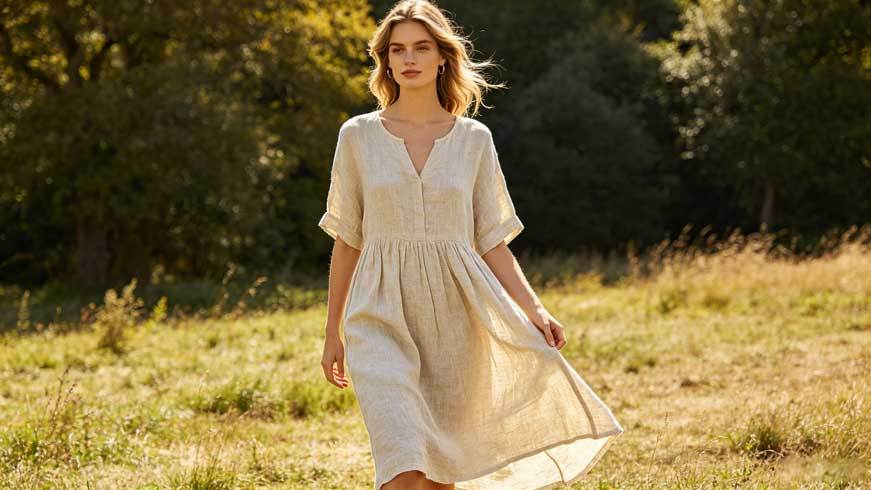
How to Build a More Natural Wardrobe With Linen
To build a more natural wardrobe with linen, start with versatile pieces you can wear often: a relaxed linen shirt, a linen dress, linen pants, and a matching linen set. Choose breathable fabrics, easy silhouettes, and colors that mix naturally with what you already own. The goal is not to create a perfect all-linen closet, but to build a wardrobe that feels softer, more comfortable, more intentional, and more useful in everyday life.
A natural wardrobe is about how clothes feel as much as how they look. Linen supports this because it feels breathable in warm weather, softens with wear, and brings visual texture without needing heavy decoration. It works beautifully for people who want a closet that feels calm, wearable, and connected to real daily routines rather than constant fashion pressure.
What Is a Natural Wardrobe?
A natural wardrobe is a closet built around comfort, natural fibers, timeless shapes, thoughtful colors, and pieces that feel good to wear repeatedly. It is not only about choosing linen, cotton, wool, silk, or other natural materials. It is also about choosing clothing that supports the life you actually live. A natural wardrobe should feel easy in the morning, comfortable through the day, and aligned with your personal rhythm.
Many people begin building a natural wardrobe because they want to move away from synthetic-heavy clothing, trend-driven shopping, or garments that look good online but feel uncomfortable in real life. A more natural wardrobe prioritizes touch, breathability, movement, and longevity. It often uses calmer colors, softer textures, and silhouettes that do not fight the body.
Linen fits this wardrobe philosophy beautifully because it is practical and emotional at the same time. It keeps you cooler in warm weather, but it also changes the mood of an outfit. Linen makes clothing feel more relaxed, more grounded, and more personal.
Core idea: A natural wardrobe is not about owning only natural fabrics. It is about choosing pieces that feel better, last longer, and make daily dressing simpler.
Why Linen Is a Strong Foundation for a Natural Wardrobe
Linen is one of the best starting points for a natural wardrobe because it works across several needs at once. It is breathable for summer, textured enough to make simple outfits interesting, durable enough for repeated wear, and timeless enough to avoid feeling outdated quickly. Few fabrics combine these qualities so naturally.
Linen is also forgiving in a lifestyle sense. It does not need to look perfectly smooth to look good. Its soft wrinkles and relaxed texture are part of its charm. This makes linen ideal for people who want a wardrobe that feels lived-in rather than overly controlled. A linen dress worn throughout the day may crease, but those creases often make the garment feel more authentic, not less beautiful.
Another reason linen is useful is that it pairs easily with other natural materials. It works with cotton tanks, leather sandals, straw bags, wool cardigans, silk scarves, and simple knitwear. This makes it easy to integrate linen gradually instead of rebuilding your closet from scratch.
Step 1: Start With Your Lifestyle, Not the Trend
The first step in building a natural wardrobe with linen is to understand your real lifestyle. Do you need clothes for warm city days, travel, casual workwear, weekends at home, beach holidays, or everyday errands? The best linen wardrobe is not the one with the most beautiful pieces in theory. It is the one that supports your actual routines.
If you travel often, linen sets, shirt dresses, and relaxed shirts may offer the most value. If your everyday life is more city-based, linen pants, structured shirts, and midi dresses may be stronger. If you live somewhere hot, sleeveless dresses, loose tops, and linen shorts may become essential. If your wardrobe needs to feel polished but comfortable, neutral linen pieces in clean silhouettes are a smart direction.
A natural wardrobe should reduce friction. Before buying linen, ask whether the piece solves a real dressing need. If it does, it is much more likely to become part of your life.
Step 2: Choose Core Linen Pieces First
A natural linen wardrobe works best when it begins with core pieces rather than statement items. These are the garments you can wear often, style easily, and combine with what you already own. Once those are in place, more expressive colors or silhouettes become easier to add.
Relaxed Linen Shirt
A relaxed linen shirt is one of the most useful pieces you can own. It can be worn buttoned as a top, open over a tank, tucked into pants, tied over a dress, layered over swimwear, or used as a light summer cover. White, stone, oatmeal, black, or soft blue are especially versatile choices.
Linen Midi Dress
A linen midi dress gives you one-step dressing without sacrificing elegance. It is ideal for warm days, travel, lunches, and daily wear. Choose a silhouette that feels easy to move in, such as a shirt dress, sleeveless midi, wrap style, or soft A-line cut.
Linen Pants
Linen pants bring natural comfort into outfits that still need polish. Wide-leg or straight-leg linen pants are especially useful because they offer coverage without the heaviness of denim. They pair well with linen shirts, cotton tanks, simple tees, and lightweight knits.
Linen Set
A matching linen set makes a natural wardrobe more efficient. Wear the pieces together for an easy outfit, then separate them for multiple combinations. A shirt-and-shorts set, shirt-and-pants set, or top-and-skirt set can be extremely useful for travel and daily dressing.
| Core Linen Piece | Why It Matters | Best Color Choices | How to Wear It |
|---|---|---|---|
| Linen Shirt | Most versatile starter piece | White, stone, black, soft blue | With pants, shorts, skirts, dresses, or swimwear |
| Linen Dress | Easy one-piece outfit | White, beige, olive, black | With sandals, sneakers, belts, or light layers |
| Linen Pants | Comfortable polished bottom | Stone, oatmeal, black, brown | With tanks, shirts, camisoles, or knits |
| Linen Set | Multiple outfits in one purchase | Cream, sand, black, olive | Wear together or separate into different looks |
Step 3: Build a Natural Color Palette
Color is one of the easiest ways to make a wardrobe feel more natural and cohesive. Linen looks especially beautiful in colors that reflect the fabric’s organic texture: white, cream, sand, stone, oatmeal, black, olive, rust, brown, soft blue, muted green, and washed terracotta. These colors feel calm and wearable rather than overly seasonal.
A natural wardrobe does not have to be all neutral, but neutrals make it easier to mix and repeat pieces. If you are just starting, choose two or three main neutrals and one or two accent colors. For example, a palette of white, oatmeal, black, and olive can create many outfits without feeling limited. A softer palette of cream, sand, dusty blue, and warm brown can feel more coastal and relaxed.
White and Cream
These shades feel fresh, light, and timeless. They work beautifully for linen shirts, dresses, and summer sets.
Stone, Sand, and Oatmeal
These are excellent foundation colors because they pair easily with both light and dark pieces. They also highlight linen’s natural texture.
Black
Black linen adds modernity and makes a natural wardrobe feel more city-ready. It is especially useful in dresses, shirts, and pants.
Earth Tones
Olive, rust, terracotta, and brown bring warmth and depth while still feeling natural and grounded.
Step 4: Prioritize Breathable Silhouettes
Linen performs best when the silhouette allows the fabric to breathe. Very tight linen garments can limit airflow and may not show the fabric at its best. A more natural wardrobe usually benefits from easy shapes: relaxed shirts, wide-leg pants, soft dresses, sleeveless tops, loose shorts, and matching sets with enough room for movement.
This does not mean everything must be oversized. It means the garment should have ease. A softly shaped midi dress can still feel feminine. A tailored linen shirt can still look refined. Linen pants can have structure while remaining comfortable. The goal is balance: enough shape to look intentional, enough ease to feel natural.
Linen looks best when it is allowed to move. A natural wardrobe should support the body, not restrict it.
Step 5: Mix Linen With Other Natural Materials
A natural wardrobe becomes more flexible when linen is mixed with other natural materials. Cotton, wool, silk, leather, straw, raffia, and soft knitwear all work well with linen because they share a tactile, grounded quality. This helps outfits feel cohesive without relying on matching everything exactly.
A linen shirt with cotton denim creates an easy everyday look. Linen pants with a cotton tank feel simple and breathable. A linen dress with leather sandals feels polished but still natural. A linen set with a straw tote feels vacation-ready. These combinations are easy because the materials belong together visually and practically.
Step 6: Create Repeatable Outfit Formulas
A natural wardrobe becomes more useful when you have outfit formulas you can repeat. Linen is ideal for this because the same pieces can be worn in several ways without feeling repetitive.
Formula 1: Linen Shirt + Linen Pants + Leather Sandals
This is a classic warm-weather outfit that feels relaxed but refined. It works for travel, lunches, weekends, and casual city dressing.
Formula 2: Linen Dress + Woven Bag + Flat Sandals
This is one of the easiest summer outfits because it requires very little styling but still feels complete.
Formula 3: Linen Set + Minimal Jewelry + Slides
A matching set gives instant coordination. With simple accessories, it works for resort, travel, and daily wear.
Formula 4: Cotton Tank + Linen Pants + Open Linen Shirt
This layered formula is comfortable, practical, and ideal for changing temperatures.
Formula 5: Linen Skirt + Linen Top + Small Leather Bag
This creates a softer, slightly more feminine outfit that still feels grounded and natural.
Styling tip: A natural wardrobe becomes easier when you repeat simple formulas. Linen’s texture keeps repeated outfits from feeling boring.
Step 7: Think in Cost Per Wear, Not Just Price
A natural wardrobe is not necessarily about buying the cheapest pieces. It is about choosing garments that earn their place over time. Linen can sometimes cost more than basic synthetic fabrics, but it often offers better long-term value because it remains useful, breathable, and timeless.
A linen dress worn twenty times in one summer is more valuable than a trendy dress worn once. A linen shirt that works for travel, weekends, and layering has more value than a top that only matches one outfit. This cost-per-wear mindset helps you buy less impulsively and choose pieces that support a slower, more natural wardrobe.
Step 8: Care for Linen So It Lasts Longer
Care is part of building a natural wardrobe. Linen is durable, but it benefits from gentle treatment. Wash linen in cool water, use mild detergent, avoid high heat, air dry when possible, and smooth garments while damp. These habits help linen keep its shape and become softer over time.
Linen wrinkles naturally, and that is part of its beauty. You can steam it if you want a smoother finish, but you do not need to make linen perfectly crisp every time. A natural wardrobe should feel lived-in and practical, not overly demanding.
- Wash linen in cool or lukewarm water.
- Use a gentle cycle and mild detergent.
- Avoid high dryer heat.
- Air dry or remove from dryer while slightly damp.
- Steam lightly instead of over-ironing.
- Store linen fully dry in a breathable space.
Step 9: Avoid Buying Linen Pieces That Do Not Serve You
Linen can be beautiful, but not every linen garment is automatically a good wardrobe choice. A natural wardrobe still needs editing. Avoid buying linen pieces only because they fit an aesthetic if they do not match your lifestyle, climate, or styling habits.
Avoid Overly Trend-Driven Shapes
If a linen garment depends too heavily on one trend, it may lose value quickly. Choose shapes that can stay useful beyond one season.
Avoid Colors That Do Not Mix
A beautiful color may still be difficult if it does not work with your existing shoes, bags, or layers. Start with colors that connect easily.
Avoid Uncomfortable Fits
Linen should feel breathable and easy. If the fit is too tight or restrictive, it may not deliver the comfort that makes linen worthwhile.
Avoid Buying Too Much at Once
A natural wardrobe grows best gradually. Buy one useful piece, wear it often, learn what works, then add intentionally.
Step 10: Build Gradually Around Your Best-Worn Pieces
The most natural wardrobe is built around observation. Notice which pieces you reach for most. If you wear a white linen shirt constantly, you may benefit from a second linen shirt in black or stone. If you love linen dresses, consider adding a different length or silhouette. If linen pants become your everyday summer bottom, choose another pair in a darker shade.
This gradual method prevents waste and helps your wardrobe become more personal. Instead of copying someone else’s ideal linen closet, you build the one that fits your body, climate, work, travel, and daily rhythm.
A Simple Starter Linen Wardrobe
If you are not sure where to begin, start with a small group of pieces that can work together. The goal is flexibility, not quantity.
| Starter Piece | Recommended Color | Why It Works | Outfit Potential |
|---|---|---|---|
| Relaxed Linen Shirt | White or stone | Works as a top or layer | With pants, shorts, dresses, or swimwear |
| Linen Midi Dress | Black, cream, or olive | Easy one-piece dressing | Casual, travel, lunch, summer evening |
| Wide-Leg Linen Pants | Oatmeal or black | Comfortable and polished | With tanks, shirts, camisoles, or knits |
| Matching Linen Set | Sand or white | Creates multiple outfits | Wear together or separate |
| Linen Top or Camisole | Cream or soft neutral | Useful warm-weather layer | With skirts, pants, shorts, or under shirts |
How Linen Supports a More Mindful Relationship With Clothing
Linen changes the way many people relate to clothing because it rewards use. It softens. It relaxes. It becomes familiar. Rather than feeling worn out after a few wears, good linen often feels better with time. This encourages a more mindful relationship with your wardrobe.
Instead of constantly searching for the next new piece, you begin noticing how existing pieces perform. You learn which shirt works in heat, which dress travels best, which pants feel easiest, and which set makes packing simpler. These observations help you buy better in the future.
Common Questions About Building a Natural Wardrobe With Linen
Do I need an all-linen wardrobe?
No. A natural wardrobe does not need to be entirely linen. Linen works best when combined with other useful materials such as cotton, leather, knitwear, and straw accessories.
What linen piece should I buy first?
A relaxed linen shirt is often the best first piece because it can be worn in many ways and pairs easily with items you already own.
Is linen only for summer?
Linen is strongest in warm weather, but heavier linen pieces and layered linen outfits can also work in spring, early autumn, travel, and homewear.
What colors are best for a natural linen wardrobe?
White, cream, stone, oatmeal, black, olive, brown, and muted earth tones are usually the most versatile and natural-looking options.
How many linen pieces do I need?
Start with three to five versatile pieces, such as a shirt, dress, pants, top, and set. Add more only after you know what you wear most.
How do I care for a linen wardrobe?
Wash gently in cool water, avoid high heat, air dry when possible, and embrace soft wrinkles as part of linen’s natural texture.
Building a more natural wardrobe with linen is not about perfection or strict rules. It is about choosing clothing that feels better, lasts longer, and supports the way you actually live. Linen helps because it is breathable, timeless, easy to style, and naturally beautiful even when worn and softly creased.
Start with simple, versatile pieces: a linen shirt, dress, pants, and set. Choose colors that mix easily, silhouettes that allow movement, and care habits that help the fabric soften over time. A natural wardrobe grows slowly, through pieces you reach for again and again. Linen is one of the best fabrics to help you build it.
Start building a more natural wardrobe with breathable linen pieces designed for repeat wear, comfort, and everyday ease.
Linen Dresses
Easy one-piece outfits that bring natural texture and effortless style into daily dressing.
Linen Tops
Breathable shirts, camisoles, and tops that layer naturally across seasons and outfits.
Linen Pants
Comfortable warm-weather bottoms that balance movement, softness, and polish.
Linen Sets
Coordinated pieces that simplify outfit planning while offering multiple styling options.
These linen essentials are strong starting points for a softer, simpler, and more breathable wardrobe.
Relaxed Linen Shirt
A versatile first piece for building natural outfits with comfort, texture, and easy layering.
Linen Midi Dress
A breathable dress that simplifies summer dressing while staying timeless and refined.
Matching Linen Set
A coordinated outfit that can be worn together or separated into multiple natural looks.
Continue exploring linen lifestyle, slow fashion, travel wardrobes, and practical linen care guides.