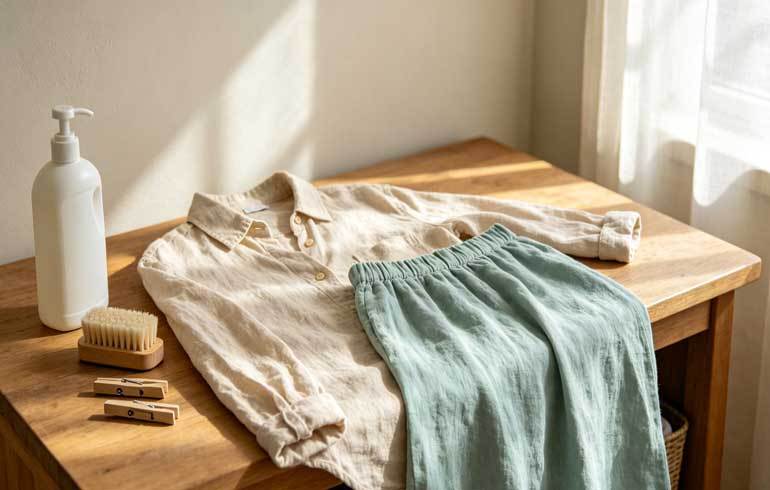
How to Wash Linen Clothes
The best way to wash linen clothes is to use cool or lukewarm water, a gentle cycle, mild detergent, and low mechanical stress. Linen can usually be machine washed, but delicate linen garments, loosely woven pieces, or items with special details may benefit from hand washing. After washing, avoid high heat. Air drying is usually the safest choice, and removing linen from the washer while slightly damp helps reduce deep wrinkles.
Linen is a natural fiber, so it responds best to simple, careful habits. You do not need to over-clean it, over-dry it, or over-iron it. A good linen care routine is built around moderation: gentle washing, mild detergent, careful drying, and relaxed finishing. When treated this way, linen can soften beautifully and remain wearable for many seasons.
Can Linen Clothes Be Machine Washed?
Yes, most linen clothes can be machine washed, especially everyday linen dresses, shirts, pants, shorts, tops, and sets. Linen is stronger than many people think, and regular washing is not a problem when the settings are gentle. The key is to avoid harsh cycles, hot water, heavy spinning, and overcrowding the machine. Linen needs space to move freely during washing so the fabric does not twist, crease too deeply, or experience unnecessary friction.
Machine washing is especially suitable for pre-washed linen, casual linen garments, and pieces designed for daily wear. If the garment label allows machine washing, use a gentle or delicate cycle with cool water and mild detergent. Turn darker linen items inside out before washing to help protect color. Wash linen with similar colors and similar fabric weights. Heavy denim, towels, or rough garments should not be washed with linen because they can create friction and damage the surface over time.
If a linen piece feels very delicate, has embroidery, fine straps, special buttons, or a loose weave, place it inside a mesh laundry bag or wash it by hand. Machine washing is convenient, but garment construction still matters. A simple linen shirt and a fine linen dress with delicate trim should not always be treated the same way.
Simple rule: Most linen clothes can be machine washed, but use cool water, a gentle cycle, mild detergent, and enough space in the machine to prevent unnecessary twisting and friction.
How to Wash Linen Clothes Step by Step
Washing linen well is not complicated, but a consistent process helps prevent common problems like shrinking, deep wrinkles, fading, and stiffness.
Step 1: Check the Care Label
Always start with the care label. Linen garments can vary depending on dye, finish, blend, lining, buttons, trims, and construction. Some linen items are fully machine washable, while others may recommend hand washing or dry cleaning. The label is especially important for lined dresses, structured pieces, dark colors, printed linen, or garments with delicate details.
Step 2: Sort by Color and Weight
Wash white linen with whites, light linen with light colors, and dark linen with dark colors. This helps prevent dye transfer and keeps lighter shades fresh. Also sort by fabric weight. Lightweight linen garments should not be washed with heavy towels, jeans, or rough fabrics. Linen does best with similar natural fabrics and similar garment weights.
Step 3: Turn Garments Inside Out
Turning linen clothes inside out helps protect the outer surface, especially for darker colors or printed pieces. It also reduces friction on visible areas, helping the garment maintain a cleaner appearance over time.
Step 4: Use Cool or Lukewarm Water
Cool water is usually safest for linen clothing. Lukewarm water can also work for many items, but hot water should generally be avoided because it can increase the risk of shrinkage and may stress the fibers. If you are unsure, choose cool water.
Step 5: Choose a Gentle Cycle
A gentle or delicate cycle is best for most linen clothes. Strong agitation can create deeper wrinkles and unnecessary wear. Linen does not need aggressive washing to become clean. A mild cycle is usually enough for daily summer garments.
Step 6: Use Mild Detergent
Choose a gentle detergent without harsh bleaching agents. Strong detergents can make linen feel stiff or weaken fibers over time. A small amount is usually enough. Using too much detergent may leave residue, which can make linen feel less soft after drying.
Step 7: Remove Promptly After Washing
Do not leave linen sitting in the washing machine for a long time after the cycle ends. Damp linen left in a tight pile will crease deeply. Remove it promptly, shake it gently, and smooth the seams before drying.
| Care Step | Best Practice | Why It Matters | Avoid |
|---|---|---|---|
| Water Temperature | Cool or lukewarm | Helps reduce shrinkage and protect color | Hot water |
| Wash Cycle | Gentle or delicate | Reduces friction and deep creasing | Heavy-duty cycles |
| Detergent | Mild detergent | Protects fibers and softness | Harsh detergent or bleach |
| Drying | Air dry or low heat briefly | Maintains shape and reduces damage | High heat drying |
| Wrinkle Control | Shake and smooth while damp | Prevents deep set-in wrinkles | Leaving wet linen in a pile |
Should You Hand Wash Linen Clothes?
Hand washing is a good option for delicate linen garments, lightweight pieces, loosely woven linen, embroidered items, or clothes you want to treat with extra care. It is also useful when you are traveling and need to refresh a linen shirt, dress, or camisole without using a machine. Linen can handle water well, but hand washing gives you more control over friction and movement.
To hand wash linen, fill a basin with cool water and add a small amount of mild detergent. Submerge the garment and gently move it through the water. Do not twist, scrub aggressively, or wring the fabric. Let it soak briefly if needed, then rinse thoroughly with cool water until detergent is removed. Press out excess water gently with your hands or roll the garment in a clean towel to absorb moisture.
Hand washing takes a little more time, but it can help preserve delicate pieces and reduce wear. It is especially useful for linen items that feel lighter, softer, or more refined than everyday basics.
What Water Temperature Is Best for Linen?
Cool water is the safest choice for washing linen clothes. It protects color, reduces the chance of shrinkage, and is gentle on the fibers. Lukewarm water can be acceptable for some linen garments, particularly light-colored items that need more thorough cleaning, but hot water should generally be avoided unless the care label specifically allows it.
Many linen care problems begin with heat. Hot water can cause shrinkage, fading, or fiber stress, especially in garments that have not been pre-washed. If you want your linen clothes to maintain their fit and texture, make cool washing your default.
When in doubt, wash linen in cool water. It is the simplest way to protect shape, color, and long-term softness.
What Detergent Should You Use for Linen?
Use a mild detergent that is gentle on natural fibers. Linen does not require strong chemical cleaning for ordinary wear. In fact, harsh detergents can make linen feel stiff, dry, or less pleasant against the skin. A gentle liquid detergent is often a good choice because it dissolves well and is less likely to leave residue.
Avoid bleach unless the care label clearly allows it, and even then, be cautious. Bleach can weaken linen fibers and cause uneven color changes. For white linen, oxygen-based whitening options may be gentler than chlorine bleach, but always test carefully and follow garment instructions.
Also avoid using too much detergent. More detergent does not mean cleaner linen. Excess detergent can remain in the fabric and make it feel less soft after drying. Use the recommended amount or slightly less for lightly worn garments.
Can You Use Fabric Softener on Linen?
Fabric softener is usually not necessary for linen. Linen naturally softens with wear and washing, and fabric softeners can sometimes coat the fibers, reducing breathability and leaving residue. If your linen feels stiff, the cause may be too much detergent, hard water, high heat, or over-drying rather than a true need for softener.
To make linen softer naturally, wash it gently, rinse thoroughly, avoid high heat, and let it relax over time. Pre-washed linen and frequently worn linen often become softer and more comfortable without extra products. If you want a softer finish, try removing the garment from the dryer while slightly damp, or steam it lightly after air drying.
How to Dry Linen Clothes
Air drying is usually the best method for linen clothes. It protects the fabric from high heat, helps maintain shape, and reduces the risk of shrinkage. After washing, shake the garment gently, smooth seams and hems with your hands, and hang it on a hanger or lay it flat depending on the garment structure.
Linen shirts and dresses often dry well on hangers, especially if the hanger supports the shoulders properly. Linen knit or very delicate pieces may be better dried flat to prevent stretching. Avoid direct harsh sunlight for dark colors, as strong sun may fade fabric over time. For white or light linen, indirect sunlight can help keep the garment fresh, but prolonged exposure is still not always ideal.
If you use a dryer, choose low heat or air dry settings and remove the garment while slightly damp. High heat is one of the biggest mistakes in linen care. It can increase shrinkage risk and create stiff, deep wrinkles that are harder to remove.
Can Linen Go in the Dryer?
Linen can sometimes go in the dryer on low heat, but air drying is safer. If you choose to tumble dry linen, use a low temperature and remove the garment before it becomes fully dry. Over-drying linen can make it feel stiff and can set wrinkles more deeply. A short low-heat tumble can help soften linen, but high heat should be avoided.
The safest method is often a combination: tumble briefly on low heat to loosen the fabric, then hang or lay flat to finish drying. This can reduce stiffness while still limiting heat exposure.
Drying tip: Remove linen while slightly damp, smooth it with your hands, and let it finish drying naturally. This helps reduce wrinkles and keeps the fabric feeling softer.
How to Prevent Linen from Shrinking
Linen can shrink if exposed to hot water, high dryer heat, or aggressive washing. To reduce shrinkage risk, wash linen in cool water, use a gentle cycle, avoid high heat, and follow the care label. Pre-washed linen is usually more stable, but it still benefits from gentle care.
Shrinkage is most likely when linen is new, unwashed, or exposed to heat. If you are washing a new linen garment for the first time, be extra careful. Avoid hot washing, do not over-dry, and reshape the garment while damp. If the item is fitted or structured, consider air drying it flat or on a hanger that preserves its shape.
It is also helpful not to shock the fabric with sudden temperature changes. Keep the wash and rinse temperatures consistent and moderate. Gentle consistency is one of the best ways to preserve linen fit.
How to Reduce Wrinkles After Washing Linen
Linen wrinkles naturally, and that is part of its charm. However, deep wrinkles from washing can be reduced with a few simple habits. The most important step is to remove linen from the washer promptly. Shake it out, smooth it with your hands, and dry it in a way that supports the garment shape.
Hanging linen while slightly damp can help gravity relax creases. Steaming is also one of the easiest ways to refresh linen without making it look overly pressed. If you prefer a crisper finish, iron linen while it is still slightly damp or use steam. But for everyday wear, many linen garments look best with a relaxed, softly creased finish.
- Remove linen from the washer immediately after the cycle ends.
- Shake garments gently before drying.
- Smooth seams, collars, cuffs, and hems by hand.
- Hang linen while slightly damp when appropriate.
- Use a steamer for easy crease control.
- Accept soft wrinkles as part of linen’s natural look.
Should You Iron Linen Clothes?
You can iron linen, but you do not always need to. Whether you iron depends on the look you want. For polished linen shirts, trousers, or structured dresses, ironing can create a cleaner finish. For relaxed dresses, loose shirts, sets, and vacation pieces, steaming or simply smoothing while damp may be enough.
If you do iron linen, it is usually easiest while the fabric is slightly damp. Use steam and iron on the reverse side for darker colors to avoid shine. Pay attention to collars, hems, waistbands, and button plackets if you want a crisp look. Avoid pressing too aggressively if you prefer linen’s natural texture.
How to Wash Different Linen Garments
Different linen pieces may need slightly different care depending on their structure, weight, and use. The general principles stay the same, but small adjustments help keep each category looking its best.
Linen Dresses
Linen dresses should be washed gently and dried in a way that protects their shape. If the dress is lined, structured, or has delicate straps, check the care label carefully. Hang drying often works well for simple dresses, while heavier styles may need to dry flat or be supported properly to avoid stretching.
Linen Shirts
Linen shirts are usually easy to wash. Turn them inside out, button them loosely if needed, and wash with similar colors. After washing, shake them out and hang them to dry. Smooth the collar, cuffs, and placket while damp to reduce wrinkles.
Linen Pants
Linen pants should be washed gently and reshaped while damp. Pay attention to waistbands, pleats, and hems. Hang them from the waistband or lay them flat depending on construction.
Linen Shorts
Linen shorts are often simple to care for, but drawstrings, elastic waists, and pockets can wrinkle deeply if left in a pile. Smooth them after washing and avoid high dryer heat.
Linen Sets
Wash matching linen sets together when possible to help maintain color consistency over time. If one piece is washed more often than the other, subtle fading differences may develop, especially in darker shades.
How to Remove Stains from Linen Clothes
Treat stains as soon as possible. The longer a stain sits, the harder it may be to remove. Blot gently rather than rubbing aggressively. Rubbing can push the stain deeper into the fibers and distort the fabric surface.
For common food or drink stains, rinse the area with cool water and apply a small amount of mild detergent. Let it sit briefly, then wash as usual. For oil-based stains, absorb excess oil first with a clean cloth or powder before washing. For makeup stains, use a gentle stain remover suitable for natural fibers, but test first in a hidden area.
Avoid harsh bleach, especially on colored linen. If the garment is valuable, delicate, or stained by something difficult like red wine, ink, or heavy oil, professional cleaning may be safer.
How Often Should You Wash Linen Clothes?
Linen does not always need to be washed after every wear unless it is visibly dirty, sweaty, or worn close to the body in hot conditions. Overwashing can create unnecessary wear. Often, airing linen between wears is enough, especially for loose shirts, dresses, and outer layers.
Items worn directly against the skin in hot weather may need more frequent washing. Linen pants, sets, and dresses may be refreshed after one or several wears depending on use. The best routine is practical: wash when needed, air when possible, and avoid treating every linen item as disposable after a single wear.
Linen care is not about perfection. It is about gentle habits that let the fabric soften, breathe, and age naturally over time.
How to Store Linen Clothes After Washing
Store linen only when it is completely dry. Moisture can lead to odors or mildew, especially in humid climates. Fold heavier linen garments and hang structured shirts or dresses if you have enough closet space. Avoid overcrowding, because linen wrinkles more deeply when compressed.
For seasonal storage, wash linen before putting it away, dry it fully, and store it in a breathable cotton bag or clean drawer. Avoid plastic storage for long periods because natural fibers benefit from airflow. If you store linen dresses or shirts on hangers, choose smooth hangers that do not distort the shoulders.
Common Linen Washing Mistakes to Avoid
Most linen care problems come from a few avoidable mistakes. Once you know them, the fabric becomes much easier to manage.
Using Hot Water
Hot water can increase shrinkage risk and stress the fibers. Cool water is safer for most linen garments.
Overloading the Washing Machine
Linen needs room to move. An overcrowded machine can create deeper wrinkles and uneven cleaning.
Using Too Much Detergent
Excess detergent can leave residue and make linen feel stiff. Use mild detergent in a moderate amount.
Drying on High Heat
High heat can shrink linen and set wrinkles. Air dry or use low heat briefly if needed.
Leaving Linen Wet in a Pile
Damp linen wrinkles deeply when left compressed. Remove it promptly and smooth it before drying.
Expecting Linen to Stay Perfectly Smooth
Linen naturally wrinkles. Soft creases are part of its texture and character. Trying to eliminate every wrinkle can make care feel harder than it needs to be.
Is Linen Hard to Care For?
No, linen is not hard to care for once you understand its needs. It simply requires a gentler approach than some everyday fabrics. The fabric is strong, but it does not benefit from harsh washing or high heat. If you use cool water, mild detergent, gentle movement, and low-heat drying, linen becomes very manageable.
In many ways, linen is easier than people expect because it does not need to look perfect to look good. A slightly relaxed finish is part of its beauty. Unlike fabrics that only look good when pressed perfectly, linen can look elegant with natural texture. This makes it especially practical for summer, travel, and everyday wardrobes.
Why Proper Washing Makes Linen Better Over Time
One of linen’s most rewarding qualities is that it can improve with age. When washed and worn properly, linen often becomes softer, more comfortable, and more personal to the wearer. The fabric relaxes without losing its identity. This is one reason people become loyal to linen after living with it for a while.
Proper washing protects that long-term beauty. Gentle care keeps fibers strong. Air drying preserves shape. Mild detergent avoids buildup. Prompt removal from the washer prevents deep creasing. These small habits work together to make linen feel better season after season.
Common Questions About Washing Linen Clothes
Can you machine wash linen clothes?
Yes, most linen clothes can be machine washed on a gentle cycle with cool water and mild detergent. Always check the care label first.
Does linen shrink when washed?
Linen can shrink if washed in hot water or dried on high heat. To reduce shrinkage risk, wash in cool water and air dry or use low heat briefly.
Should linen be washed in hot or cold water?
Cool water is usually best. It protects the fabric, helps preserve color, and reduces the chance of shrinkage.
Can linen clothes go in the dryer?
Linen can sometimes be tumble dried on low heat, but air drying is safer. Avoid high heat because it can shrink the fabric and set wrinkles.
How do you keep linen from wrinkling after washing?
Remove linen promptly from the washer, shake it out, smooth it by hand, and hang it while slightly damp. Steaming can also help.
Should you use fabric softener on linen?
Fabric softener is usually unnecessary. Linen naturally softens with wear and washing, and softener may leave residue on the fibers.
Washing linen clothes properly is simple once you follow the right principles. Use cool water, mild detergent, gentle washing, careful drying, and avoid high heat. Remove linen promptly after washing, smooth it while damp, and let the fabric keep some of its natural texture. These habits help prevent shrinkage, reduce deep wrinkles, and keep linen feeling soft and breathable.
Linen is not a fabric that needs to be over-managed. It is strong, natural, and designed to become more beautiful with time. With gentle care, your linen dresses, shirts, pants, tops, and sets can remain some of the most comfortable and elegant pieces in your wardrobe season after season.
Care for your favorite linen pieces properly so they stay soft, breathable, and ready for warm-weather dressing.
Linen Dresses
Easy summer dresses that stay beautiful longer with gentle washing and low-heat drying.
Linen Tops
Lightweight shirts, camisoles, and tops designed for breathable everyday wear.
Linen Pants
Relaxed warm-weather bottoms that benefit from careful washing and reshaping.
Linen Sets
Matching outfits that should be washed together to help maintain consistent color and texture.
These wardrobe pieces are easy to maintain when washed gently and dried with care.
Linen Shirt Dress
A versatile piece that washes well with cool water, gentle detergent, and careful hang drying.
Relaxed Linen Shirt
A breathable staple that becomes softer and easier to wear with proper washing over time.
Matching Linen Set
A coordinated outfit that stays fresher longer when washed gently and stored fully dry.
Continue reading practical guides for wearing, styling, and caring for linen clothing.