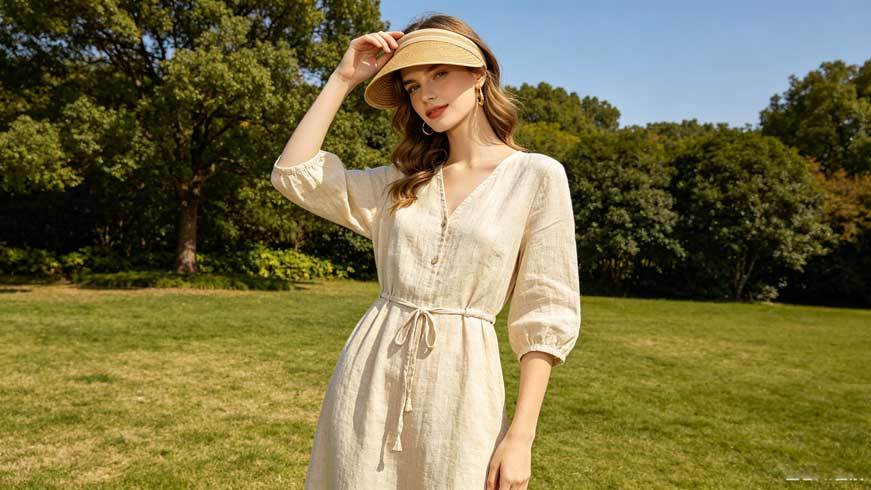
Is Linen Good for Hot Weather?
Yes, linen is excellent for hot weather. It is one of the best fabrics to wear in heat because it is breathable, lightweight, airy, and more comfortable than many alternatives when temperatures rise. Linen allows air to circulate around the body, feels less clingy than many other materials, and supports a cooler wearing experience in both dry heat and warm, humid conditions. That combination is what gives linen such a strong reputation in summer wardrobes.
Linen’s appeal in heat is not just about being a natural fabric. Many natural fabrics can still feel heavy or warm depending on their weight and weave. Linen stands out because of how its fibers behave. It tends to feel dry, open, and breathable rather than dense or sticky. It also works especially well in the relaxed silhouettes people naturally gravitate toward in hot weather: easy dresses, oversized shirts, wide-leg pants, sleeveless tops, and soft sets. The result is not only comfort, but also a more effortless kind of dressing that looks seasonally right.
Why Linen Feels Better in Heat
To understand why linen is so good in hot weather, it helps to think about what actually makes clothing uncomfortable in the heat. Usually, the problem is not only temperature itself. It is trapped warmth, reduced airflow, fabric clinging to the skin, and the sensation of dampness staying too close to the body. Linen addresses those problems more effectively than many other fabrics.
It Allows Better Airflow
Breathability is the quality people mention most often when they talk about linen, and for good reason. Linen’s fiber structure and typical weave help air move more easily through the fabric. That matters in hot weather because airflow allows body heat to escape rather than staying trapped. When clothing breathes well, the entire outfit feels lighter and less oppressive.
It Feels Less Sticky Against the Skin
One of the most uncomfortable things about heat is when clothing starts to cling to the body. Linen tends to feel drier and less clingy than many fabrics, which makes it especially pleasant when worn for long hours. Instead of collapsing tightly onto the skin, linen often stays a little more open and relaxed, especially in looser cuts.
It Supports Easier Summer Silhouettes
Linen is not only a fabric advantage. It is also a style advantage. The kinds of garments usually made from linen tend to be the ones that work best in heat: airy dresses, relaxed shirts, sleeveless tops, wide trousers, and matching sets. Linen therefore helps hot-weather comfort in two ways at once—through the fabric itself and through the silhouettes it naturally suits.
Core reason linen works in heat: It reduces trapped warmth, encourages airflow, and feels less clingy than many other materials, which is exactly what clothing needs to do in very warm conditions.
What Makes Linen Different from Other Fabrics in Hot Weather?
Many fabrics are marketed as lightweight or summer-friendly, but they do not all perform the same way once temperatures get genuinely high. Linen stands apart because it combines several useful qualities at once. It is breathable, textured, absorbent without feeling soggy, and visually suited to warm weather. That combination is rare.
Cotton is breathable too, but some cotton garments can still feel more compact, damp, or clingy in humidity. Rayon and viscose may drape beautifully, but they can sometimes feel less airy in high heat, depending on construction. Polyester often looks smooth and easy-care, but it is frequently the least pleasant in real summer heat because it tends to hold warmth and reduce airflow. Linen is consistently recommended because it performs strongly across the categories that matter most in hot weather: ventilation, comfort, visual lightness, and real-life wearability.
It also helps that linen looks exactly the way a hot-weather wardrobe should feel. The fabric has a natural sun-washed quality. It does not try to look too crisp, too engineered, or too synthetic. Instead, it looks relaxed, breathable, and comfortable at first glance, which is why it fits so well into summer dressing.
Is Linen Better Than Cotton in Hot Weather?
In many situations, yes. Linen is often better than cotton in hot weather because it usually allows more airflow and feels less dense in prolonged heat. This does not mean cotton is bad in summer. Cotton remains one of the best everyday natural fabrics available. But if the question is specifically about intense warmth, heat buildup, and staying cool, linen often has the edge.
Cotton can vary widely depending on its weave and weight. A soft cotton tank may feel excellent in summer, while a dense cotton dress may feel less airy. Linen tends to be more consistently associated with openness and breathability. That makes it especially strong in climates where heat is persistent rather than occasional.
The difference becomes even more noticeable when the weather is both hot and humid. Cotton may start to feel heavier once it absorbs moisture. Linen often keeps a drier, lighter feeling for longer. For people who want maximum breathability, linen is often the better summer choice, while cotton remains a versatile and comfortable backup for basics and layering pieces.
| Fabric | Breathability | Heat Comfort | Feel on Skin | Best Use in Hot Weather |
|---|---|---|---|---|
| Linen | Very high | Excellent | Dry, airy, lightly textured | Dresses, shirts, pants, sets |
| Cotton | Good to very good | Good | Soft, familiar, can feel heavier | Basics, tees, casual dresses |
| Rayon / Viscose | Moderate | Moderate | Soft and fluid | Drapey summer pieces |
| Polyester | Low | Low | Smooth but often heat-trapping | Not ideal for high heat |
Linen is not just good for hot weather because it is natural. It is good because it solves the specific discomforts that heat creates: trapped warmth, low airflow, and fabric that sits too heavily on the skin.
Is Linen Good for Humid Weather Too?
Yes, linen is also very good in humid weather. In fact, humidity is one of the places where linen’s strengths become most obvious. Humidity makes everything feel heavier. Fabrics that might be tolerable in dry heat can suddenly become suffocating once the air itself feels damp. Linen handles this better than many alternatives because it still maintains airflow and tends to feel less sticky on the body.
Humid weather can make clothes feel as though they are holding onto the body rather than resting on it. Linen is often appreciated precisely because it resists that sensation more effectively. Especially in loose or relaxed garments, it can create a feeling of space around the skin. That helps reduce the discomfort that comes from fabric sticking too closely in warm, damp air.
Of course, no fabric can make a humid day feel cool in an absolute sense. But linen can make it feel more manageable. And in summer dressing, that difference matters a great deal.
Does Linen Help with Sweating?
Linen does not stop sweating, but it does help clothing feel more comfortable when sweating happens. This is an important distinction. In real hot weather, sweating is normal and often unavoidable. The goal is not to eliminate it with fabric. The goal is to choose materials that make the body feel less overwhelmed when it occurs.
Linen helps because it does not trap warmth the way many synthetic fabrics do. Since airflow is better, clothing is less likely to feel suffocating. Linen also tends to feel less clammy than some fabrics after prolonged wear, especially when cut in looser shapes. That is one reason it remains such a strong option for summer travel, city walking, outdoor lunches, and hot daily routines.
If your main concern is whether linen feels more comfortable when the day gets hotter and the body starts to perspire, the answer is yes. It generally feels better than many denser or more heat-trapping materials.
What Kind of Linen Is Best for Hot Weather?
Not every linen garment will perform exactly the same way. Fabric weight, garment construction, and fit all influence how well linen works in the heat. The best linen for hot weather is usually lightweight to midweight, breathable, and cut in a silhouette that allows movement. Thin linen is often best for very high temperatures, while slightly heavier linen can still work beautifully for trousers, shirting, or dresses where some structure is useful.
Pre-washed linen is often a smart choice because it tends to feel softer from the beginning while keeping the same natural breathability. Softened linen shirts and dresses are especially comfortable in daily summer wear because they combine airflow with a more relaxed hand feel.
The best hot-weather linen garments also avoid unnecessary heaviness. Thick lining, too many layers, very fitted cuts, or excessive detail can all reduce the natural advantages of the fabric. Linen works best when the design allows the material to do what it does best: breathe.
Best-performing linen for heat: Choose lighter weights, relaxed cuts, and designs with room for movement. Fabric alone matters, but fit and construction matter just as much.
Best Linen Clothing to Wear in Hot Weather
Linen performs best when used in garments that support airflow and ease. These are the categories where it usually delivers the most value in high temperatures.
Linen Dresses
Linen dresses are one of the strongest hot-weather options because they create a complete outfit while staying light and breathable. Shirt dresses, sleeveless midis, slip dresses, and maxis all work especially well. They reduce the need for layers and help you stay comfortable without losing polish.
Linen Shirts
Linen shirts are another essential because they can be worn alone, open over tanks, or lightly layered over swimwear. The fabric’s breathability makes even long sleeves more wearable in heat, especially when the shirt is oversized or loosely cut.
Linen Pants
Wide-leg or straight-cut linen pants are one of the smartest alternatives to heavier summer trousers. They provide coverage without the dense feel of denim or structured cotton. They are ideal for travel, city dressing, and warm-weather outfits that need a bit more refinement.
Linen Tops and Camisoles
Sleeveless linen tops and simple camisoles are perfect for the hottest days because they feel airy and light while still having more structure than some thin jersey basics.
Linen Sets
Coordinated linen sets are especially useful in hot weather because they create a styled look without requiring effort. They are breathable, travel-friendly, and easy to wear from day to night with small accessory changes.
What Should You Avoid Even If It Is Linen?
Linen is strong in hot weather, but the wrong garment design can still undermine its benefits. Some linen pieces feel less comfortable simply because the cut or construction does not support the climate.
Very Tight Fits
Linen works best when it has some room to move. If a linen garment is too fitted, it cannot create the same sense of airflow and ease that makes the fabric so appealing in heat.
Too Much Lining
Lining may increase coverage, especially in light colors, but too much lining can reduce breathability. The best hot-weather linen garments balance practicality and comfort rather than overbuilding the design.
Heavy Details
Thick belts, excessive pockets, overly layered panels, or bulky trims can all make a linen garment feel heavier than it needs to. In hot weather, cleaner usually feels better.
Dark Colors in Heavy Weights
Linen in dark colors can still look beautiful and remain wearable in heat, especially black linen dresses and shirts. But if the fabric is also heavy, it may not feel as cool as a lighter-weight neutral style. Weight often matters more than color, but the combination is worth considering.
How Linen Feels in Dry Heat vs Humid Heat
Linen is strong in both, but the experience is slightly different. In dry heat, linen feels airy and comfortable because it helps keep warmth from building too intensely against the body. In humidity, its main advantage is that it feels less clingy and sticky than many alternatives. In both settings, linen’s open feel and reduced density help it outperform more compact or synthetic fabrics.
In dry climates, linen often feels almost crisp in the best way. It creates a sense of lightness and movement that fits the environment perfectly. In humidity, its value becomes more practical and more sensory. It simply feels less unpleasant for longer. That may sound like a small win, but on very humid days it can completely change how wearable an outfit feels.
Why Linen Looks Right in Hot Weather Too
Comfort is only part of the story. Linen also looks right in heat. Summer dressing is not only about survival. It is also about wanting clothing that appears seasonally appropriate. Linen excels here because its texture and drape communicate ease, freshness, and a natural relationship to warm weather. A linen dress or shirt rarely looks too polished, too heavy, or too artificial for the season.
This matters because people usually feel best when their clothes match the environment. Linen does that beautifully. It looks cool even before you put it on. That makes it psychologically satisfying as well as physically practical. It supports the kind of wardrobe people usually want in hot weather: simpler, lighter, softer, and more relaxed.
Linen succeeds in heat because it feels cool and looks cool. Few fabrics offer both at the same time as naturally.
How to Style Linen for Very Hot Days
The best way to style linen in real heat is to keep the outfit as light and balanced as possible. Linen already brings texture and visual character, so it does not need heavy styling to look complete.
Choose Open Shoes
Flat sandals, leather slides, and minimal strappy styles all work well because they reinforce the breathable quality of linen outfits. Bulky shoes can make the look feel heavier than necessary.
Keep Accessories Simple
Woven bags, small leather bags, and natural-texture accessories often work best. Linen does not usually need overly glossy or highly embellished styling to look finished.
Use Light Layers Only
If you need a layer, choose another breathable piece such as a lightweight linen shirt or a very fine cardigan. Avoid piling dense fabrics on top of linen in a way that defeats the point of the outfit.
Lean on Loose Silhouettes
The hotter the day, the more useful it becomes to allow shape without tightness. Linen dresses, oversized shirts, easy pants, and matching sets often feel more comfortable than fitted pieces in strong summer heat.
Does Linen Get Better with Wear in Summer?
Yes. One of the reasons many people become loyal to linen is that it often gets better over time. It softens, relaxes, and becomes more comfortable without losing its identity. This is especially satisfying in summer wardrobes, where you tend to wear your favorite pieces repeatedly.
Linen may not always win an instant softness contest against cotton, but it often wins on long-term relationship. A linen shirt or dress that has been worn and washed many times can become one of the most comfortable and most beautiful pieces in a hot-weather wardrobe. That makes linen feel less like a short-term seasonal purchase and more like a fabric worth returning to year after year.
Is Linen Worth It If You Live Somewhere Very Hot?
Absolutely. In very hot climates, linen is often even more worth it because the benefits are easier to feel day after day. When heat is a constant rather than an occasional inconvenience, the value of breathable clothing increases dramatically. Linen can make everyday dressing easier, reduce discomfort, and help create wardrobes that are genuinely livable in the climate.
That is why linen remains so popular in regions known for warm weather, coastal lifestyles, and long summers. It is not just aesthetically appropriate. It is functionally helpful. In some wardrobes, linen stops being an optional summer indulgence and becomes a practical necessity.
Who Benefits Most from Wearing Linen in Heat?
Linen works for many people, but it is especially helpful for anyone who dislikes clothing that feels sticky, heavy, or over-constructed in summer. It is ideal for travelers, hot-climate dressers, people building summer capsules, and anyone who wants a wardrobe that feels polished without adding complexity.
- People who live in hot or humid climates.
- Travelers who need breathable and versatile summer clothing.
- Minimalists who want fewer, better warm-weather pieces.
- Anyone who values comfort without sacrificing style.
- Shoppers looking for natural fabrics that feel seasonally right.
Does Linen Have Any Downsides in Hot Weather?
The main downside people mention is wrinkling. Linen wrinkles naturally, and if someone wants a fabric that stays perfectly smooth through the day, that may feel frustrating. But many people see those wrinkles as part of linen’s charm rather than a flaw.
Another possible downside is that very light linen can sometimes feel a bit sheer, depending on color and construction. That is why choosing the right cut, lining balance, and styling matters. Still, these are relatively small trade-offs compared with the comfort benefits the fabric provides in heat.
In practical terms, the advantages of linen in hot weather usually outweigh the downsides for anyone who values airflow, ease, and natural texture.
Common Questions About Linen in Hot Weather
Is linen cooler than cotton in hot weather?
In many cases, yes. Linen often feels cooler because it allows more airflow and usually feels less dense against the body than many cotton fabrics.
Is linen good for humidity?
Yes. Linen is especially appreciated in humidity because it tends to feel less sticky and less clingy than many other fabrics.
Does linen help with sweating?
Linen does not stop sweating, but it can make clothing feel more comfortable when you sweat because it reduces trapped warmth and feels drier than many alternatives.
What linen clothes are best for very hot weather?
Linen dresses, shirts, wide-leg pants, sleeveless tops, and matching sets are usually the most useful categories because they maximize airflow and comfort.
Is linen too heavy for peak summer?
No, not if you choose the right weight and cut. Lightweight to midweight linen in easy silhouettes is one of the best options for peak summer heat.
Is linen worth wearing in very hot climates?
Yes. The hotter the climate, the more valuable linen often becomes because its breathability and comfort benefits are easier to notice every day.
Linen is one of the best fabrics for hot weather because it addresses the real problems heat creates. It breathes well, feels lighter than many alternatives, supports airflow, and tends to feel less clingy and less suffocating over the course of a hot day. Those qualities make it not just a fashionable summer fabric, but a genuinely useful one.
If you want clothing that works with the season instead of against it, linen remains one of the smartest choices you can make. Whether in dresses, shirts, pants, or sets, it helps make warm-weather dressing simpler, cooler, and more comfortable without giving up style. That is why linen continues to return every summer—not as a passing trend, but as one of the most reliable fabrics for real heat.
Explore the linen categories that perform best in heat and help build a breathable, comfortable summer wardrobe.
Linen Dresses
Easy warm-weather silhouettes that stay breathable, polished, and comfortable through hot days.
Linen Tops
Lightweight essentials that offer airflow, simplicity, and easy styling in high temperatures.
Linen Pants
Relaxed alternatives to heavier trousers, ideal for coverage without unwanted heat.
Linen Sets
Breathable matching outfits that make summer dressing effortless and put together.
These are the kinds of linen pieces that usually feel best when temperatures are high and comfort matters most.
Linen Midi Dress
A breathable one-piece option that balances comfort, ease, and refined summer style.
Relaxed Linen Shirt
An airy staple that works alone, layered, or open over lighter warm-weather basics.
Wide-Leg Linen Pants
A cooler way to get coverage in hot weather without the heaviness of denim or dense cotton.
Continue reading practical guides on linen, summer comfort, and breathable wardrobe building.