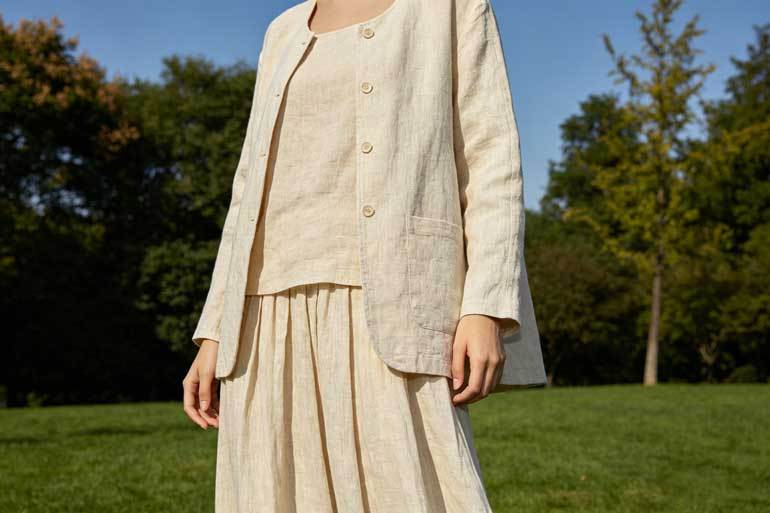
Linen vs Cotton: Which Is Better?
Linen is better if you want breathability, airflow, natural texture, and a more elevated warm-weather look. Cotton is better if you want immediate softness, familiarity, ease, and versatile all-season basics. In other words, neither fabric wins in every category. Linen often performs better in hot weather and refined minimalist wardrobes, while cotton often wins for softness, accessibility, and daily comfort in casual pieces.
The real answer depends on what you are comparing, how you want the garment to feel, and what role the fabric plays in your wardrobe. A cotton tee and a linen dress are not solving the same problem. A linen shirt and a cotton blouse may look similar at first, but they behave very differently once you wear them for a full day in summer heat. The best choice comes from understanding use, not just preference.
What Is the Difference Between Linen and Cotton?
Linen is made from flax fibers, while cotton is made from the fibers that grow around cotton seeds. Both are plant-based natural textiles, but their structures are different, which is why they feel and perform differently. Linen fibers are longer and usually more textured, giving linen its breathable, crisp, slightly slubbed appearance. Cotton fibers are shorter, softer, and more flexible, which is why cotton often feels smoother and more familiar against the skin.
This difference in fiber structure affects almost everything that follows: softness, wrinkle behavior, drape, airflow, durability, and even visual identity. Cotton tends to feel softer immediately, while linen tends to feel drier, lighter, and more textured. Cotton often creates a more casual or familiar look, while linen carries a more relaxed yet elevated impression. Neither of these qualities is inherently better. They simply make the fabrics suited to different goals.
Simple rule: Cotton usually feels softer right away, while linen usually feels cooler, more breathable, and more visually distinctive.
Linen vs Cotton: Side-by-Side Comparison
Before diving into deeper detail, it helps to see the broad comparison at a glance. The table below summarizes the main differences between the two fabrics in practical terms.
| Category | Linen | Cotton | Which Often Wins? |
|---|---|---|---|
| Breathability | Very high airflow, especially in heat | Good airflow, but varies by weave | Linen |
| Softness | Can start crisper, softens over time | Usually soft from the beginning | Cotton |
| Warm Weather Comfort | Excellent | Good to very good | Linen |
| Texture | Natural, slightly textured, airy | Smooth to soft depending on type | Preference-based |
| Wrinkling | Wrinkles naturally and visibly | Wrinkles less in many constructions | Cotton |
| Durability | Very strong fiber when well made | Durable, but varies widely by weight and weave | Linen |
| Ease of Care | Simple, but often needs steaming | Generally easy and familiar | Cotton |
| Style Feel | Relaxed, refined, minimal | Casual, versatile, classic | Preference-based |
| Long-Term Softening | Gets better with wear | Often stays consistently soft | Tie |
| Summer Wardrobes | Ideal for hot weather | Strong for basics and everyday pieces | Linen |
Which Fabric Is More Breathable?
In most cases, linen is more breathable than cotton. This is one of the most important reasons linen is so often recommended for summer wardrobes. Linen fibers and weaves tend to allow more airflow, which helps heat escape more easily. That makes the fabric feel cooler and less heavy during hot weather, especially when compared with tightly woven cotton garments.
Cotton is still breathable, and that is one reason it remains a wardrobe essential. But not all cotton is equally airy. A fine cotton voile blouse will feel very different from thick cotton jersey or heavy cotton twill. Linen is more consistently associated with airflow, openness, and lightness. That does not mean every linen garment is automatically cooler than every cotton garment, but as a category, linen generally has the edge.
This difference matters most in high heat and humidity. In those conditions, the gap between the two fabrics becomes easier to feel. Linen usually remains dry-feeling and comfortable for longer, while some cotton garments may begin to feel heavier or more clingy over time.
If your main concern is staying cool in hot weather, linen usually beats cotton because it allows more airflow and feels less dense against the body.
Which Fabric Is Softer?
Cotton is usually softer than linen at first touch. That is one reason cotton is so widely used for T-shirts, underwear, pajamas, bedding, and everyday basics. It feels familiar, flexible, and easy against the skin. For people who want instant softness, cotton often wins immediately.
Linen, by contrast, can feel crisper or slightly drier when new. This is not a flaw. It is simply part of the fiber’s character. What makes linen special is that it often softens beautifully over time, especially after repeated wear and washing. High-quality linen becomes more fluid and comfortable without losing its distinctive texture.
So if you are judging softness in the fitting room, cotton often feels more immediately appealing. If you are judging how the fabric ages and settles into your wardrobe over time, linen becomes much more competitive. In some cases, worn-in linen can feel incredibly soft while still maintaining more structure and personality than cotton.
Which Fabric Is Better for Summer?
Linen is usually better for summer, especially in hot and humid climates. Its breathability, lightness, and naturally airy feel make it one of the strongest warm-weather fabrics available. It is particularly effective in loose silhouettes such as shirts, dresses, wide-leg pants, and coordinated sets. That is why linen dominates so many resort, vacation, and summer capsule wardrobes.
Cotton is still an excellent summer fabric, especially for basics like tank tops, T-shirts, dresses, and underwear. But the experience of wearing cotton in peak summer heat can vary greatly depending on its weight and construction. Heavy cotton can feel warm. Tight cotton knits can feel clingy. Dense cotton poplin can sometimes feel less airy than expected. Linen’s advantage is that it tends to feel more open and breathable by nature.
If you want the simplest answer for hot-weather dressing, linen is usually the better summer choice, while cotton remains the better all-rounder for daily basics.
Which Fabric Is Better for Winter or Cooler Weather?
Cotton is usually more practical in cooler weather, especially for layering pieces, knit basics, sweatshirts, and long-sleeve tops. Cotton blends comfortably into transitional and all-season wardrobes because it feels familiar and easy to build around. It is less tied to one season than linen is.
Linen is not exclusively a summer fabric, but it is more strongly associated with warmth-weather dressing because of its airflow and ease. Heavier linens can work in transitional weather, especially in shirts, trousers, and jackets, but cotton generally has the broader seasonal range.
So if you are choosing one fabric to cover more months of the year, cotton is usually more flexible. If you are focused on dressing well in warmth, linen becomes the stronger performer.
Which Looks More Expensive or Elevated?
Linen often looks more elevated because of its texture, drape, and natural irregularity. It gives garments visual depth without needing embellishment or complicated design. A simple linen dress can look more sophisticated than a basic cotton dress because the fabric itself carries more character. This is one reason linen is so popular in minimalist fashion and modern resortwear.
Cotton can absolutely look premium too, especially in crisp shirting, quality woven dresses, or finely made cotton poplin pieces. But in many everyday contexts, cotton reads as more familiar and casual. Linen often has the edge when you want an outfit to feel effortless but refined.
This does not mean linen is always better dressed up. It means that even simple linen pieces often look intentional. They carry a certain quiet luxury precisely because the fabric feels natural rather than overly polished.
Which Fabric Wrinkles More?
Linen wrinkles more than cotton, and this is one of the most obvious practical differences between the two fabrics. Linen’s natural wrinkling is part of its identity. The soft creases communicate movement, texture, and ease. Many people love that quality because it feels authentic and relaxed. Others find it inconvenient, especially if they prefer crisp, smooth clothing.
Cotton wrinkles too, but in many cases it wrinkles less visibly, especially when blended, knit, or woven in denser constructions. For people who prioritize lower-maintenance dressing, cotton often feels easier and more forgiving. It tends to require less steaming and less acceptance of texture.
So if wrinkle resistance matters a great deal to you, cotton usually has the practical advantage. If you see wrinkling as part of natural beauty rather than a problem to eliminate, linen becomes easier to love.
Which Fabric Lasts Longer?
Linen is often considered more durable than cotton at the fiber level. Flax fibers are strong, which is one reason quality linen garments can last for years when cared for properly. Linen can withstand repeated wear and tends to age beautifully, becoming softer over time without necessarily losing its character.
Cotton is also durable, but its longevity depends more heavily on the type of cotton, the weight, the weave, and the way the garment is made. Thin cotton jersey will not wear like heavyweight cotton canvas. Fine cotton basics may lose shape more quickly than structured linen pieces.
In a direct comparison between well-made garments, linen often wins on longevity. But the truth is that good construction matters as much as fabric choice. A poorly made linen item will not necessarily outlast a beautifully made cotton one. Fabric quality and garment design always shape the final outcome.
Which Fabric Is Easier to Care For?
Cotton is generally easier to care for. Most people are already used to washing, drying, and wearing cotton. It feels low-risk, familiar, and simple. It also usually requires less steaming and less acceptance of visible wrinkling.
Linen is not difficult to care for, but it asks for a slightly different mindset. It benefits from gentle washing, less aggressive heat, and often a bit of steaming if you want a cleaner finish. It also asks you to embrace some natural texture instead of expecting the same smoothness as cotton.
If you want pure convenience, cotton usually wins. If you are happy to give a fabric a bit more intention because you love the way it looks and feels, linen still remains very manageable.
Practical takeaway: Cotton is usually easier to care for, but linen rewards even simple care with more character, more texture, and often better long-term wardrobe value.
Which Fabric Is Better for Sensitive Skin?
Both linen and cotton can be good for sensitive skin because they are natural fibers. However, the answer depends on the person and the specific finish of the garment. Cotton often feels softer immediately, so it may be more comfortable for people who dislike texture or crispness. That is one reason cotton is common in baby clothing, basics, and sleepwear.
Linen, especially high-quality or washed linen, can also be excellent because it feels breathable and dry rather than sticky. For people who get irritated when fabrics trap heat or moisture, linen may actually feel better in summer conditions. Much depends on whether the sensitivity is more about softness or about temperature and humidity.
If immediate softness is essential, cotton is usually safer. If overheating and dampness are the bigger issue, linen may feel more comfortable.
Which Fabric Is More Sustainable?
Linen is often viewed as the more sustainable choice because flax generally requires fewer inputs than conventional cotton, including less water in many growing regions. Linen also has strong longevity, which supports slower consumption and longer garment life. These qualities make it attractive to shoppers who care about natural fibers and long-term wardrobe thinking.
Cotton can also be sustainable, but this depends more on how it is grown and processed. Organic cotton, regenerative approaches, and responsible manufacturing can improve cotton’s environmental profile significantly. Conventional cotton, however, is often criticized for heavy water use and chemical dependence in some systems.
So on a broad level, linen often gets the sustainability advantage. But the best answer still depends on sourcing, quality, dyeing, manufacturing practices, and how long the garment stays in use. A durable piece worn for years is always better than a “better” fabric worn only a few times.
Which Fabric Is Better for Different Types of Clothing?
The linen-versus-cotton question becomes more useful when you compare fabric choice by garment category. Each fabric has areas where it tends to work best.
For T-Shirts
Cotton usually wins. It is softer, more flexible, and better suited to the knit structure most people expect from T-shirts. Linen tees exist, but they have a very different feel and are more niche.
For Shirts
This depends on the look you want. Cotton shirts feel crisp, versatile, and classic. Linen shirts feel more relaxed, airy, and summer-specific. For hot weather, linen is often better. For year-round office basics, cotton may be more versatile.
For Dresses
Linen is often stronger for warm-weather dresses because it creates shape, breathability, and visual texture. Cotton dresses are also excellent, especially in softer, more casual or romantic styles. Linen tends to feel more refined, while cotton often feels more familiar and easy.
For Pants
Linen pants are ideal for summer because they feel cool and relaxed. Cotton pants offer broader year-round utility, especially in twill, poplin, or jersey forms. If you need trousers for heat, linen is often the better answer.
For Bedding
Cotton and linen are both excellent, but for different reasons. Cotton bedding often feels smoother and softer immediately. Linen bedding feels breathable, airy, and gets better over time. The choice depends on whether you prioritize immediate softness or textured breathability.
How Do Linen and Cotton Age Over Time?
Cotton often stays reliably familiar. It softens, washes well, and remains comfortable, but in lower-quality garments it may pill, thin out, or lose crispness over time. Linen, on the other hand, often becomes more beautiful with wear. It softens while retaining its texture and can develop a lived-in elegance that makes it feel better season after season.
This is one of the reasons many people become loyal to linen once they start wearing it. It is not always love at first touch. Sometimes it becomes love after repeated use, once the fabric softens and the garment begins to shape itself around real life.
Cotton is reliable and easy. Linen often feels more rewarding over time. That difference matters if you think about your wardrobe in terms of longevity rather than just first impressions.
When Should You Choose Linen?
Choose linen when you want clothing that feels breathable, textured, and warm-weather appropriate. Linen is especially strong if you live in a hot climate, travel often in summer, or want a wardrobe that feels elevated without being formal. It is also ideal if you enjoy natural fabrics with visible character.
- Choose linen for hot weather and humidity.
- Choose linen for dresses, airy shirts, wide-leg pants, and matching sets.
- Choose linen if you like relaxed, minimal, and refined outfits.
- Choose linen if you care about airflow, longevity, and natural texture.
- Choose linen if you are comfortable with some wrinkling as part of the aesthetic.
When Should You Choose Cotton?
Choose cotton when you want softness, familiarity, and versatility across many garment types. Cotton works especially well for basics, casual wear, and everyday pieces that need to be easy, washable, and comfortable. It is also often the better choice if you want a fabric that feels immediately soft and requires less maintenance.
- Choose cotton for T-shirts, tanks, underwear, and everyday basics.
- Choose cotton when you want immediate softness.
- Choose cotton when easy care matters most.
- Choose cotton for year-round casual versatility.
- Choose cotton when you prefer less visible wrinkling.
Can You Have Both in the Same Wardrobe?
Absolutely. In fact, the smartest wardrobes usually use both fabrics well rather than forcing one to replace the other entirely. Cotton and linen are not enemies. They serve different purposes. A wardrobe built only around cotton may feel practical but miss some of the elegance and breathability linen offers. A wardrobe built only around linen may feel beautiful in summer but lack the softness and everyday ease of cotton basics.
The best approach is often to let each fabric do what it does best. Use cotton for foundational layers, sleepwear, casual tops, and familiar basics. Use linen for summer dresses, shirts, trousers, and pieces where texture and airflow truly matter. This gives you comfort, function, and style without unnecessary compromise.
So Which Is Better Overall?
Linen is better overall if your priorities are breathability, summer comfort, texture, and a more refined natural look. Cotton is better overall if your priorities are softness, accessibility, easy care, and versatile basics. Neither fabric wins every category because they are solving different wardrobe problems.
If you live in a warm climate, love minimalist summer style, or want pieces that feel more special without becoming impractical, linen may become your favorite quickly. If you want a dependable fabric that works in basics, layers, and everyday comfort with minimal effort, cotton remains essential.
The deeper answer is that “better” depends on use. Linen often feels better when you need coolness and natural elegance. Cotton often feels better when you need softness and easy daily function.
Common Questions About Linen vs Cotton
Is linen better than cotton for summer?
In most cases, yes. Linen is usually more breathable and airy, which makes it especially strong for hot and humid weather.
Is cotton softer than linen?
Usually yes, especially when new. Cotton tends to feel softer immediately, while linen softens more over time.
Does linen last longer than cotton?
Quality linen is often very durable and may outlast many cotton garments, especially when cared for well.
Which wrinkles more, linen or cotton?
Linen wrinkles more visibly than cotton. This is part of its natural look and one of the main reasons some people love it while others prefer cotton.
Which is more sustainable, linen or cotton?
Linen often has the sustainability advantage in broad comparisons, but both fabrics depend on sourcing, production methods, and how long the garment is actually worn.
Can I wear both fabrics in the same wardrobe?
Yes, and that is often the best strategy. Cotton works beautifully for basics, while linen shines in summer-focused and more textured wardrobe pieces.
Linen and cotton are both excellent fabrics, but they are excellent in different ways. Linen is usually the better choice for hot weather, breathable comfort, natural texture, and an elevated summer look. Cotton is usually the better choice for softness, everyday basics, and easy, familiar versatility.
If you are choosing between them, start by asking what you want the garment to do. If you need a breathable dress, an airy shirt, or relaxed summer pants, linen is often the stronger option. If you need an easy tee, a soft basic layer, or an all-season casual staple, cotton often makes more sense. The most useful wardrobe does not pick one and reject the other. It understands the strengths of both and uses each fabric where it performs best.
Explore the linen pieces that highlight the strengths discussed in this guide, especially breathability, texture, and easy summer styling.
Linen Dresses
Breathable silhouettes designed for warm weather, relaxed elegance, and everyday summer ease.
Linen Tops
Airy essentials that bring texture, comfort, and versatility to hot-weather dressing.
Linen Pants
Cooler and more polished than many heavier alternatives, ideal for summer wardrobes.
Linen Sets
Coordinated pieces that make getting dressed feel simple while still looking refined.
These pieces show why linen often becomes the preferred fabric when warmth, ease, and style need to work together.
Linen Maxi Dress
An easy summer hero piece that highlights linen’s breathability and effortless elegance.
Relaxed Linen Shirt
A warm-weather staple that offers more airflow and texture than many cotton basics.
Wide-Leg Linen Pants
A polished summer alternative to heavier trousers, ideal for movement and comfort.
Read more guides that compare fabrics, improve wardrobe decisions, and help you dress better for the season.