How to Style a Linen Dress for Fall: Layering That Works
- Share
- publisher
- KOSSR
- Issue Time
- Sep 4,2026
Summary
A practical layering system for wearing linen dresses in fall: temperature bands from 44F to 68F, the dress cuts that layer best, what to wear under and over the dress, tights and boots, five complete looks, a 60-second dressing check, and the honest limits. From KOSSR, 100% European flax, garment-washed linen.
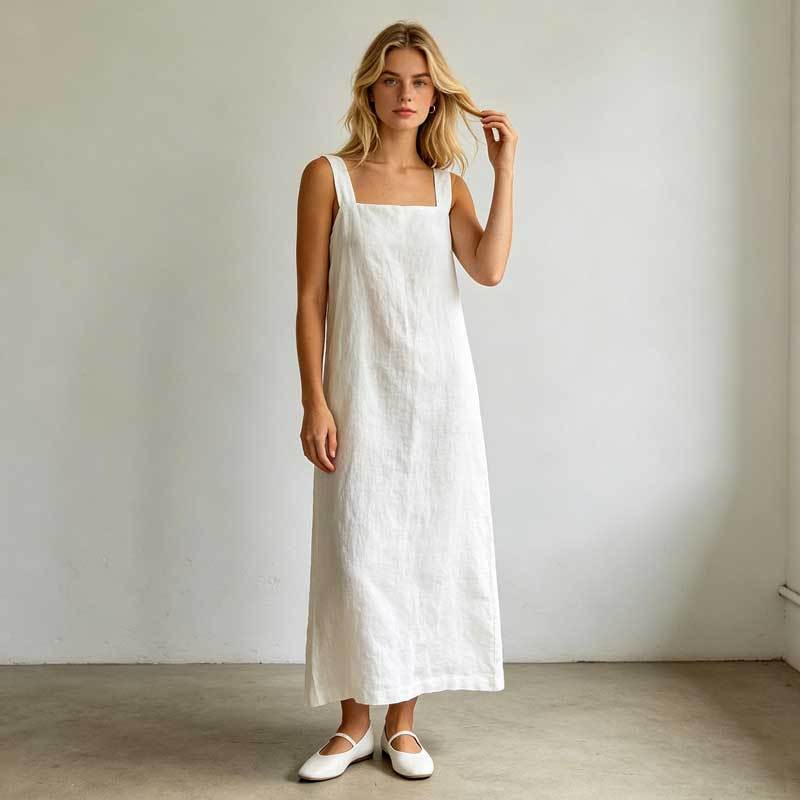
How to Style a Linen Dress for Fall: Layering That Works
Yes, you can keep wearing linen dresses well into fall — the trick is not one heavy coat, but a system of two or three lighter layers that respect the dress underneath. Linen is a breathable, moisture-moving fabric that sits comfortably between about 50°F and 68°F (10°C–20°C) once you add the right things over and under it: a fitted base layer when the dress is sleeveless, a knit cardigan or blazer as the middle layer, tights and boots to finish the bottom half, and one carefully chosen outer piece for genuinely cold mornings. The most common mistake is treating the dress as a summer relic and reaching for a single thick jacket; that crushes the silhouette and still leaves your legs cold. The layered approach keeps the dress the center of the outfit while giving you a workable temperature range that runs through most of the season. This guide walks through the temperature logic first, then the dress types that layer best, the three-layer system in detail, five complete looks you can copy this week, and the honest limits of where a linen dress stops being the right call. KOSSR makes 100% European flax linen, garment-washed for softness, with composition and weight stated on every product page — the weight number is genuinely useful here, because it tells you how much layer you need underneath.
Temperatures in this guide are practical working ranges for layering, not laboratory guarantees — your local wind, humidity, and how warm you personally run will shift every band by a few degrees. Where a fabric weight or denier number appears, it describes a common category, and KOSSR product pages state the exact weight of each garment.
The Short Answer: Layer in Threes, Not One Big Coat
If you take one idea from this guide, take this: a fall linen dress outfit is a three-layer equation — something under the dress, something over the dress, and something on your legs and feet. Each layer is thinner than you expect, because the linen itself is already doing part of the work. Linen's open weave and hollow flax fibres move moisture and release heat efficiently, which is exactly why it feels cool in summer; in cooler weather that same breathability means a linen dress traps almost no heat by itself, so every degree of warmth has to come from what you add. The practical result is that a 160 gsm garment-washed linen dress with a thin merino base, an open knit cardigan, opaque tights, and ankle boots covers roughly the same comfort range as a light coat — but it looks like an outfit instead of a bundle.
- Under the dress: add warmth closest to the body where it cannot wreck the silhouette — a fitted long-sleeve knit under a shirt dress, or a fine cotton camisole under a looser dress when you only need a little.
- Over the dress: choose one middle layer sized to stay open — knit cardigan, relaxed blazer, overshirt, or a longline vest — so the dress shape reads through it.
- Legs and feet: tights in 40–80 denier with ankle boots, or bare legs with loafers and a longer dress; the bottom half decides whether the outfit feels like fall or still feels like a summer holdover.
In short: do not ask one jacket to do everything. Distribute warmth across base, middle, and legs, keep each layer light enough that the linen dress stays visible, and you extend a summer dress into most of autumn without a single heavy coat in the picture.
The Fall Temperature Map for Linen Dresses
Weather, not the calendar, decides when a linen dress works — which is why the same dress can feel right in late September and wrong on an equally warm day in November. Work from the actual temperature at the time you will be outside, and adjust the layer recipe below. The bands are deliberately wide because wind and sun change everything; treat them as starting points, not rules.
| Temperature | What to add | A complete example |
|---|---|---|
| 68°F+ (20°C+) | Nothing, or a single thin layer: an open linen shirt worn over the dress, or a light scarf | Sleeveless linen midi dress, bare legs, flat sandals or loafers — summer dressing that already works |
| 60–68°F (16–20°C) | One light over-layer: knit cardigan, denim jacket, or relaxed blazer; bare legs still fine | Shirt dress with a fine knit cardigan, white sneakers or loafers — the classic early-fall look |
| 52–60°F (11–16°C) | Two layers: fitted base under the dress if it is sleeveless, plus a mid-weight cardigan or blazer over; add 40–80 denier tights | Midi dress with a long-sleeve knit base, oversized blazer, opaque tights, ankle boots |
| 44–52°F (7–11°C) | Three full layers: base + structured middle (blazer, overshirt, or knit) + a trench or wool coat for outdoors; 80+ denier tights and boots | Shirt dress, merino base, wool-blend overcoat, opaque tights, knee or ankle boots, scarf |
| Below 44°F (below 7°C) | Only the heaviest linen dresses still earn their place: layered under a real winter coat where the dress acts as a mid-layer or a skirt-and-top effect | Long-sleeve linen dress under a wool coat with a knit underneath, 100+ denier tights, boots — the dress becomes an extra layer, not the main event |
The most useful habit is checking the wind before you choose. A 55°F (13°C) day with sun and no wind takes the 52–60°F recipe and feels easy; the same temperature with a gusty wind will push you toward the colder band. Linen is not windproof — its weave lets air move — so wind is the factor that turns a comfortable outfit into a chilly one faster than temperature alone.
Which Linen Dresses Layer Best (and Which Fight You)
Not every linen dress takes layers equally well. The cut — not the colour or the fabric weight — decides how many layers you can add before the outfit starts to look bulky or the layers start to show through awkwardly. Here is the honest dress-by-dress picture, based on how these silhouettes behave:
| Dress style | Layering rating | Why, and the recipe that works |
|---|---|---|
| Linen shirt dress | Excellent | Button-front construction means you can add a long-sleeve knit underneath without fighting the neckline, and wear it open over a top later in the season. The single most versatile fall dress silhouette. |
| Linen midi dress | Very good | The longer hem balances an oversized cardigan or blazer, and mid-calf length works with tights and boots. The proportions forgive a generous middle layer better than any shorter style. |
| Linen maxi dress | Very good | A fitted knit worn over a maxi dress creates a skirt-and-top silhouette that reads as intentional layering. Sleeveless maxis accept a fine base layer underneath without lines showing. |
| Linen A-line or shift dress | Good | Easy to layer over; the relaxed shape hides a thin base. Avoid heavy chunky knits over it — the volume doubles. Keep the middle layer sleek and the fit slim. |
| Linen wrap dress | Good, with care | The wrap closure means anything bulky underneath distorts the fit and the neckline. Use a smooth, thin base layer and a light cardigan that does not pull at the wrap. |
| Linen slip dress | Fair — style only | The most honest entry: a slip dress under a chunky knit or blazer is a striking fall look, but it is the least warm option and needs opaque tights plus a real over-layer. It is a style choice, not a warmth strategy. |
If you are shopping for a dress that will carry you across the season, the linen shirt dress and linen midi dress categories are where the fall-friendly cuts live — button-front and longer hemlines both make layering dramatically easier. Linen maxi dresses belong in the same conversation for the skirt-over-knit trick. Whatever silhouette you own, the same principle applies: the looser the dress, the slimmer the layers you add to it; the slimmer the dress, the more room you have for texture and volume outside it.
Layer One — Under the Dress: Warmth That Never Shows
The layer nobody sees does more for your comfort than the layer everybody sees. When the dress itself is sleeveless or short-sleeved, a fitted base underneath adds meaningful warmth without changing the dress's shape at all — the key word is fitted. A slim long-sleeve knit in merino, fine cotton, or a cotton blend sits under a shirt dress or A-line dress invisibly, while a baggy thermal will create ridges and ruin the line.
The turtleneck-under-dress trick
The single most effective cold-weather move with a linen dress: wear a fine-gauge turtleneck or mock-neck underneath a button-front shirt dress, and leave the dress's top buttons open. The collar of the base layer frames your face, the dress provides the colour and texture, and the look reads as deliberate styling rather than a layering accident. This works from roughly 50–60°F (10–16°C) and is the look most people picture when they ask how to wear a summer dress into fall.
When the dress is loose or sleeveless
For a sleeveless A-line or maxi dress, a smooth camisole or a fine cotton linen camisole adds a modest layer of warmth and, more importantly, protects against the slight see-through effect that can appear when lighter linen is backlit in lower autumn light. If you want real warmth under a sleeveless dress, switch the camisole for the fitted knit and let the dress's straps or neckline sit over it — an intentional two-texture look that works to about 50°F.
Size honestly for base layers
If you plan to layer under a dress all season, buy the dress with that in mind: a shirt dress in your regular size usually accommodates one thin base layer; if you intend to wear a mid-weight knit underneath, size up once so the buttons do not pull. This is a fit question, not a fabric question — and if you are unsure how a style fits, the sizing guidance in our styling guide for linen dresses covers how these cuts run before you order.
The under-layer rule: fitted, smooth, and one shade either darker than the dress or deliberately tonal. Never looser than the dress itself, never ribbed heavily enough to print through, and never so thick that buttons strain. If the base layer changes the dress's fit, it is the wrong base layer.
Layer Two — Over the Dress: Choose the Middle Layer by Job
The over-layer is where fall styling actually happens — it is the layer people photograph and the layer that decides whether the outfit reads as intentional. The options below are ranked by the job they do over a dress, with the honest note that one over-layer rarely covers the whole season; most people own two or three of these and rotate by temperature.
| Over-layer | Best temperature | What it does to a dress | Styling note |
|---|---|---|---|
| Fine knit cardigan | 58–66°F (14–19°C) | Adds softness and colour without weight; keeps the dress silhouette visible | Wear it open, hem at hip level over a midi; belt it over a shirt dress for shape |
| Relaxed linen or cotton blazer | 54–64°F (12–18°C) | Sharpens the outfit; structured shoulder balances a soft dress | The natural-fibre pairing for work or city days — see our guide to linen blazers for fall layering |
| Overshirt or chore jacket | 50–60°F (10–16°C) | Gives a casual, outdoorsy frame; its boxy cut needs a slimmer dress under it | Leave it open over a shirt dress, sleeves rolled once, with straight-leg energy |
| Longline knit cardigan or duster | 50–58°F (10–14°C) | Adds the most warmth of the knits and elongates a midi or maxi dress | Best over slim dresses; the long vertical line keeps the outfit from looking wide |
| Vest or gilet (quilted or knit) | 46–56°F (8–13°C) | Warms the core — the part that feels cold first — while leaving arms and dress free | A surprisingly dress-friendly layer over a long-sleeve shirt dress with tights |
| Trench or wool overcoat | Below 50°F (below 10°C) | The outdoor layer: worn open or closed over everything for the commute, then removed indoors | Treat it as transport, not outfit — the dress plus middle layer is the look once you arrive |
Two proportion rules save every over-layer decision. First, volume in only one place at a time: an oversized blazer wants a slim dress under it, and a chunky cardigan wants a streamlined dress too — two loose shapes together read as sloppy instead of styled. Second, use length as your tool: a midi dress gives you permission to wear a cropped cardigan, while a shorter dress asks for a longer over-layer to keep the eye moving vertically. The blazers and jackets that do this job well are the relaxed, garment-washed styles — and the linen blazer collection is built around that cut rather than stiff tailoring.
The over-layer rule: one job per garment. The cardigan provides softness, the blazer provides structure, the vest provides core warmth, and the coat provides weather protection. When one over-layer tries to do two jobs — usually warmth and weather — it ends up too heavy for the dress and you are back to the one-coat mistake.
Layer Three — Legs, Feet, and the Finishing Details
Most people give up on linen dresses in fall because of their legs, not their torso — a warm top half and cold ankles feels worse than uniform chill. The bottom half is the third layer of the system, and it is the one that makes the outfit read as autumn rather than as a summer dress with a jacket on top.
Tights: match the denier to the temperature
- 20–40 denier (sheer): the bridge layer for 55–64°F (13–18°C) — takes the edge off without looking like you dressed for winter; works with loafers and low boots.
- 50–80 denier (opaque): the everyday fall choice for 46–56°F (8–13°C); a matte opaque tight reads as a deliberate colour block with the dress rather than a hosiery afterthought.
- 100+ denier (heavy opaque or fleece-lined): for below 46°F (8°C); choose these only when the outfit really needs the dress — below this point the honest question is whether the dress is still earning its place.
Colour is a styling decision, not an afterthought: black tights with a coloured dress are the safe classic; matching the tight to the dress's darker tone lengthens the leg; and earthy tones — rust, olive, chocolate — pair naturally with the palette of a garment-washed linen dress.
Footwear by dress length
Ankle boots work with every hem length and are the default fall answer; knee boots suit midi dresses particularly well because the boot shaft fills the gap between hem and ground; loafers and low-heeled boots read smarter for work, while chunky-soled boots lean casual. If you wear socks with cropped trousers or rolled jeans elsewhere in fall, the same instinct applies here — but keep socks tonal with your tights or boots so the line stays clean.
Finishing details that seal the look
A belt is the most underused fall tool: worn over a cardigan or blazer at the waist, it restores the dress's shape and stops the layered outfit from reading as a sack. A scarf — linen, silk, or fine wool — adds a frame of colour at the neck and fills the V that open collars leave in cold wind. Keep the accessories count at two or three, because the layered silhouette is already visually busy; the linen scarf collection is a natural match if you want texture without adding bulk.
Five Complete Fall Looks, One Dress Each
The fastest way to use this system is to copy a complete formula and adjust the colours. Here are five looks built around real linen dress silhouettes, each with its temperature and the exact layers involved:
- Morning errands, 55°F (13°C): linen shirt dress, fine merino long-sleeve underneath with the top buttons open, relaxed blazer, 50 denier tights, suede ankle boots, crossbody bag.
- Work day, 58°F (14°C): mid-calf midi dress, slim knit vest over it, low-heeled boots, structured tote; swap the vest for a blazer before meetings for a sharper line.
- Weekend brunch, 60°F (16°C): A-line linen dress, chunky knit cardigan in a contrasting earth tone, loafers, no tights if the sun is out — the easiest look on this list.
- Evening out, 50°F (10°C): slip dress under an oversized black knit with a fine chain belt, opaque tights, heeled ankle boots — the deliberate texture-contrast look from earlier, styled up.
- Cool travel day, 48°F (9°C): maxi dress with a fitted knit worn over it as a top (skirt effect), quilted vest, 80 denier tights, sturdy boots — a look that survives airports and train stations with dignity.
Notice what the five looks share: every one uses the dress as the colour and texture anchor, keeps the under-layer fitted, restricts volume to one over-layer, and treats the bottom half as a real decision rather than an afterthought. If you want the broader framework this fits into — how each linen garment crosses the season, not just dresses — our summer-to-fall wardrobe transition guide covers the full capsule — the reverse mirror, styling linen dresses in warm weather, completes the other half of the year.
The 60-Second Check Before You Walk Out
Layering fails happen in the doorway, not in the planning — usually because one layer is wrong rather than missing. Run this check before you leave and most cold-weather dress days fix themselves:
- Fit first: buttons zip and close without strain over the base layer, and the dress's silhouette still reads as the outfit's centre.
- One volume at a time: if the over-layer is oversized, the dress and base are slim — never two loose shapes.
- Legs matched to torso: if you needed a vest or second over-layer for your core, your legs need opaque tights and closed boots, not bare ankles.
- Wind check: open-weave linen lets air through — on a windy day, add a layer you would skip on a still one at the same temperature.
- Indoor plan: the outfit should still work with the over-layer removed, because you will remove it — the dress plus middle layer is the indoor look.
- Honest mirror test: if the layers have hidden the dress so completely that it could be anything underneath, drop one layer and let the linen back into the picture.
Quick rule of thumb: at 60°F you should see the dress and one layer; at 50°F the dress, a visible base, and one over-layer; below that, the dress works best as a layer inside a proper winter coat — and at some point, the honest answer is to switch to linen trousers and a knit instead.
Colour, Texture, and the Wrinkle Reality of Layered Linen
Two styling instincts separate layered outfits that look expensive from ones that look accidental, and both are easy to apply. First, deepen the palette as the temperature drops: the summer white, sand, and sky tones that make a linen dress feel light also make it look thin in October. Move toward rust, olive, chocolate, ink, and burgundy — in the dress if you are buying for fall, or in the layers and tights around the dress you already own. Second, create texture contrast on purpose: linen is a smooth, matte, slightly irregular weave, so it photographs beautifully against ribbed knits, brushed wool, and suede. A fine knit under a shirt dress or a chunky cardigan over an A-line dress is not just warmth — it is the visual interest that makes the outfit read as styled.
On the wrinkle question, layered linen is actually easier to live with than bare linen. Creases in the dress are partly hidden by the over-layer, and the fitted base layer underneath holds its own shape. If you steam the dress the night before and hang it, a full day of layering will leave it looking intentional rather than crushed — relaxed creases are part of linen's character, and garment-washed linen arrives already softened, which is why the wash matters. Care questions about steaming, ironing, and washing layered pieces are answered in the linen care FAQ, and the temperature logic for the wider season sits in our guide to wearing linen in fall.
Frequently Asked Questions
Can you wear tights with a linen dress in fall?
Yes — tights are the layer that makes a linen dress viable in fall. Choose 40–80 denier opaque tights for the 46–58°F (8–14°C) range and sheerer 20–40 denier above that. Match them tonally with the dress for a longer leg line, or use black as the safe contrast, and finish with ankle boots or loafers.
Will layering crush the linen or ruin its drape?
Layered correctly, no. The dress keeps its shape when the under-layer is fitted (so it cannot bunch) and the over-layer is worn open (so it does not compress the fabric). Heavy chunky knits worn buttoned over a loose dress are the main culprit — that combination presses the linen into deep creases by the end of the day.
What do you wear under a slip dress in cool weather?
A slip dress is the style-first option: the classic cold-weather move is a fitted long-sleeve knit or turtleneck under it, worn as a deliberate layered look, with opaque tights and boots. Expect it to be less warm than a shirt or midi dress at the same layer count, and treat it accordingly — it is a fashion choice with real limits.
Is a linen dress warm enough for fall evenings?
By itself, no — linen traps little heat, which is its summer strength. With the three-layer system (fitted base, over-layer, tights and boots) a mid-weight linen dress is comfortable into the mid-40s°F (around 7°C) for most people. Below that, let the dress work inside a winter coat rather than trying to make it a standalone warmth piece.
Can I wear a white linen dress in fall?
You can, and the styling rule is to ground it: white or ivory linen reads as autumn when it is layered with earth tones — olive knit, rust scarf, chocolate tights and boots. The all-white summer styling is what dates it; the fabric itself has no season.
The Two-Minute Summary
A linen dress is not a summer-only garment — it is a fabric whose breathability simply means the warmth must come from layers, not from the weave. The system is three layers working together: a fitted base under the dress, one well-chosen over-layer sized to keep the silhouette visible, and tights plus footwear that solve the cold-legs problem. Dress cuts matter — shirt dresses and midi dresses are the easiest to layer, slip dresses the most style-limited — and temperature bands between roughly 44°F and 68°F (7°C–20°C) cover most of the season when you match the recipe to the day. Below that, keep the dress honest: let it work as a layer under a real winter coat, or switch to linen bottoms where the warmth math is easier. The full autumn-layering framework for every linen piece is in our autumn layering FAQ, and for dress styles across the warmer season, the summer linen dress styling guide completes the year.
Build Your Fall Linen Dress Rotation
Shop 100% European flax, garment-washed linen dresses and blazers with composition and weight stated on every product page — or ask us anything about layering, fit, or care before you order.
Browse linen dresses · Shop linen blazers · Ask us a question