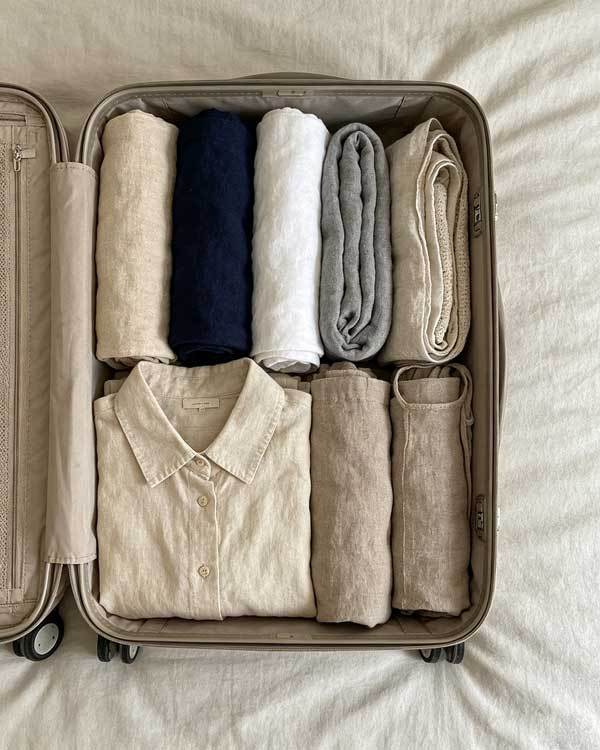
Styling FAQ · Autumn Layering
Is Linen Suitable for Autumn Layering?
Yes — linen is genuinely suitable for autumn layering, and the reason is a fabric property most people misunderstand. Linen's breathability is not a summer-only feature; it is a two-way mechanism. The same hollow flax fibres that let heat escape in July trap a thin layer of still air next to your skin when covered by a knit or jacket in October — which is the same insulating principle wool uses. In practice, layered linen is comfortable across roughly 10–25°C: linen as the breathable base, a knit or sweater as the mid layer that provides warmth, and a blazer, trench, or wool coat as the outer layer for wind and cold. The honest limits are equally clear: linen alone will not keep you warm below about 10°C, and its open weave is poor wind protection, so the outer layer does that job. This answer explains the temperature windows, the layer-by-layer principle, and which linen pieces and materials layer best together — based on the same fabric facts we publish on KOSSR product pages: 100% European flax, garment-washed, with composition and weight stated directly.
This answer is based on how flax linen actually behaves in layered outfits — practical temperature targets from real seasonal dressing, not laboratory claims. Where numbers appear, they are working ranges, not guarantees.
Linen's autumn range
Roughly 10–25°C when layered correctly; below that it works as a base under heavy winter outerwear.
Three layers, three jobs
Linen manages moisture and comfort; the mid layer traps warmth; the outer layer shields wind and cold.
Material matters
Linen pairs best with wool, cotton knit, and cashmere mids — breathable naturals that trap still air without trapping sweat.
The Direct Answer: Why Linen Layers Well in Autumn
The short answer is yes, and the longer answer is about how layering works with a breathable fabric. Linen is suitable for autumn layering because it performs the two jobs a base layer actually needs: moisture management and temperature regulation. The misunderstanding comes from treating breathability as a cooling feature only. It is not — it is an air-management feature. In summer, the open weave and hollow flax fibres move heat and humidity away from the skin. In autumn, when you cover that linen with a knit or jacket, the same structure traps a thin layer of still air between the fabric and your skin, and still air is the best insulator a natural fibre can offer.
That is the same principle wool relies on, which is why the classic autumn pairing of linen and wool is not a contradiction — it is a division of labour. The linen manages the microclimate next to your skin: it wicks perspiration when you move between cold outdoors and warm interiors, dries fast, and stops the clammy feeling that synthetic bases cause. The wool or knit on top traps the warmth. This is also why our related answer on wearing linen in fall reaches the same conclusion from the seasonal side, and why the transition guide on moving linen from summer to fall treats layering as the core method.
- Linen regulates, it does not insulate alone. A single lightweight linen shirt at 10°C will not keep you warm. Linen's autumn job is comfort and moisture underneath; the layers above provide the warmth.
- Garment-washed linen layers smoothly. Pre-softened, pre-shrunk linen drapes flat under a knit or jacket instead of bunching stiffly like raw linen, which is the finish that makes layering actually comfortable.
- Mid-weight linen holds its line. At roughly 150–180 gsm, garment-washed linen has enough body to sit cleanly under an outer layer without adding bulk — featherweight summer weaves collapse and shift.
- Linen blocks little wind. The honest counterpoint: its open weave is weak against wind, so on a blustery day the outer layer must do the shielding. Layering is not a magic trick; it is a system with clear job assignments.
The direct answer: yes, linen is suitable for autumn layering — as the breathable base of a three-layer system across roughly 10–25°C, with a mid layer for warmth and an outer layer for wind. What does not work is unlayered linen on a cold day, and no honest guide will claim otherwise.
The Temperature Guide: What Linen Layering Works At
Match your linen layers to a temperature window rather than a calendar date, because autumn swings wildly by region and week. Here is the honest breakdown of what works at each temperature:
| Temperature | Is layered linen suitable? | Layer system |
|---|
| 20–25°C |
Yes, easily |
Linen alone, or with one light layer — a thin knit, overshirt, or cardigan you can remove indoors |
| 15–20°C |
Yes, comfortably |
Linen base + one mid layer (knit, sweater, blazer); switch to longer cuts and closed shoes |
| 10–15°C |
Yes, with a full system |
Linen base + mid layer + outer (blazer, trench, or wool coat); tights or thermal leggings under trousers |
| 5–10°C |
Only as a base layer |
Linen under heavy winter outerwear, or indoors; the warmth comes entirely from the layers above |
| Below 5°C |
Rarely the main choice |
Linen is fine as an indoor base or under a heavy coat, but wool and insulation do the real work outdoors |
Most people in temperate climates experience the 15–25°C windows for six to ten weeks of autumn, and those are exactly the temperatures where layered linen shines. The practical habit: check the morning low and afternoon high before dressing, because autumn days often swing 8–10°C. A linen base with a peelable mid layer handles that swing better than any single heavy garment, which is the strongest practical argument for linen layering in autumn.
The Layering Principle: Three Layers, Three Jobs
The reason linen layering works is that each layer has exactly one job, and no layer is asked to do another layer's work. This division is what separates comfortable autumn dressing from bulky, clammy dressing:
- Base layer — your linen. A long-sleeve linen shirt, blouse, or top sits next to the skin. Its job is moisture management and breathable comfort, not warmth. Garment-washed linen at roughly 150–170 gsm is the ideal base — soft enough to wear against the skin, structured enough to layer under.
- Mid layer — the warmth. A knit cardigan, crew-neck sweater, overshirt, or blazer goes over the linen. This layer traps the air that actually insulates. Wool, cotton knit, or a textured natural-fibre sweater all work; the mid layer is where temperature control happens, which is why it should come off easily indoors.
- Outer layer — the weather shield. A trench, wool coat, blazer, or padded jacket handles wind and cold when you step outside. In early fall this layer may stay in the car; by late fall it is the first piece you reach for. Linen rarely appears in this layer — its job in the system is underneath.
The system works because each layer is replaceable. A 20°C day needs only base + mid; a 12°C morning needs all three; a heated office at 22°C needs just the base again. This peel-ability is the single biggest advantage of a linen-based autumn wardrobe — and the reason our guide on building a linen capsule wardrobe recommends building around bases and mids rather than buying one heavy coat for everything.
Which Materials Layer Best With Linen?
Not all mid layers are equal over linen. The principle is simple: pair breathable naturals with linen so the system breathes as a whole; avoid synthetics that trap moisture against the very fabric meant to move it away. Here is how the usual materials compare:
| Mid-layer material | How it works over linen | Best for |
|---|
| Wool (merino, lambswool) |
Traps still air for real warmth while still breathing; the classic linen partner |
12–18°C days, the workhorse autumn mid layer |
| Cotton knit |
Breathable and soft, lighter warmth; layers cleanly without bulk |
15–20°C, early autumn, indoor-first days |
| Cashmere or alpaca |
Lightweight warmth with excellent drape; sits beautifully over linen's texture |
Cooler days, dressier outfits |
| Polyester fleece or knit |
Traps heat but traps moisture too — the clammy layer that defeats linen's purpose |
Avoid over linen; choose wool or cotton instead |
| Linen blazer or jacket |
Structure over structure — a mid-weight linen blazer over a linen shirt adds line without weight |
Office and event days in the 14–20°C range |
The pairing rule in one line: linen manages moisture, so everything above it should also breathe — wool and cotton do, polyester does not. If you are choosing pieces for the system, a merino or lambswool knit is the highest-value mid layer, and it is the material we recommend first in our related FAQ on styling a linen dress for cooler days, where the same base-plus-knit logic applies to dresses.
Which Linen Pieces Layer Best in Autumn
Not every linen piece transitions equally well, and three factors decide how far a piece carries into autumn: weight, cut, and finish. Here is the honest piece-by-piece picture:
Linen shirts and tops — the best autumn base
A long-sleeve garment-washed linen shirt at 150–180 gsm is the most versatile autumn base in the wardrobe. It layers under knits without bulk, buttons or unbuttons to manage temperature, and works from 10–25°C depending on what goes on top. Our styling FAQ on how to style a linen shirt covers the outfit combinations; for autumn the formula is shirt + knit + coat.
Linen trousers — the year-round anchor
Mid-weight linen trousers transition almost seamlessly: worn alone to 18°C, with a knit on top to 12°C, and with thermal or merino leggings underneath to about 8°C — the loose drape hides the extra layer completely. The styling detail is in our FAQ on how to style linen pants.
Linen dresses — layerable with the right additions
A mid-weight linen dress takes a turtleneck underneath or a knit worn over it like a cardigan, plus tights and boots, and stays in service for weeks longer than a bare-arms version. The full method is in our FAQ on styling a linen dress.
Linen blazers and jackets — the missing middle
This is the piece most autumn wardrobes lack. A garment-washed linen blazer at 180–220 gsm adds both warmth and structure across the 12–20°C range, and layers under a wool coat when it cools further — the full system is covered in our linen outerwear collection, where weight and finish are stated on every piece.
Linen shorts — retire them early
Honest advice: shorts are the one piece most people retire by mid-October. They work through the warm September tail with tights, but past 12–14°C they look and feel seasonal. Let trousers carry the transition.
The autumn buying rule: if you buy one piece to make linen layering work in autumn, make it a mid-weight (150–180 gsm) garment-washed long-sleeve shirt or a linen blazer at 180–220 gsm. Those two pieces anchor most autumn outfits.
Caring for Layered Linen in Autumn
Autumn linen gets worn in layers, washed less often, and stored for longer stretches — which changes the care routine in small but useful ways:
- Wash less, air more. Worn over a base layer, autumn linen stays cleaner — air it after each wear and wash every few wears. Fewer washes preserve the fabric and the garment-washed softness. The full routine is in our FAQ on how to wash linen clothing.
- Handle layering creases with steam. Linen worn under a knit or coat develops pressure creases that differ from summer's casual wrinkles. Hang it overnight after a layered day, and use steam rather than a hot iron on garment-washed fabric. Our FAQ on removing wrinkles from linen covers the steam-first method.
- Keep the cool-water rule. Wash at 30°C or below with mild detergent and no bleach — cool water protects both the fibre and the deep autumn colours, which stay richer longer when washed cool.
- Air-dry away from heat. Avoid radiators and tumble dryers. Linen dries fast anyway; a shirt hung in a ventilated room is usually ready the same evening.
When Linen Layering Does Not Work: The Honest Limits
To give a complete answer, here is where the "yes" stops:
- Below about 5–8°C outdoors, linen stops being the main choice. Its open weave provides little insulation on its own; wool and insulation do the real work. Linen remains useful as an indoor base or under a heavy coat, but expecting it to carry a freezing day is unrealistic.
- Windy days defeat unlayered linen. Linen blocks wind poorly. On a blustery day, the outer layer matters more than the fabric beneath — plan the coat first.
- Featherweight linen has a season limit. A 110 gsm summer dress or shirt will not layer convincingly into late October. Mid-weight pieces transition; featherweight ones retire earlier.
- Synthetic mids defeat the system. A polyester fleece over linen traps the moisture linen is designed to move — the combination feels clammy and defeats the entire point. Layer linen with wool and cotton, not synthetics.
- Linen alone never replaces a knit. The fabric's job in autumn is comfort and moisture, not warmth. If an outfit relies on linen for heat, it will be cold — the mid layer must earn its place.
These limits are why the honest answer is "yes, with a system" rather than a blanket yes. Within 10–25°C, layered linen is comfortable, stylish, and practical; outside that range, it plays a supporting role rather than the lead.
Related Questions
Is linen good for hot weather?
The summer side of the same fabric — why breathability makes linen a warm-weather essential and how the same property works in reverse for layering.
Build an Autumn Layering System
Browse the KOSSR collection of 100% European flax, garment-washed linen — shirts, trousers, dresses, blazers, and sets in warm neutral and deep autumn tones — or contact us with any question about fabric weight, layering, or fit before you order.
Browse linen clothing · Ask us a question