Linen vs Wool: Choosing the Right Natural Fabric for Cooler Weather
- Share
- publisher
- KOSSR
- Issue Time
- Sep 17,2026
Summary
Linen and wool compared for cooler weather: why wool traps air and holds warmth while linen conducts heat and dries fast, what moisture regain numbers mean, which fabric weights work between 8 and 18 degrees Celsius, how to layer linen under wool, and where each fibre stops working.
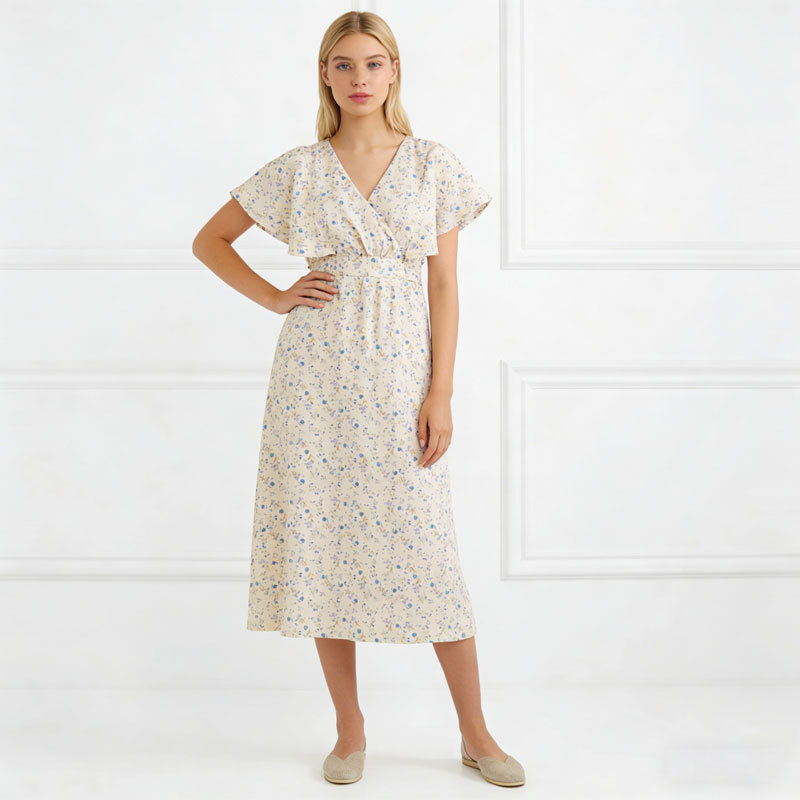
Direct answer: Wool is the warmer fibre and linen is not trying to be. Wool keeps you warm by trapping air inside a crimped, lofted structure and by releasing a small amount of heat as it absorbs moisture, which is why a wool layer can feel genuinely warm at 5°C. Linen does the opposite job well: flax fibre conducts heat away from the skin quickly and holds very little still air, so it feels cool and dry even when the surrounding air is cold. That does not make linen a summer-only fabric. Between roughly 8°C and 18°C, a mid-weight linen layer worn next to the skin under a wool mid-layer manages moisture better and overheats less than wool worn directly against the skin, because linen moves perspiration outward fast and dries quickly. The practical answer is not either-or: linen is the layer that touches your skin, wool is the layer that holds the warmth, and a wind-resistant outer layer takes over below about 8°C. If you want the fabric that does the daily work across three seasons, that is usually a mid-weight linen shirt or shirt dress underneath wool, not one fibre replacing the other. Written for shoppers who have been told that linen is a summer fabric and wool is a winter fabric, and who want to know what each fibre actually does to body heat, what the moisture numbers look like, how fabric weight changes the answer, and where each one genuinely stops working. Most fabric comparisons are framed as a contest with a winner, and that framing breaks down almost immediately here. Linen and wool come from different plant and animal sources, they have opposite surface structures, and they are at their best in different positions in the same outfit. Treating them as rivals is a bit like comparing a raincoat with a jumper: both are useful, both are made for weather, and neither one does the other's job. Wool is a protein fibre built from overlapping scales around a crimped core. The crimp is the wave in the fibre, and the wave is why wool yarns hold so much air. Air is a poor conductor of heat, so a fabric that traps a lot of it slows the rate at which body heat escapes. Wool also absorbs water vapour inside the fibre rather than only on its surface, and that absorption releases a small amount of energy as heat, a well-documented effect known as heat of sorption. Both mechanisms point in the same direction: wool slows heat loss and can feel actively warm. Flax is a cellulose fibre with a smooth, slightly waxy surface and a highly crystalline internal structure. It is denser, it conducts heat more readily than wool, and it holds far less still air. When this fibre touches skin that is warmer than the surrounding air, heat moves out of the skin and into the fabric quickly, which is exactly what you perceive as a cool, dry, crisp hand feel. The same property that makes linen pleasant in a heatwave is what makes it feel chilly on a cold morning. Read those two paragraphs as a description of two functions rather than two competitors and the buying decision gets much simpler. Linen is a contact-cooling, moisture-moving fibre. Wool is an insulating, moisture-buffering fibre. A wardrobe that mixes them can cover a far wider temperature range than a wardrobe built on either one alone, which is why so many cold-weather outfits in linen-friendly wardrobes are built as a stack rather than a single garment. To understand why wool wins the warmth question, it helps to separate the three things it does at once. Each of them is a physical property of the fibre, not a marketing claim, and each of them can be checked against what you feel when you wear it. The consequence is that wool produces insulation that scales up and down gently. A light merino layer is warm without being heavy; a chunky knit is very warm. You can add or remove one layer and change the comfort band by several degrees, which is why wool dominates mid-layers in autumn and winter clothing. Wool also has honest limits, and it is worth knowing them before you build a whole winter around it. When wool gets properly wet rather than merely damp, water displaces the air in the structure, and because water conducts heat far better than air, the insulation value falls sharply. Wool is also not windproof in a plain knit, and it can be heavy, slow to dry when saturated, and costly compared with plant fibres. The fibre wins the warmth argument; it does not win every argument. Linen is often described as breathable, and the word is doing a lot of work in that sentence. Breathability usually means air permeability, how easily air passes through the fabric. Linen scores well there because plain-weave linen has an open structure with relatively little yarn crimp, so air moves through it readily. But the more important behaviour in a cold-weather discussion is a different property: the way flax conducts heat away from the skin. Flax is a dense, crystalline cellulose fibre with a smooth surface. Compared with wool, it conducts heat more readily and holds less still air, so when it sits against warm skin in cool air it draws heat outward quickly. That is perceived as a cool touch. It is the same reason a marble floor feels colder than a wooden one at identical temperature: the floor is the same temperature, but the marble moves heat out of your foot faster. Two other linen properties matter for cooler weather: Put those two behaviours together and you get the profile that makes linen genuinely useful in autumn: it is not warm, but it is dry, fast-drying and non-clinging. A dry layer feels far warmer than a damp one, and that single fact is the bridge between linen and the cold-weather wardrobe described in the rest of this guide. Temperature alone does not decide which fabric feels better, because humidity, wind and activity level all change the calculation. Still, it is useful to map the broad bands where each fibre usually performs well, provided the numbers are read as general guidance rather than laboratory thresholds. The table below assumes a normally active adult, light to moderate wind, and a mid-weight fabric of roughly 150 to 200 gsm in the linen case. Two caveats belong with that table. First, activity changes everything: the same person walking briskly at 10°C generates considerably more body heat than the same person sitting still, and linen's ventilation becomes an advantage in the first case and a disadvantage in the second. Second, fabric weight matters as much as fibre type, which is why the next sections deal with grams per square metre and with the layer system rather than with fibres alone. If you remember one technical term from this comparison, make it moisture regain. It is the percentage of water a dry fibre absorbs from the air at a standard temperature and humidity, usually quoted at 20°C and 65% relative humidity, and it explains most of the difference you feel on your skin. Typical published values are around 12% for flax, around 8.5% for cotton, around 11% for silk, and around 16 to 17% for wool, with polyester below 1%. Those gaps look small in percentage points and feel large in practice, because regain affects three things at once: how the fabric feels when you touch it, how fast it takes perspiration away from skin, and how damp it becomes before you notice. There is a practical test you can run at home. Wear a linen shirt and a cotton shirt of similar weight on two similar autumn days involving the same amount of walking, and take note of how each feels on your back when you stop moving. The linen garment commonly dries out and returns to a neutral feel in a shorter time, while the cotton one holds a damp patch longer. On a cool day, that difference in drying time is worth more than a small difference in insulation, because a dry layer keeps its air space and a wet one does not. This is also the point where the linen-versus-wool question becomes a layering question. The fibre with the higher regain is better at staying warm in damp cold; the fibre with the faster drying time is better at staying dry in active cold. Wearing them in the right order lets you collect both benefits instead of choosing between them. Base-layer choice is decided less by warmth than by moisture. In cool weather the layer against your skin has one job: move perspiration away from the body and dry quickly, so that the insulating layers above it stay dry and keep their trapped air. For that role, linen has a genuine advantage over wool for many people. It absorbs and releases vapour quickly, it does not cling when damp, and it feels crisp rather than scratchy. For anyone who finds coarser wool uncomfortable against the skin, this is not a minor point; it is the difference between wearing the layer at all and taking it off after twenty minutes. Wool has its own case as a base layer, and it is a strong one when the wool is fine. Fine merino has fibre diameters commonly around 17 to 19 microns, well below the roughly 30 micron threshold at which wool fibres start to feel prickly to most people, and it buffers moisture effectively. On a cold, damp day with little activity, a fine wool base layer will usually feel warmer than linen. On a cold day that involves walking, stairs or a warm train carriage, the same layer can leave you overheated and damp, which is where linen's ventilation wins. A workable rule for the transition season looks like this: choose the base layer for the humidity and your activity, and choose the mid-layer for the temperature. If you run warm, or the day will involve movement and indoor heating, put linen against your skin. If you run cold and will mostly be still outdoors, put fine wool there. Either way, the next layer up is where the actual warmth is added. Layering works because each layer adds a small, controllable amount of insulation while managing moisture, so you can shed heat in stages instead of all at once. The table below is written for a temperate autumn day that starts near 7°C and warms to about 16°C, with a light breeze, which is the pattern most common between late September and early November. Two details make this system work better than simply piling on clothes. First, keep the layers close but not tight. Compression flattens the air space that does the insulating, so a wool knit squeezed under a tight coat is much less warm than the same knit with room to trap air. Second, make sure each layer can be removed without disturbing the others. A mid-layer you can pull off and tie around your waist is more useful on a variable day than a single heavy garment that you are stuck with until you go home. Linen earns a place in this system even on genuinely cold days, because it is the layer that keeps the wool dry. A wool layer that sits directly on damp skin loses much of its insulating value, since water conducts heat away far faster than the air it displaces. Putting linen underneath protects the wool's performance, which is a benefit that has nothing to do with linen's own insulation and everything to do with moisture. Fibre type sets the character of a fabric; weight and weave set how much of that character you actually feel. Two linen garments can behave like different materials if one is a light voile and the other is a heavy, tight plain weave, so any comparison that ignores grams per square metre is only half the story. Linen garments on the market typically run from about 120 gsm at the light end, through 150 to 190 gsm in everyday shirts and dresses, up to roughly 240 to 260 gsm in heavier shirting, wide-leg trousers and outerwear. For cool-weather use, the useful thresholds are reasonably clear: Weave matters as much as weight. A tight plain weave blocks more wind and holds its shape, which is why it reads as formal and works in a blazer. A loose, open weave ventilates more and drapes softly, which is why it reads as relaxed and belongs in a summer shirt. A twill or herringbone weave in the same fibre will add weight and structure without adding much warmth in itself, because warmth still comes mainly from trapped air, not from fibre density. One garment detail resolves a lot of the ambiguity: look for the gsm listed on the product page. KOSSR lists fabric weight, fibre composition and pre-wash treatment for each style, and those three numbers tell you more about how a piece will behave in October than any general statement about linen being a summer fabric. If you want the longer version of that reasoning, the transition logic is set out in whether linen is suitable for autumn layering. Honest comparisons include the parts where the preferred option loses. Linen is a good bridge fabric, and it is not a replacement for wool in real cold. Four limitations are worth stating plainly. None of those points is a reason to leave linen out of a cold-weather wardrobe. They are reasons to place it correctly: next to the skin, under something warmer, with a wind-blocking layer available when the forecast calls for one. Used that way, its weaknesses are covered by the layers above it, and its strengths are the ones that keep the whole outfit comfortable. Wool has its own list of compromises, and they are the reason a linen-only or wool-only wardrobe is a bad idea in the other direction. The useful summary is that wool is the better insulator and the worse all-round contact fibre for many people, while linen is the better contact fibre and the worse insulator. That asymmetry, rather than a ranking, is the practical conclusion of the comparison. Because the two fibres fail in opposite conditions, blends sell on a real logic rather than a marketing story. A linen-wool blend combines linen's moisture movement and dry hand with wool's air retention and warmth, producing a fabric that is warmer than pure linen and lighter and crisper than pure wool. How a blend behaves depends heavily on the ratio, so it is worth reading the composition rather than the label name. A blend that is mostly linen with a modest wool content stays close to linen in feel while gaining some warmth and some wrinkle recovery. A blend that is mostly wool behaves like a lighter wool with better moisture handling. Three-fibre mixes that add a small amount of a synthetic fibre usually trade a little breathability for shape retention and easier care, which is a reasonable trade for outerwear and a poor one for a next-to-skin layer. If you are buying to layer, the composition percentages and the gsm tell you where the garment belongs in the stack. A lighter, linen-rich blend is a base-layer candidate. A heavier, wool-rich blend is a mid-layer. Both are more useful in a mixed autumn wardrobe than a fourth plain cotton item, because cotton sits awkwardly in this system: it absorbs moisture but holds it longer than linen, and it holds less air than wool, so it is neither the best base layer nor the best insulator. Most autumn wardrobes do not need more clothes, they need pieces that can be worn in more than one configuration. Six items cover the 8°C to 18°C band, and they do it mostly with linen doing the daily work and wool doing the warming. The test for whether a capsule is working is simple: count how many of these six you can wear at the same time and how many you can remove one by one as the day warms up. A wardrobe where two pieces do all the work is not a capsule, it is a purchase. A wardrobe where each piece has a defined position in the stack is one you will actually wear from September into November. Cold-weather care is different from summer care mainly because the garments are heavier, worn more often, and often layered against skin. Two routines, kept separate, protect both fibres. For linen, the priorities are cool washing and avoiding unnecessary heat: For wool, the priorities are minimal washing and controlled drying: In both cases, the single best habit is to wash less and air more. Heavier garments worn over a base layer do not need to be cleaned as often as the base layer does, and a linen base layer is the piece that carries the washing load. That arrangement also extends the life of the more expensive wool pieces, which is where the real cost per wear is decided. Several ideas about linen circulate widely and are contradicted by how the fibre actually behaves. Clearing them up is the fastest way to use linen properly outside summer. If you take one habit from this list, take the layer habit. Almost every disappointment with linen in cool weather comes down to an expectation that a single garment can do the work of three, and almost every good experience comes from giving linen the one job it does best and letting wool do the warmth. In the 16°C to 22°C range, a mid-weight linen shirt or dress is usually comfortable on its own, particularly while moving. Below about 16°C, most people want a second layer, and below about 10°C, linen alone is not enough for sitting still outdoors. Think of linen as the layer that keeps you dry rather than the layer that keeps you warm. Linen normally goes underneath, directly against the skin, with wool above it. That order lets linen move moisture away from the body and away from the wool, so the wool keeps its trapped air and its insulation value. The reverse order, wool against skin and linen on top, works in mild weather but gives up linen's main advantage. Around 150 to 190 gsm is the most flexible range, because it feels substantial on a cool morning without becoming heavy indoors. Above roughly 200 gsm, linen gains structure and some wind resistance and works well as an outer layer, but it adds less warmth than an equivalent weight of wool or a wool blend. Yes. Linen releases moisture quickly and does not hold water as tightly as cotton or wool, so a damp linen layer returns to a neutral, dry feel sooner. That is the main reason it works well next to the skin during active autumn days when you move between cold air and heated indoors. The comparison resolves cleanly once you stop asking which fibre is better and start asking which layer you are filling. Wool is the warmer fibre: crimp, loft and high moisture regain give it air to trap and heat to release, and it holds that warmth in damp cold better than any plant fibre. Linen is the drier fibre: crystalline flax conducts heat away quickly and releases moisture fast, so it feels crisp, dries quickly and never clings. For cooler weather, that makes linen the base layer and wool the insulation. Between roughly 8°C and 18°C, a mid-weight linen layer under a light wool knit covers most autumn days, including the ones that start cold and finish warm. Below 8°C, add a wind-resistant outer layer and cover the extremities. Above 18°C, the wool comes off and the linen stays. Read the composition and the weight before you buy, and the decision mostly makes itself: a mid-weight linen shirt or shirt dress is the piece that earns the most wear across the season, and a fine wool knit is the piece that makes it work in the cold. Neither replaces the other, and the outfit that gets both right is the one you will reach for every morning from September onwards. KOSSR makes 100% European flax linen garments, garment washed for a softer hand and pre-shrunk for dimensional stability, with fibre composition, fabric weight and pre-wash treatment listed on every product page. Start with the mid-weight pieces that layer under wool all season. Shop linen shirts · Shop linen sets · Read the autumn layering guideLinen vs Wool: Choosing the Right Natural Fabric for Cooler Weather
Why Linen and Wool Are Not Really Competitors
How Wool Retains Heat: Crimp, Loft and Trapped Air
How Linen Handles Heat: Conduction, Wicking and the Dry Feel
The Comfort Window: Where Each Fibre Works Best
Conditions
Linen next to skin
Wool next to skin
What usually works best
Above 24°C, humid
Excellent, stays dry and crisp
Often too warm and clingy
Linen alone
18-24°C, mixed
Comfortable, dries quickly
Comfortable if fine and light
Either, linen for humid days
8-18°C, transition
Cool alone, excellent as a base layer
Warm alone, can overheat indoors
Linen base plus light wool layer
0-8°C
Too cool as the only layer
Effective, especially in a knit or coat
Linen base plus wool mid plus shell
Below 0°C or strong wind
Not sufficient without a windproof layer
Warm but needs wind protection
Insulated shell over both
Moisture Regain: The Number That Explains Cold-Weather Feel
The Layer That Touches Your Skin
Building an Autumn Layer System With Linen and Wool
Layer
Fibre and weight
Job it does
Example from the KOSSR range
Base
Linen, roughly 150-190 gsm
Moves vapour out, dries fast, keeps the mid-layer dry
A mid-weight linen shirt
Mid
Wool knit or light wool blend
Traps air, buffers moisture, provides the warmth
A fine merino crew or cardigan
Outer
Linen blazer, heavy linen jacket, or a wind-resistant coat
Blocks wind, adds a little insulation, keeps the look sharp
A structured linen blazer
Extras
Wool socks, scarf, hat
Covers extremities that lose heat fastest
Any warm accessory
Fabric Weight and Weave: What Changes at 190 gsm
Where Linen Falls Short in Cold Weather
Where Wool Falls Short
Linen-Wool Blends and Three-Fibre Mixes
A Cooler-Weather Capsule: Six Pieces That Earn Their Space
Caring for Linen and Wool in Colder Months
Five Myths About Linen in Cold Weather
Frequently Asked Questions
Is linen warm enough for autumn on its own?
Should linen go under or over wool?
What weight of linen works best for cooler weather?
Does linen dry faster than wool?
The Verdict: Pick the Fibre for the Job, Not the Season
Build the Layer That Does the Daily Work