Can Linen Go in the Dryer?
Yes, linen can go in the dryer in some cases, but it should only be dried on low heat or an air-dry setting, and it should be removed while still slightly damp. High heat is not recommended because it can cause linen to shrink, stiffen, or develop deep wrinkles. For most linen clothing, air drying is the safest and most reliable method.
Linen is a natural fiber made from flax. It is strong, durable, and long-lasting, but it reacts to heat. The dryer itself is not always the problem; the problem is excessive heat and over-drying. A short, gentle tumble on low heat can sometimes soften linen or remove excess moisture, but a full high-heat drying cycle can easily create problems. If you want your linen clothing to keep its shape and texture, the drying method matters just as much as the washing method.
Why High Heat Is Risky for Linen
High heat is the main reason linen can shrink or become difficult to manage after drying. When linen fibers are exposed to strong heat, they may contract. This can make a garment smaller in length, width, or key fit areas such as the waist, sleeves, bust, or inseam. The change may be small, but with fitted linen dresses, tailored linen pants, or structured shirts, even slight shrinkage can affect comfort.
Heat can also make linen feel stiff. Many people think linen naturally becomes rough after washing, but the real cause is often over-drying. When linen is left in a hot dryer until completely dry, the fibers may feel crisp, tight, and less relaxed. Removing linen while slightly damp and letting it finish drying naturally usually creates a softer finish.
Another issue is wrinkling. Linen wrinkles naturally, which is part of its charm, but high heat can set those wrinkles more deeply. A garment that would have dried with soft, relaxed creases may come out of a hot dryer with sharper, harder-to-remove folds. That is why gentle drying is so important.
Simple rule: Linen does not like high heat. If you use a dryer, keep the setting low, remove the garment while damp, and let it finish drying naturally.
Best Dryer Settings for Linen Clothes
If the care label allows tumble drying, choose the gentlest setting available. The best dryer setting for linen is usually air dry, no heat, delicate, or low heat. Avoid normal, heavy-duty, high heat, or sanitize cycles. These settings are too intense for most linen clothing and may increase the risk of shrinkage or stiffness.
| Dryer Setting | Safe for Linen? | Best Use | Risk Level |
|---|---|---|---|
| Air Dry / No Heat | Usually safest | Removing moisture without heat stress | Low |
| Low Heat | Often acceptable if label allows | Short tumble to soften or partly dry | Low to moderate |
| Delicate | Usually acceptable with caution | Light garments and everyday linen | Moderate |
| Medium Heat | Not ideal | Only if label clearly permits | Moderate to high |
| High Heat | Not recommended | Avoid for linen clothing | High |
How to Dry Linen Clothes Safely
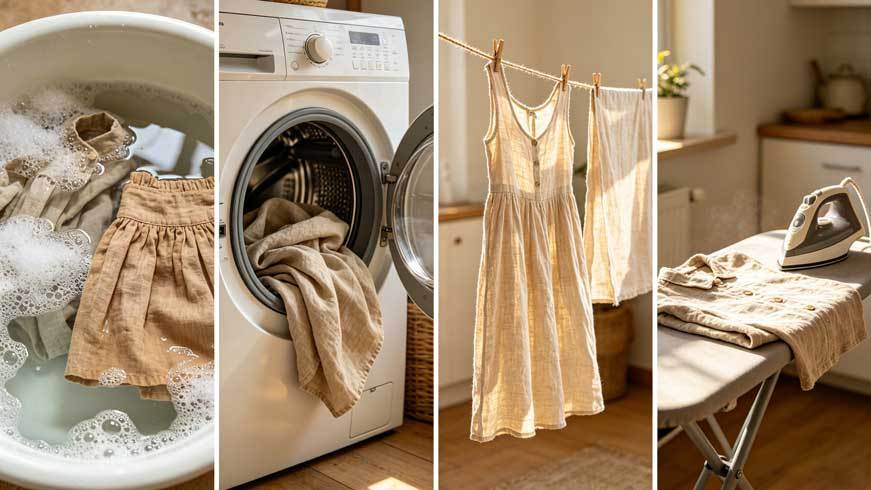
The safest way to dry linen clothes is to remove excess water gently, reshape the garment, and let it air dry. This method protects the fabric from heat and helps preserve the original fit. It also reduces deep wrinkles if you smooth the garment before drying.
Step 1: Remove Linen Promptly After Washing
Do not leave linen sitting in the washing machine. Damp linen left in a tight pile will develop deep creases. Remove it as soon as the wash cycle ends and shake it gently to loosen folds.
Step 2: Press Out Excess Water Gently
Do not twist or wring linen aggressively. If the garment is very wet, press it gently between your hands or roll it in a clean towel to absorb moisture. This is especially useful for hand-washed linen pieces.
Step 3: Smooth the Garment by Hand
Before drying, smooth seams, collars, cuffs, hems, waistbands, and pockets. This step makes a big difference in how the garment looks once dry. Linen responds well to being shaped while damp.
Step 4: Hang or Lay Flat
Linen shirts and simple dresses often dry well on a hanger. Linen pants may be hung from the waistband or laid flat depending on weight. Delicate or heavy pieces should be laid flat to prevent stretching. Avoid thin wire hangers that can distort shoulders.
Step 5: Finish with Steam if Needed
Once the garment is dry or slightly damp, steam it lightly if you want a smoother finish. Many linen clothes look best with a natural relaxed texture, so you do not need to remove every wrinkle.
The best linen drying method is not the fastest method. It is the method that protects shape, softness, and the natural texture that makes linen beautiful.
Can You Tumble Dry Linen Briefly?
Yes, in many cases you can tumble dry linen briefly on low heat or no heat, especially if you remove the garment before it becomes fully dry. This can help loosen the fabric and reduce the stiff feeling that sometimes happens after washing. However, it should be a short step, not a full high-heat drying cycle.
A good method is to tumble linen for a few minutes on low or air-dry settings, then hang or lay it flat to finish drying. This gives you some of the softening benefit of tumble drying while reducing the risk of shrinkage. It is especially useful for casual linen shirts, loose pants, and everyday linen pieces. For delicate dresses, structured garments, or pieces you are worried about shrinking, skip the dryer entirely.
Does Linen Shrink in the Dryer?
Yes, linen can shrink in the dryer, especially when exposed to high heat. Shrinkage risk is highest for new linen, untreated linen, fitted garments, and items that have not been pre-washed. Pre-washed linen is usually more stable, but it can still shrink if dried too hot or for too long.
Shrinkage may affect the length of dresses, sleeves, pants, and tops. It may also change the fit around the waist, hips, shoulders, or bust. This is why air drying is safest for garments where fit matters. Even a small amount of shrinkage can be noticeable in tailored linen pants or a fitted linen dress.
Shrinkage prevention: Wash linen in cool water, avoid high dryer heat, remove while damp, and reshape before drying completely.
Does the Dryer Make Linen Wrinkle More?
The dryer can make linen wrinkle more if the heat is too high, the load is crowded, or the garment is over-dried. Linen naturally wrinkles, but high heat can set wrinkles more firmly. When linen tumbles in a hot dryer until fully dry, creases can become sharper and more difficult to relax.
To reduce wrinkles, dry linen only briefly, remove it while slightly damp, and smooth it by hand. If you air dry linen on a hanger after shaping it, wrinkles are usually softer and easier to steam out. Linen will never look perfectly wrinkle-free in the same way as some synthetic fabrics, but it can look relaxed, refined, and intentionally textured.
Should Linen Be Air Dried?
Yes, air drying is generally the best choice for linen clothes. It avoids high heat, protects garment shape, and helps the fabric keep its natural texture. Air drying is especially recommended for linen dresses, fitted garments, dark colors, delicate details, and matching sets you want to preserve carefully.
The best air-drying method depends on the garment. Linen shirts can often be hung. Dresses may be hung if they are not too heavy. Pants can be hung from the waistband or dried flat. Heavier pieces should be supported so they do not stretch. Always dry linen in a place with good airflow, and make sure the garment is fully dry before storing.
Drying Linen Dresses
Linen dresses need careful drying because shrinkage or stretching can affect length, fit, and drape. If a dress is lightweight and simple, it can often be hung on a smooth hanger to dry. Smooth the neckline, straps, side seams, and hem while damp. If the dress is heavier, lined, or has a delicate shape, lay it flat or support it well to avoid distortion.
Avoid high dryer heat for linen dresses. A dress that shrinks even slightly may become shorter or tighter than intended. If the dress is part of a summer wardrobe you wear often, air drying is the safest long-term method.
Drying Linen Shirts
Linen shirts are usually among the easiest linen garments to dry. After washing, shake the shirt, smooth the collar and cuffs, and hang it on a proper hanger. Buttoning the top button or a few front buttons can help the shirt keep its shape as it dries. If you prefer a softer finish, you may tumble briefly on no heat or low heat before hanging.
Linen shirts naturally look good with slight creasing, so they do not need to be perfectly pressed. For a cleaner finish, steam or iron while slightly damp.
Drying Linen Pants and Shorts
Linen pants and shorts should be reshaped carefully while damp. Waistbands, pleats, pockets, and hems can crease deeply if left twisted. Hang pants from the waistband or lay them flat. Smooth the leg seams by hand before drying. Avoid high heat because pants are especially sensitive to changes in inseam length and waistband fit.
Shorts are usually more forgiving, but elastic or drawstring waists can still twist during washing. Straighten waistbands and pockets before drying so the garment keeps a cleaner shape.
Drying Matching Linen Sets
Matching linen sets should be dried consistently. If one piece is tumble dried and the other is air dried, the two pieces may age differently over time. One may shrink slightly, fade faster, or feel different in texture. To keep a matching set looking coordinated, wash and dry both pieces the same way whenever possible.
Air drying is especially helpful for linen sets because it preserves both fit and color consistency. If you briefly tumble one piece, do the same for the other, then finish both by air drying.
How to Keep Linen Soft After Drying
Linen sometimes feels stiff after drying, but this is often caused by over-drying, too much detergent, hard water, or high heat. To keep linen soft, use mild detergent, rinse thoroughly, avoid overloading the machine, and remove linen from the dryer or drying area before it becomes overly crisp.
A short tumble on low or no heat can help soften linen, but it should not replace safe drying habits. Linen also softens naturally with repeated wear and washing. The more you live in linen, the more comfortable it often becomes.
What to Avoid When Drying Linen
Most linen drying problems come from a few common mistakes. Avoiding these habits will help your linen clothing last longer and feel better.
- Do not use high dryer heat.
- Do not over-dry linen until it feels stiff and crisp.
- Do not leave damp linen in a pile.
- Do not wring linen aggressively after hand washing.
- Do not dry delicate linen pieces on thin hangers that distort shape.
- Do not dry matching set pieces differently if you want them to remain consistent.
- Do not store linen before it is fully dry.
Can You Dry Linen in Direct Sunlight?
Linen can be dried in sunlight, but direct strong sunlight should be used with care. For white or light-colored linen, sunlight can help create a fresh feeling, but prolonged exposure may still weaken fibers over time. For dark or colored linen, direct sunlight can cause fading. A shaded, airy place is often the best balance.
If drying outdoors, turn darker garments inside out and avoid leaving them in the sun longer than needed. Good airflow matters more than intense sunlight. Linen dries relatively well in breathable conditions, so a shaded balcony, laundry rack, or indoor area with ventilation is usually enough.
Can You Iron Linen After Drying?
Yes, linen can be ironed after drying, but it is easier to iron when slightly damp. If the garment has dried completely, use steam or lightly mist it with water before ironing. For dark linen, iron on the reverse side to avoid shine. Focus on collars, cuffs, hems, waistbands, and button areas if you want a more polished look.
You do not need to iron linen perfectly unless that is your preferred style. Linen’s soft wrinkles are part of its character. A light steam is often enough to make the garment look fresh while preserving its relaxed texture.
Can You Unshrink Linen After Dryer Heat?
Mild shrinkage may sometimes be improved, but severe shrinkage from high dryer heat may not fully reverse. If linen has shrunk, soak it in lukewarm water, gently press out excess water, and reshape it while damp. Lay it flat and carefully stretch it back toward its original size. Do not pull aggressively, as this can distort seams or damage the garment.
This method may help recover a small amount of length or width, but it is not guaranteed. Prevention is always better than correction. The safest approach is to avoid high heat from the beginning.
Common Questions About Drying Linen
Can linen go in the dryer on low heat?
Yes, some linen clothes can go in the dryer on low heat if the care label allows it. Remove the garment while slightly damp and finish air drying.
Will linen shrink in the dryer?
Linen can shrink in the dryer, especially on high heat. Low heat is safer, but air drying is the best way to reduce shrinkage risk.
Is it better to air dry linen?
Yes. Air drying is usually best because it protects linen from heat damage, shrinkage, stiffness, and deep wrinkles.
Why does linen feel stiff after drying?
Linen may feel stiff if it is over-dried, exposed to high heat, washed with too much detergent, or not rinsed well enough.
How do you dry linen without wrinkles?
Remove linen promptly after washing, shake it out, smooth it by hand, hang or lay flat while damp, and steam lightly if needed.
Can I tumble dry linen sheets and linen clothes the same way?
Linen sheets may tolerate tumble drying better than fitted linen clothing, but low heat is still safest. Clothes need more care because fit and shape matter more.
Linen can go in the dryer, but only with care. Low heat or air-dry settings are the safest dryer options, and linen should be removed while still slightly damp. High heat should be avoided because it can shrink the fabric, set deep wrinkles, and make linen feel stiff. For most linen clothing, air drying remains the best method.
If you want your linen dresses, shirts, pants, tops, and sets to stay soft, breathable, and beautiful, treat drying as an important part of the care routine. Use gentle washing, avoid heat, reshape garments while damp, and let linen keep its natural relaxed texture. With the right habits, linen becomes easier to care for and more comfortable over time.
Choose breathable linen pieces and care for them with gentle drying methods that help preserve fit, softness, and natural texture.
Linen Dresses
Airy summer dresses that keep their drape and length best with careful low-heat or air drying.
Linen Tops
Lightweight shirts and camisoles that stay softer when removed from the dryer slightly damp.
Linen Pants
Relaxed bottoms that benefit from air drying to protect inseam length and waistband fit.
Linen Sets
Matching outfits that should be dried consistently to maintain shape, color, and texture.
These linen wardrobe staples stay beautiful longer when dried gently and stored fully dry.
Linen Midi Dress
A breathable summer piece that looks best when air dried and steamed lightly if needed.
Relaxed Linen Shirt
A versatile staple that can be briefly tumbled low, then hung to finish drying naturally.
Matching Linen Set
A coordinated outfit that should be dried the same way to keep both pieces consistent.
Read more linen care guides for washing, drying, shrinking, softening, and everyday maintenance.