Does Linen Shrink?
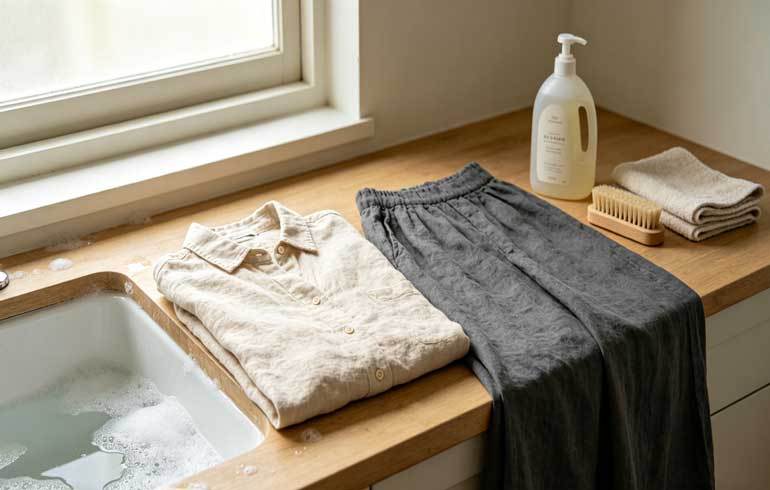
Yes, linen can shrink, especially during the first wash or when exposed to heat. Linen is a natural fiber made from flax, and like many natural fabrics, it reacts to water, heat, and mechanical movement. The highest shrinkage risk usually comes from hot water and high dryer temperatures. If linen is washed gently in cool water and air dried, shrinkage is usually much easier to control.
Not all linen shrinks the same way. Pre-washed linen is usually more stable than untreated linen. Linen blends may behave differently from pure linen. Lightweight linen may respond differently from heavier linen. Garment construction also matters. A loose linen shirt may tolerate slight shrinkage better than a fitted linen dress or tailored linen pants. That is why washing method and garment type both play an important role.
Why Does Linen Shrink?
Linen shrinks because flax fibers can contract when exposed to water, heat, and agitation. During manufacturing, weaving, dyeing, finishing, and garment construction, fibers may be stretched or held under tension. Washing relaxes that tension. When heat is added, the fibers may contract further, creating visible shrinkage in the finished garment.
This is why a linen garment may fit differently after its first wash if it has not been pre-washed or if it is washed incorrectly. The fabric is not “damaged” in every case; sometimes it is simply returning to a more relaxed fiber state. However, once a garment becomes smaller than intended, the result can be frustrating, especially if the item had a close fit.
Shrinkage is also affected by how the garment is dried. A linen shirt washed in cool water and hung to dry is much less likely to shrink dramatically than the same shirt washed in hot water and dried on high heat. Heat accelerates contraction, which is why drying method matters as much as washing method.
Simple rule: Linen shrinkage is mainly caused by heat, water, and agitation. The gentler the wash and the lower the heat, the safer the garment will be.
How Much Does Linen Shrink?
The amount of shrinkage depends on the fabric, finish, garment construction, and care method. Pre-washed or garment-washed linen may shrink very little with proper care. Untreated linen may shrink more noticeably, especially during the first wash. In many cases, linen can shrink a small amount, but improper washing and drying can create more significant size changes.
Because there is no universal shrinkage number that applies to every linen garment, the safest approach is to follow the care label and avoid heat. Some linen clothing brands pre-wash their fabric or garments to reduce shrinkage risk before the customer receives the item. Others may use linen that still has more potential movement left in the fiber. This is one reason two linen garments can behave differently even if they look similar.
For fitted items, even a small amount of shrinkage can affect comfort. For oversized shirts or relaxed dresses, slight shrinkage may be less noticeable. If you are buying linen clothing and are between sizes, it can be helpful to consider the garment’s fit, whether it is pre-washed, and how you plan to care for it.
Does Linen Shrink Every Time You Wash It?
Linen does not usually continue shrinking heavily every time you wash it. The most noticeable shrinkage often happens during the first wash, especially if the fabric was not pre-washed. After the fibers have relaxed and the garment has stabilized, future shrinkage is generally smaller if the garment is cared for properly.
However, repeated exposure to hot water or high dryer heat can continue to affect the garment over time. Even if the biggest change happens early, poor care can gradually alter the shape, length, and fit of linen clothing. This is why a consistent gentle routine is important. Cool water and air drying are not just for the first wash; they help preserve the garment over its full life.
Does Pre-Washed Linen Shrink?
Pre-washed linen is less likely to shrink significantly, but it can still shrink slightly if exposed to high heat or harsh washing. Pre-washing means the fabric or garment has already gone through a washing or softening process before sale, helping relax the fibers and reduce future size changes. This is one reason pre-washed linen often feels softer and more comfortable from the beginning.
Still, pre-washed does not mean shrink-proof. Linen remains a natural fiber, and heat can still affect it. The best way to protect pre-washed linen is to treat it gently: cool water, mild detergent, low agitation, and air drying. If you care for it properly, pre-washed linen usually remains much more stable and predictable than untreated linen.
Pre-washed linen is safer, softer, and more stable, but it still needs gentle care. Heat can shrink almost any natural fiber if the conditions are harsh enough.
How to Prevent Linen from Shrinking
Preventing shrinkage is much easier than trying to reverse it later. The best linen care routine is simple and consistent. You do not need complicated products or special equipment. You mainly need to avoid heat and excessive friction.
Wash Linen in Cool Water
Cool water is one of the most important ways to protect linen from shrinkage. Hot water can cause fibers to contract more aggressively. If you are unsure about the garment, choose cool water. This is especially important for new linen clothes, dark colors, fitted garments, and delicate pieces.
Use a Gentle Cycle
A gentle or delicate cycle reduces agitation. Strong washing can twist linen, create deep wrinkles, and stress the fibers. Linen does not need heavy-duty washing for ordinary wear. A mild cycle is usually enough.
Use Mild Detergent
Harsh detergent can make linen feel stiff and may weaken fibers over time. A gentle detergent cleans linen without stripping its natural character. Use a moderate amount, because excess detergent can leave residue and make the fabric feel less soft.
Avoid High Dryer Heat
High heat is one of the biggest causes of linen shrinkage. Air drying is safest. If you use a dryer, choose low heat and remove the garment while slightly damp. Never over-dry linen on high heat if you want to preserve its size.
Reshape While Damp
After washing, gently shake the garment, smooth seams, and reshape it before drying. This helps the garment return to its intended form and reduces deep creases.
| Care Step | Best Choice | Shrinkage Risk | Avoid |
|---|---|---|---|
| Water Temperature | Cool water | Low | Hot water |
| Wash Cycle | Gentle cycle | Low | Heavy-duty cycle |
| Detergent | Mild detergent | Low | Harsh detergent or bleach |
| Drying | Air dry | Lowest | High heat tumble dry |
| Finishing | Steam or iron while damp | Low | Over-drying before ironing |
Can You Put Linen in the Dryer?
Linen can sometimes go in the dryer on low heat, but air drying is safer if you want to prevent shrinkage. A short low-heat tumble may soften linen and reduce stiffness, but high heat should be avoided. The safest approach is to remove linen while it is still slightly damp and allow it to finish drying naturally.
If a linen garment is fitted, new, dark-colored, or not pre-washed, be extra cautious with the dryer. Heat can affect both size and texture. Air drying takes longer, but it is usually the best choice for preserving fit and long-term fabric quality.
Does Linen Shrink in Cold Water?
Linen is much less likely to shrink in cold water than in hot water. Cold water is usually the safest washing choice. However, if a linen garment has never been washed before and was not pre-shrunk, a very small amount of relaxation shrinkage may still happen simply because the fibers are exposed to water for the first time. This is usually far less dramatic than shrinkage caused by heat.
Cold water, gentle washing, and air drying create the lowest-risk care routine. If you want to protect linen clothing, especially items you love or wear often, make cold washing your default habit.
Does Linen Shrink When Hand Washed?
Hand washing linen in cool water is usually a very safe method. It gives you more control over movement and reduces friction compared with some machine cycles. However, hand washing in hot water or wringing the garment aggressively can still cause problems. The method matters more than whether washing is done by hand or machine.
To hand wash linen safely, use cool water and mild detergent. Move the garment gently through the water, rinse well, and press out water without twisting. Roll it in a clean towel to absorb extra moisture, then hang or lay flat to dry. This approach is especially good for delicate linen dresses, camisoles, lightweight tops, and special pieces.
Can You Unshrink Linen?
Sometimes linen can be gently relaxed after shrinkage, but it may not fully return to its original size. The success depends on how much it shrank, how the garment was constructed, and whether heat caused the fibers to contract strongly. If shrinkage is mild, you may be able to improve the fit slightly by soaking the garment in lukewarm water, gently stretching it back into shape, and air drying it flat.
The process should be gentle. Do not pull aggressively, because this can distort seams, necklines, hems, or waistbands. For valuable garments, it may be better to consult a professional cleaner or tailor. Prevention is always better than correction, but mild shrinkage can sometimes be eased.
If linen has shrunk: Soak gently, reshape while damp, and air dry flat. This may help recover some size, but severe heat shrinkage may not fully reverse.
How Shrinkage Affects Different Linen Garments
Shrinkage can feel different depending on the garment category. A small size change may barely matter in one item but make another difficult to wear.
Linen Dresses
Linen dresses can be affected by shrinkage in length, bust, waist, and lining alignment. A relaxed dress may tolerate slight shrinkage, but a fitted dress may become too tight or too short. If a linen dress is lined, the outer fabric and lining may not shrink at the same rate, which can affect drape. This is why dresses should always be washed according to the label and dried carefully.
Linen Shirts
Linen shirts may shrink in sleeve length, shoulder width, or body length. Oversized shirts are more forgiving, but fitted shirts can feel noticeably different after shrinking. Hang drying and smoothing the shirt while damp helps protect shape.
Linen Pants
Pants are especially sensitive to shrinkage because inseam length and waistband fit matter. Even a small change can affect comfort. Avoid high heat and reshape the waistband, seams, and legs while damp.
Linen Shorts
Shorts may be more forgiving than pants, but shrinkage can still affect waistband comfort and rise. Elastic or drawstring waistbands may tolerate small changes better than tailored waistbands.
Linen Sets
Matching linen sets should ideally be washed together to maintain consistent color and texture. If one piece shrinks more than the other or is washed more often, the set may no longer feel as balanced. Care for both pieces consistently.
Does Linen Blend Shrink?
Linen blends can shrink, but their behavior depends on the other fibers in the blend. Linen-cotton blends may still shrink because both fibers are natural. Linen-viscose or linen-rayon blends may have different drape and shrinkage behavior. Linen-synthetic blends may shrink less in some cases, but they may also lose some of the breathability and natural texture people love about pure linen.
Because blends vary so much, the care label becomes especially important. Do not assume that a blend will behave exactly like pure linen. The safest routine remains the same: cool water, gentle washing, low heat, and careful drying.
Should You Size Up in Linen Because of Shrinkage?
You do not always need to size up in linen, especially if the garment is pre-washed and designed with a relaxed fit. However, if you are between sizes, prefer a looser fit, or the garment is not pre-washed, sizing up may offer extra comfort and flexibility. This is especially true for fitted dresses, tailored pants, and garments where even slight shrinkage would affect wearability.
Linen often looks best with some ease, so choosing a fit that is not overly tight can be a good styling decision as well as a practical one. A little room allows airflow, reduces stress on seams, and makes the garment more comfortable in summer heat.
Linen should not be bought skin-tight if you want maximum comfort and long-term wear. A little ease helps the fabric breathe and makes small size changes less noticeable.
Does Linen Shrink More Than Cotton?
Linen and cotton can both shrink because they are natural fibers, but they do not always shrink in the same way. Cotton is often more familiar to people because most wardrobes already include many cotton garments. Linen may feel more concerning because its texture and drape are more distinctive, and shrinkage can be more visible in certain silhouettes.
In general, untreated linen can shrink noticeably if washed or dried improperly. Cotton can also shrink, especially in hot water or high heat. The difference depends on fabric treatment, construction, and care. Pre-washed linen may be quite stable, while untreated cotton may shrink more than expected. Instead of assuming one always shrinks more, focus on whether the garment has been pre-shrunk and how you care for it.
How to Wash New Linen for the First Time
The first wash is the most important moment for linen shrinkage prevention. Treat new linen carefully, especially if you are unsure whether it has been pre-washed. Use cool water, wash separately or with similar colors, choose a gentle cycle, and avoid the dryer on high heat.
If you are worried about shrinkage, hand washing the first time can be a safe option. After washing, gently reshape the garment while damp and air dry it. Do not judge the final fit until the piece is fully dry and relaxed. Linen can feel different when damp, and it may soften further with wear.
How to Keep Linen Clothes the Same Size
Keeping linen clothes the same size comes down to consistency. One careful wash followed by one hot dryer cycle can still cause problems. Build a routine and repeat it every time.
- Wash linen in cool water.
- Use a gentle or delicate cycle.
- Choose mild detergent.
- Avoid bleach and harsh chemical treatments.
- Do not overload the washing machine.
- Remove linen promptly after washing.
- Air dry whenever possible.
- Use low heat only if tumble drying briefly.
- Reshape seams, hems, and waistbands while damp.
- Store linen fully dry and avoid tight compression.
Is Shrinkage Always Bad?
Shrinkage is usually unwanted when it changes the intended fit, but a small amount of fiber relaxation is not always disastrous. Some linen garments are designed with this in mind, especially relaxed shirts, oversized dresses, and easy pants. The problem happens when shrinkage is uneven, excessive, or affects key fit points such as bust, waist, hips, sleeve length, or inseam.
In some cases, a garment that was slightly oversized may still remain wearable after mild shrinkage. But because shrinkage is difficult to control precisely, it is better not to rely on it as a fit adjustment method. If a garment is too large, tailoring is safer than intentionally shrinking it.
Why Quality Linen Care Matters
Linen is a long-lasting fabric when cared for well. One of its best qualities is that it can become softer and more comfortable over time. But that only happens when the fabric is treated properly. Repeated high heat, harsh detergent, and rough washing can reduce the life of the garment, while gentle care helps the fibers age beautifully.
This is especially important if you build a wardrobe around linen dresses, shirts, pants, and travel sets. These are pieces you may want to wear for multiple summers. Protecting their size and shape means protecting the value of the wardrobe itself.
Common Questions About Linen Shrinkage
Does 100% linen shrink?
Yes, 100% linen can shrink, especially if washed in hot water or dried on high heat. Pre-washed linen is usually more stable but still needs gentle care.
Does linen shrink in the dryer?
Yes, linen can shrink in the dryer, especially on high heat. Air drying is the safest method. If using a dryer, choose low heat and remove the garment while slightly damp.
Does linen shrink in cold water?
Linen is much less likely to shrink in cold water than in hot water. Cold washing is the safest choice for preserving fit.
Can you reverse linen shrinkage?
Mild shrinkage may sometimes be improved by soaking, gently reshaping, and air drying flat. Severe heat shrinkage may not fully reverse.
Should I size up in linen clothing?
Not always, but if you are between sizes or buying a fitted linen garment, choosing a slightly more relaxed fit can help protect comfort and wearability.
How do I stop linen from shrinking?
Wash in cool water, use a gentle cycle, avoid high heat, air dry when possible, and reshape the garment while damp.
Linen can shrink, but shrinkage is usually preventable with the right care routine. The biggest risks are hot water, high dryer heat, harsh washing, and untreated fabric. If you wash linen in cool water, use mild detergent, choose gentle cycles, and air dry the garment, you can greatly reduce the chance of unwanted size changes.
The key is to treat linen as a natural fabric with character. It does not need aggressive cleaning or high heat to stay beautiful. With gentle care, linen clothes can keep their shape, soften over time, and remain some of the most breathable and elegant pieces in your wardrobe season after season.
Choose linen pieces designed for comfort, breathability, and long-term wear when cared for properly.
Linen Dresses
Breathable summer dresses that keep their shape best with cool washing and air drying.
Linen Tops
Lightweight shirts and tops that soften beautifully when cared for gently.
Linen Pants
Relaxed warm-weather bottoms that benefit from careful washing and reshaping.
Linen Sets
Matching outfits that should be washed consistently to maintain fit, color, and texture.
These linen pieces are designed to become long-term summer staples with the right care habits.
Linen Midi Dress
A breathable dress style that keeps its best shape with gentle washing and careful drying.
Relaxed Linen Shirt
A versatile linen staple that becomes softer and more comfortable with proper care.
Matching Linen Set
A coordinated outfit that stays more consistent when both pieces are washed together gently.
Read more guides on washing, styling, and caring for linen clothing.