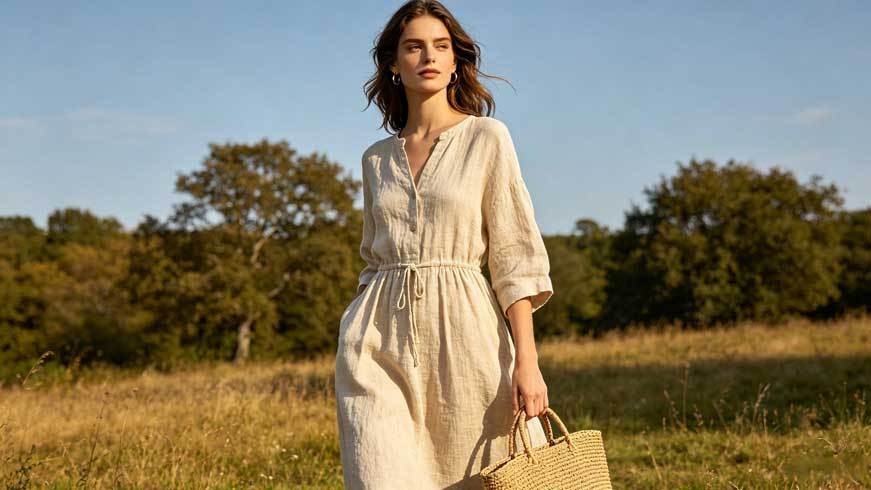
How to Choose High-Quality Linen Clothing
To choose high-quality linen clothing, focus on fabric quality, weight, softness, weave consistency, garment construction, fit, shrinkage control, and long-term wearability. The best linen garments feel breathable, drape naturally, soften over time, and are finished with clean stitching, thoughtful structure, and practical care instructions.
High-quality linen is not always the softest fabric immediately. Some premium linen begins with a slightly crisp texture and becomes softer through wear and washing. What matters most is whether the garment feels durable, breathable, balanced in weight, and well made overall.
1. Start by Checking the Fabric Composition
The first thing to check when choosing linen clothing is the fabric composition. Some garments are made from 100% linen, while others are linen blends mixed with cotton, rayon, viscose, polyester, or other fibers. This matters because the composition changes how the garment feels, drapes, wrinkles, breathes, and ages.
If you want the most authentic linen experience, 100% linen is usually the best choice. It offers the classic breathable texture and natural feel that people expect from linen clothing. However, some blends can still be high quality depending on the purpose of the garment.
Linen-cotton blends may feel softer and more familiar. Linen-viscose blends may drape more fluidly. Small blend percentages may also reduce wrinkling slightly. The key is transparency. A good brand clearly explains what the fabric contains rather than using vague descriptions like “linen feel” or “linen look.”
Quality tip: Always read the composition label carefully. “Linen blend” and “linen-style” are not the same as 100% linen.
2. Fabric Weight Is One of the Biggest Quality Indicators
Fabric weight affects how linen clothing looks, feels, drapes, and performs. Very thin linen may feel airy but can also appear weak, overly sheer, or less durable. Extremely heavy linen may feel structured but too stiff or warm for summer wear. High-quality linen usually has a balanced weight suitable for the garment type.
Lightweight linen works well for loose summer tops, relaxed dresses, and beachwear. Midweight linen is often the most versatile because it balances airflow and structure. Heavier linen is useful for pants, jackets, or more tailored pieces that need stronger shape retention.
Before buying, ask whether the weight makes sense for the garment. Linen pants should not feel paper-thin. A summer dress should not feel heavy and rigid. Good linen feels intentional.
| Linen Weight | Best Use | What Good Quality Looks Like | Possible Warning Signs |
|---|---|---|---|
| Lightweight Linen | Summer dresses, tops, beachwear | Airy but still stable | Too sheer or weak |
| Midweight Linen | Shirts, pants, sets, dresses | Balanced drape and structure | Feels stiff or flat |
| Heavyweight Linen | Trousers, jackets, tailoring | Structured without stiffness | Too heavy for warm weather |
3. High-Quality Linen Should Feel Natural, Not Plastic-Like
Good linen feels breathable and alive. It should not feel coated, slippery, overly shiny, or plastic-like. Linen naturally has texture and small irregularities because flax fibers are organic and slightly uneven. These natural variations are part of linen’s beauty.
When touching linen, look for a fabric that feels substantial yet breathable. It should move naturally rather than feeling stiff like cardboard or unnaturally slick. Some premium linen may feel slightly crisp at first, but it should still feel comfortable against the skin and soften over time.
If linen feels excessively smooth and synthetic, it may contain a high percentage of artificial fibers or heavy chemical finishing. That does not always mean the garment is bad, but it changes the authentic linen experience.
High-quality linen should feel breathable, textured, and natural — not perfectly flat or artificially slick.
4. Look Closely at the Weave and Texture
Linen weave quality affects durability and appearance. Better linen usually has an even, balanced weave without excessive gaps, weak spots, or inconsistent texture. Small natural slubs are normal and often desirable because they reflect the organic nature of flax fibers.
However, poor-quality linen may have irregular weaving that causes weak structure, transparency problems, or uneven drape. When possible, zoom into close-up fabric photos online or inspect the garment directly in person.
Good linen texture should look organic and relaxed without appearing messy or unfinished. Premium linen often develops a beautiful washed appearance while still maintaining enough structure to hold shape.
5. Construction Quality Matters as Much as Fabric
Even excellent linen fabric can become disappointing if the garment construction is poor. High-quality linen clothing should have clean stitching, smooth seams, secure buttons, neat hems, and balanced shaping.
Linen can fray more easily than some synthetic fabrics if seams are not finished correctly, so construction quality is especially important. Check whether the garment has reinforced seams in stress areas such as underarms, waistbands, pockets, and crotch seams.
Good linen garments should also hang evenly. Uneven hems, twisting side seams, puckering, or poor alignment are warning signs that the garment may not wear well long term.
Construction checklist: Look for neat stitching, stable seams, clean buttonholes, finished hems, balanced drape, and thoughtful garment structure.
6. High-Quality Linen Should Drape Naturally
One of the easiest ways to judge linen quality is by how it moves. Good linen drapes naturally. It should not collapse into shapelessness, but it also should not feel overly stiff or rigid. High-quality linen moves with the body and allows air circulation without looking lifeless.
Linen dresses should skim rather than cling awkwardly. Linen shirts should relax softly around the body. Linen pants should have enough body to maintain shape while still moving comfortably. The best linen silhouettes balance structure and ease.
If linen clothing looks flat, stiff, or overly thin in product photos, it may not drape well in real life. Videos and movement shots can be especially helpful when buying linen online.
7. Pre-Washed Linen Is Often Easier to Wear
Many premium linen garments are pre-washed or garment washed before sale. This process softens the fabric, reduces stiffness, and helps stabilize shrinkage. Pre-washed linen usually feels more comfortable immediately and often develops a softer lived-in appearance.
While raw linen can still become beautiful over time, pre-washed linen is often easier for everyday wardrobes because it requires less break-in. Product descriptions that mention “washed linen,” “softened linen,” or “garment-dyed linen” are often positive signs.
Before buying, check whether the brand explains how the fabric has been treated. Better linen brands usually provide details about washing, finishing, or softening methods.
8. Transparency Should Match the Garment Purpose
Some linen garments are intentionally lightweight and airy, but high-quality linen should still make sense for the garment category. Linen pants should generally offer enough coverage. Dresses should not become unintentionally transparent in sunlight unless designed as beachwear.
White and cream linen naturally show more light, but quality garments often solve this through slightly denser fabric, lining, layering design, or better construction choices.
Before purchasing, study product photos carefully. Natural light images help reveal opacity better than studio lighting. If transparency is not addressed at all in the product description, be cautious with very light colors.
| Garment Type | Ideal Linen Feel | Transparency Expectation | Quality Sign |
|---|---|---|---|
| Linen Shirt | Light but stable | Slightly airy is acceptable | Natural texture without weakness |
| Linen Dress | Soft drape with body | Minimal transparency | Lining or balanced weight |
| Linen Pants | Structured and breathable | Should not appear sheer | Midweight fabric |
| Linen Set | Balanced movement | Depends on color and use | Consistent fabric quality |
9. Better Linen Usually Improves With Time
One of the strongest signs of high-quality linen is that it becomes better after repeated wear. Premium linen softens gradually, becomes more comfortable, and develops a relaxed elegance that feels personal rather than worn out.
Poor linen often behaves differently. It may pill, lose shape, weaken quickly, or feel rough even after washing. High-quality linen develops softness while still maintaining enough integrity to hold its form.
This long-term behavior is one reason linen is associated with slow fashion and intentional wardrobes. A well-made linen garment can remain relevant and wearable for many seasons.
Great linen does not peak on the first wear. It grows softer, easier, and more beautiful with time.
10. Good Linen Brands Explain Their Fabric Clearly
Transparency is another sign of quality. Brands that produce better linen clothing usually explain fabric composition, care methods, sizing, fabric weight, shrinkage expectations, and garment details clearly.
Strong linen product descriptions often mention:
- Whether the garment is 100% linen or blended
- If the fabric is pre-washed or softened
- Fit style such as relaxed, oversized, or tailored
- Opacity or lining details
- Washing instructions
- Garment measurements
- Country of production or fabric origin
When a brand avoids all fabric detail and focuses only on styling photos, it can be harder to judge quality accurately.
11. Linen Fit Should Support the Fabric
Linen usually performs best in silhouettes that allow some movement and airflow. High-quality linen garments are often designed with ease rather than extreme tightness. This helps the fabric drape properly and improves comfort.
A well-designed linen dress should move naturally when walking. Linen shirts should feel relaxed rather than strained. Linen pants should offer space for airflow while still maintaining structure.
Tight linen garments may wrinkle sharply across the body and lose the effortless elegance that makes linen attractive in the first place.
12. Color Quality Also Matters
Linen responds beautifully to natural, washed, and earthy colors. High-quality linen garments often use dye methods that allow the fabric texture to remain visible rather than masking it under heavy coating or overly bright saturation.
Soft whites, creams, oatmeal, olive, black, rust, sand, brown, and muted blues often show linen at its best. These colors allow the texture and weave to remain visible, creating a richer visual effect.
If linen looks unnaturally shiny or heavily coated with color, it may not age as beautifully over time.
Color tip: Washed neutrals and earthy tones usually highlight linen texture more naturally than overly saturated finishes.
13. How to Spot Poor-Quality Linen
There are several warning signs that may indicate lower-quality linen clothing:
- Fabric feels excessively thin and weak
- Surface appears overly shiny or synthetic
- Stitching is loose or uneven
- Garment twists or hangs unevenly
- No fabric details are provided
- Light colors appear unintentionally transparent
- Fabric feels stiff without structure
- Buttons, seams, or hems look poorly finished
- Care instructions are unclear or missing
- The garment loses shape quickly after washing
Not every inexpensive linen garment is poor quality, but quality problems often appear first in fabric density, construction, and finishing details.
14. Best Linen Pieces to Invest in First
If you are beginning to build a better linen wardrobe, focus first on versatile pieces with strong repeat-wear value.
Relaxed Linen Shirt
A well-made linen shirt is one of the most practical and timeless wardrobe pieces. It works for layering, travel, casual outfits, and warm-weather dressing.
Linen Midi Dress
A quality linen dress can become a complete outfit that feels breathable, elegant, and effortless across many situations.
Linen Pants
Good linen pants should feel breathable but structured enough to drape properly. Midweight fabric is often ideal.
Matching Linen Set
Linen sets provide excellent styling flexibility because the pieces can be worn together or separately.
Linen Outer Layer
Overshirts, lightweight jackets, or open linen layers are useful transitional pieces that extend linen beyond peak summer.
Simple Checklist for Choosing Better Linen Clothing
- Check fabric composition carefully
- Choose suitable weight for the garment type
- Look for balanced natural texture
- Check opacity in light colors
- Review stitching and seam quality
- Look for pre-washed or softened linen
- Choose silhouettes with ease and airflow
- Read care instructions before buying
- Prioritize versatile pieces over trend items
- Think about long-term wear value
Why High-Quality Linen Clothing Is Worth It
High-quality linen clothing often costs more initially, but it usually offers stronger long-term value. Good linen ages beautifully, softens naturally, remains breathable in heat, and supports repeat wear across many seasons.
A premium linen shirt can work for travel, casual dressing, layering, and warm-weather comfort. A well-made linen dress can become a summer essential for years. Linen pants can replace heavier bottoms while still looking polished. These pieces earn their place through usefulness rather than trend.
When linen is chosen well, it becomes one of the most wearable, timeless, and satisfying fabrics in a natural wardrobe.
Common Questions About High-Quality Linen Clothing
How can you tell if linen clothing is high quality?
Look for balanced fabric weight, breathable texture, clean stitching, stable seams, good drape, clear fabric details, and garments that soften naturally over time.
Is 100% linen always better?
Not always. Pure linen offers the most authentic texture and breathability, while some blends provide softer drape or easier care depending on the garment purpose.
Should good linen feel soft immediately?
Not necessarily. Premium linen may begin slightly crisp and become softer with repeated wear and washing.
Does high-quality linen wrinkle less?
All linen wrinkles naturally, but better linen often wrinkles more softly and elegantly because the fabric structure is stronger and more balanced.
What linen weight is best?
Midweight linen is usually the most versatile because it balances airflow, structure, opacity, and durability.
Why is some linen clothing expensive?
Higher-quality linen uses better flax fibers, stronger weaving, improved finishing, better garment construction, and often more thoughtful design and production methods.
Choosing high-quality linen clothing is about more than softness or appearance. Great linen combines breathable natural texture, balanced weight, good construction, thoughtful fit, and long-term comfort. The best pieces become softer and more beautiful over time while remaining practical and wearable.
Before buying linen, pay attention to fabric composition, weave quality, transparency, construction details, care instructions, and whether the garment truly supports your lifestyle. A carefully chosen linen shirt, dress, pair of pants, or matching set can become one of the most valuable pieces in a timeless wardrobe.
Explore breathable linen pieces designed with balanced fabric weight, comfortable silhouettes, and timeless styling.
Linen Dresses
Easy warm-weather dresses with natural drape, breathable texture, and timeless styling value.
Linen Shirts
Relaxed shirts designed for layering, travel, and effortless everyday dressing.
Linen Pants
Comfortable breathable bottoms that balance airflow, structure, and relaxed polish.
Linen Sets
Coordinated pieces that simplify styling while creating multiple outfit combinations.
These versatile linen essentials are strong starting points for building a more intentional wardrobe.
Relaxed Linen Shirt
A breathable staple that works across travel, layering, warm-weather dressing, and daily outfits.
Linen Midi Dress
A timeless one-piece outfit that combines airflow, movement, and relaxed elegance.
Matching Linen Set
A coordinated outfit that can be worn together or separated into versatile combinations.
Explore more practical linen guides covering buying advice, care routines, fabric comparison, and natural wardrobe styling.