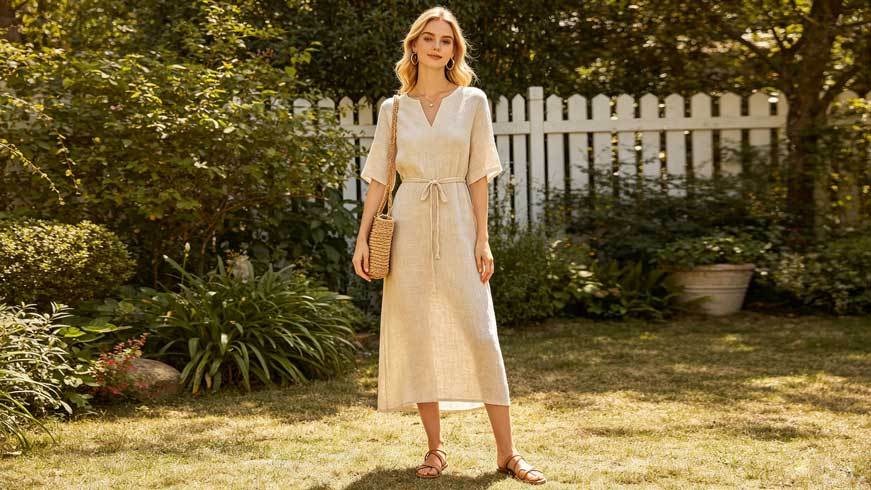
What to Know Before Buying Linen Clothing
Before buying linen clothing, you should know that linen is breathable, durable, naturally textured, and especially good for warm weather, but it also wrinkles easily, may shrink if exposed to heat, and can feel crisp before it softens with wear. The best linen pieces are made with the right fabric weight, thoughtful construction, comfortable fit, and care instructions that match your lifestyle.
Buying linen well is about more than choosing a pretty dress or shirt. It means understanding whether the fabric is lightweight or structured, whether it is pre-washed, whether the color may be sheer, whether the garment has enough ease for airflow, and whether the piece can be worn repeatedly. Linen works best when it is chosen with intention.
1. Linen Is Natural, Breathable, and Textured
The first thing to understand is that linen is a natural fabric made from flax fibers. It is valued because it feels breathable, airy, and slightly textured. This makes it especially useful for summer clothing, vacation outfits, resort wardrobes, and natural everyday dressing. Linen does not feel perfectly smooth like many synthetic fabrics. It has a distinct surface, often with subtle slubs and variations that give it character.
This natural texture is one of linen’s biggest advantages. It gives simple clothing more visual depth, which is why a plain linen shirt or midi dress can look more elevated than a similar garment in a flatter fabric. If you like clothes that feel polished but not overly formal, linen is often a strong choice.
However, shoppers should know that linen’s texture may feel different from what they are used to. Some linen feels crisp at first, especially if it has not been heavily washed or softened. Over time, good linen often becomes softer and more comfortable. This softening process is one of the reasons many people become loyal to linen after wearing it for a season.
Buying tip: Linen should not be judged only by first-touch softness. High-quality linen often becomes softer, more relaxed, and more beautiful with repeated wear and washing.
2. Fabric Weight Matters More Than Many Shoppers Realize
Linen clothing can feel very different depending on fabric weight. Lightweight linen is airy, breathable, and ideal for hot weather, but it may be more sheer or delicate. Midweight linen offers a good balance between comfort and structure, making it useful for dresses, shirts, pants, and sets. Heavier linen feels more substantial and can be excellent for trousers, jackets, and structured pieces, but it may not feel as cool in peak summer.
Before buying, consider how and where you plan to wear the piece. A lightweight linen dress may be perfect for beach holidays or humid climates, while a midweight linen shirt dress may feel more versatile for city dressing. Linen pants often benefit from slightly more weight because the fabric needs enough body to drape well and avoid feeling too fragile.
| Linen Weight | Best For | Main Benefit | What to Watch For |
|---|---|---|---|
| Lightweight Linen | Summer tops, loose dresses, beachwear | Very breathable and airy | May be more sheer or delicate |
| Midweight Linen | Dresses, shirts, pants, sets | Balanced comfort and structure | Check softness and drape |
| Heavyweight Linen | Trousers, jackets, structured pieces | More shape and durability | May feel warmer in peak heat |
3. Linen Wrinkles Naturally
Linen wrinkles. This is one of the most important things to know before buying it. If you expect linen to stay perfectly smooth all day, you may feel disappointed. But if you understand linen’s character, the wrinkles become part of the fabric’s beauty. Soft creases give linen its relaxed, lived-in, effortless appearance.
The best linen clothing is designed to look good even when naturally creased. Loose dresses, relaxed shirts, wide-leg pants, and soft sets often handle wrinkles beautifully because the silhouettes match the fabric’s casual elegance. Very fitted or overly formal linen pieces may require more pressing if you prefer a cleaner finish.
Before buying linen, ask yourself whether you enjoy natural texture. If you do, linen can become one of your favorite fabrics. If you need a perfectly crisp surface at all times, linen may require more steaming or ironing than you prefer.
Linen is not designed to look untouched. Its beauty comes from movement, texture, and a soft lived-in finish.
4. Linen May Shrink If Washed Incorrectly
Linen can shrink, especially if washed in hot water or dried on high heat. This is why care instructions matter before buying. Pre-washed linen is usually more stable and less likely to shrink dramatically, but it still needs gentle care. If the product description mentions garment washing, pre-washing, or softened linen, that is often a positive sign.
To reduce shrinkage risk, linen should usually be washed in cool water with mild detergent and dried naturally or on low heat. High dryer heat is one of the most common causes of unwanted shrinkage. If you are buying a fitted linen dress or tailored linen pants, shrinkage matters more because even small size changes can affect comfort.
Before purchasing, check whether the brand provides clear care instructions. A good linen product page should explain how to wash and dry the garment. If no care information is provided, be cautious and treat the item gently.
5. Fit Should Usually Have Some Ease
Linen clothing often looks and feels best when it has a little room. Because linen is breathable and structured, it performs well in relaxed silhouettes. Very tight linen garments can restrict airflow and may crease more sharply across the body. A slightly looser fit allows the fabric to move naturally and helps the garment feel more comfortable in warm weather.
This does not mean linen must be oversized. A linen dress can be shaped, a linen shirt can be tailored, and linen pants can look polished. The key is ease. The garment should not pull tightly across the bust, waist, hips, shoulders, or thighs. Linen should support movement, not fight it.
When buying online, check the size chart carefully. Look at garment measurements, not only general size labels. Linen styles can vary widely depending on whether the design is oversized, relaxed, straight, fitted, or adjustable. If you are between sizes, a slightly more relaxed fit is often safer for linen clothing.
6. Some Linen Can Be See-Through
Transparency is another important factor before buying linen clothing. Lightweight linen, white linen, cream linen, and pale colors can sometimes be slightly sheer, especially in strong light. This does not mean the garment is poor quality, but it does mean you should understand how it is intended to be worn.
Linen dresses may need lining, a slip, or carefully chosen underwear depending on the color and weight. Linen pants in light shades should have enough fabric density to provide coverage. Linen tops and shirts can be intentionally airy, but you may want to layer a camisole underneath.
Before purchasing, look for product photos in natural light, close-up fabric shots, and descriptions that mention lining or opacity. If you are buying white linen clothing, check whether the garment is described as sheer, semi-sheer, lined, or opaque.
Opacity tip: Light-colored linen is beautiful, but always check fabric weight, lining, and product photos before buying if coverage matters to you.
7. Linen Quality Depends on Fabric and Construction
Good linen clothing is not only about the fabric. Construction matters too. Seams, buttons, hems, waistbands, pockets, linings, and finishing all affect how the garment wears over time. A beautiful linen fabric can still become disappointing if the sewing is poor or the fit is not well developed.
When buying linen, look for neat stitching, reinforced seams, clean buttonholes, well-finished hems, and thoughtful garment structure. Linen can fray if not finished properly, so seam quality matters. For dresses and pants, pay attention to whether the garment has enough structure to hold its shape while still feeling comfortable.
The best linen clothing feels relaxed but not careless. It should look intentional, even when the fabric wrinkles naturally.
8. Linen Blends Are Not Always Bad
Many shoppers assume 100% linen is always better, but linen blends can also be useful depending on your needs. Linen-cotton blends may feel softer and more familiar. Linen-viscose blends may have more drape. Linen blends with small amounts of other fibers may wrinkle differently or feel smoother.
The trade-off is that blends may not offer the exact breathability, texture, or durability of pure linen. If you want the most authentic linen feel, 100% linen is usually preferred. If you want easier care, softer touch, or more fluid drape, a blend may be practical.
Before buying, read the fabric composition. Do not rely only on the word “linen” in the product title. A garment may be pure linen, linen blend, or linen-look fabric. These are not the same.
9. Linen Clothing Is Worth Buying When You Will Wear It Often
Linen can cost more than basic synthetic or cotton clothing, so it is worth thinking about cost per wear. A linen dress worn many times each summer may be much more valuable than a cheaper trend piece worn once. A linen shirt that works for travel, layering, beach days, and casual outfits can become one of the most useful pieces in your closet.
Before buying, ask whether the item can be styled in at least three ways. Can the shirt be worn open and buttoned? Can the dress work with sandals and sneakers? Can the pants be worn for travel and daily outfits? Can the linen set be separated? If the answer is yes, the piece is more likely to earn its place.
| Buying Question | Why It Matters | Good Sign | Warning Sign |
|---|---|---|---|
| Is it pre-washed? | Helps reduce shrinkage and stiffness | Product mentions washed or softened linen | No care or fabric finish details |
| Is the fabric weight suitable? | Affects comfort, coverage, and drape | Weight matches garment use | Very thin fabric for structured pants |
| Does it fit your lifestyle? | Improves repeat wear | Can be styled many ways | Only works for one occasion |
| Is it easy to care for? | Determines long-term use | Clear washing instructions | Unclear or overly difficult care |
10. The Best Linen Pieces to Buy First
If you are new to linen clothing, it helps to start with versatile pieces rather than highly specific statement items. These categories usually offer the strongest wardrobe value.
Linen Shirt
A relaxed linen shirt is often the best first purchase. It can be worn alone, open over a tank, layered over swimwear, tied over a dress, or paired with pants and shorts. White, stone, black, or soft blue are especially useful.
Linen Dress
A linen midi dress, shirt dress, or sleeveless dress is a strong summer essential. It creates a complete outfit in one piece and can be styled casually or more elegantly.
Linen Pants
Linen pants are ideal if you want breathable comfort with more coverage than shorts. Wide-leg and straight-leg styles usually offer the best balance of ease and polish.
Linen Set
A matching linen set gives you an instant outfit and separate styling options. It is especially useful for travel, vacation wardrobes, and summer capsule dressing.
Linen Top or Camisole
A linen top is easy to wear in hot weather and pairs well with linen pants, skirts, shorts, and cotton basics. It can also be a good layering piece under shirts or lightweight jackets.
11. Choose Colors That Work With Your Existing Wardrobe
Linen looks beautiful in natural shades, but the best color depends on your wardrobe. White and cream feel fresh and summery. Stone, sand, and oatmeal are easy to mix. Black linen feels modern and city-friendly. Olive, rust, brown, and terracotta add warmth and depth. Soft blue, muted green, and pale yellow can feel relaxed and seasonal.
If you want the highest versatility, begin with neutral or earth-tone linen. These colors pair easily with leather sandals, woven bags, cotton tanks, denim, knitwear, and simple jewelry. Once your core linen wardrobe is established, you can add softer colors or prints.
12. Understand Linen Care Before Buying
Linen is not difficult to care for, but it does require gentle habits. Wash linen in cool water, use mild detergent, avoid high heat, and air dry when possible. Remove linen from the washer promptly and smooth it while damp to reduce deep wrinkles. If you want a cleaner finish, steam or iron the garment while slightly damp.
Before buying linen clothing, be honest about your care habits. If you rarely air dry clothes or dislike steaming, choose linen styles that look good with natural wrinkles. Relaxed shirts, dresses, and sets are often easier to maintain than very structured linen pieces.
The best linen purchase is one that fits not only your style, but also your lifestyle, climate, care routine, and willingness to embrace natural texture.
13. Common Mistakes to Avoid When Buying Linen Clothing
Linen is a wonderful fabric, but many buying mistakes come from unrealistic expectations or choosing the wrong piece for the wrong use.
Expecting Linen Not to Wrinkle
Linen wrinkles naturally. If you want a perfectly smooth finish all day, you may need to steam regularly or choose a blend.
Buying Too Tight
Linen usually needs ease. Very tight linen can feel restrictive and may crease more sharply.
Ignoring Care Instructions
Hot water and high dryer heat can shrink linen. Always check care details before washing.
Choosing the Wrong Fabric Weight
Very thin linen may not be ideal for pants, while heavy linen may feel too warm for peak summer dresses.
Buying Based Only on Photos
Product photos can show style, but you should also check composition, measurements, lining, opacity, and care information.
Choosing Pieces That Do Not Match Your Life
A linen garment should support real use. If it only works for one imagined occasion, it may not become a wardrobe staple.
A Simple Linen Buying Checklist
Before buying a linen garment, use this checklist to make a better decision:
- Check whether the item is 100% linen or a linen blend.
- Look for fabric weight, lining, and opacity information.
- Read the size chart and garment measurements carefully.
- Choose a fit with enough ease for movement and airflow.
- Check whether the fabric is pre-washed or softened.
- Review washing and drying instructions.
- Ask whether the color works with your existing wardrobe.
- Consider whether the piece can be styled in at least three ways.
- Think about cost per wear instead of only the purchase price.
- Accept natural wrinkles as part of linen’s character.
Is Linen Clothing Worth Buying?
Yes, linen clothing is worth buying if you value breathability, natural texture, long-term wear, and effortless style. It is especially worthwhile for summer wardrobes, vacation dressing, warm climates, natural capsule wardrobes, and people who prefer fewer but better pieces. Linen is not the lowest-maintenance fabric if you want a perfectly smooth look, but it is one of the most rewarding fabrics if you appreciate relaxed elegance.
The best linen clothing becomes more useful over time. A shirt softens. A dress becomes easier to style. A set becomes a travel favorite. Pants become the comfortable alternative to heavier bottoms. This long-term relationship is what makes linen different from many trend-driven purchases.
Common Questions Before Buying Linen Clothing
Is linen clothing good for summer?
Yes. Linen is one of the best fabrics for summer because it is breathable, lightweight, and comfortable in warm weather.
Does linen clothing shrink?
Linen can shrink if washed in hot water or dried on high heat. Choose cool washing, gentle cycles, and air drying to reduce shrinkage risk.
Is linen clothing see-through?
Some lightweight or light-colored linen can be slightly sheer. Check fabric weight, lining, and product photos before buying.
Should I size up in linen clothing?
Not always, but linen usually looks and feels better with some ease. If you are between sizes or prefer relaxed comfort, sizing up may be a good choice.
Is 100% linen better than linen blends?
100% linen offers the most authentic texture and breathability, while blends may feel softer, drapier, or easier to care for depending on the fiber mix.
What linen piece should I buy first?
A relaxed linen shirt, linen midi dress, linen pants, or matching linen set are the best starting points because they are versatile and easy to wear often.
Before buying linen clothing, it helps to understand the fabric honestly. Linen is breathable, natural, durable, and beautifully textured, but it also wrinkles, may shrink with heat, and can vary in opacity and softness. These qualities are not disadvantages when you know what to expect. They are part of what gives linen its character.
The best linen pieces are chosen with real life in mind. Look for the right fabric weight, comfortable ease, useful colors, clear care instructions, and styles you can wear repeatedly. When selected well, linen clothing can become one of the most valuable parts of a natural, slow, and effortless wardrobe.
Start with versatile linen pieces that offer breathability, natural texture, and strong repeat-wear value.
Linen Dresses
Easy one-piece outfits for summer, travel, weekends, and effortless warm-weather dressing.
Linen Tops
Breathable shirts, camisoles, and tops that pair naturally with everyday wardrobes.
Linen Pants
Comfortable bottoms that provide airflow, movement, and relaxed polish.
Linen Sets
Coordinated looks that create easy outfits and multiple styling options.
These are practical first choices for anyone buying linen clothing for a more natural wardrobe.
Relaxed Linen Shirt
A versatile piece that works as a top, layer, travel item, and everyday wardrobe essential.
Linen Midi Dress
A breathable one-piece outfit that balances comfort, polish, and repeat wear.
Matching Linen Set
A coordinated outfit that can be worn together or separated for more styling options.
Continue reading practical linen guides for better buying, styling, care, and wardrobe planning.