How to Choose Linen Clothing for Travel | KOSSR Buying Guide
- Share
- Issue Time
- Aug 27,2026
Summary
How to choose linen for travel: weight, washed vs unwashed, weave, fit, colour, capsule size, budget and road care — with honest guidance on when linen suits a trip and when it does not.
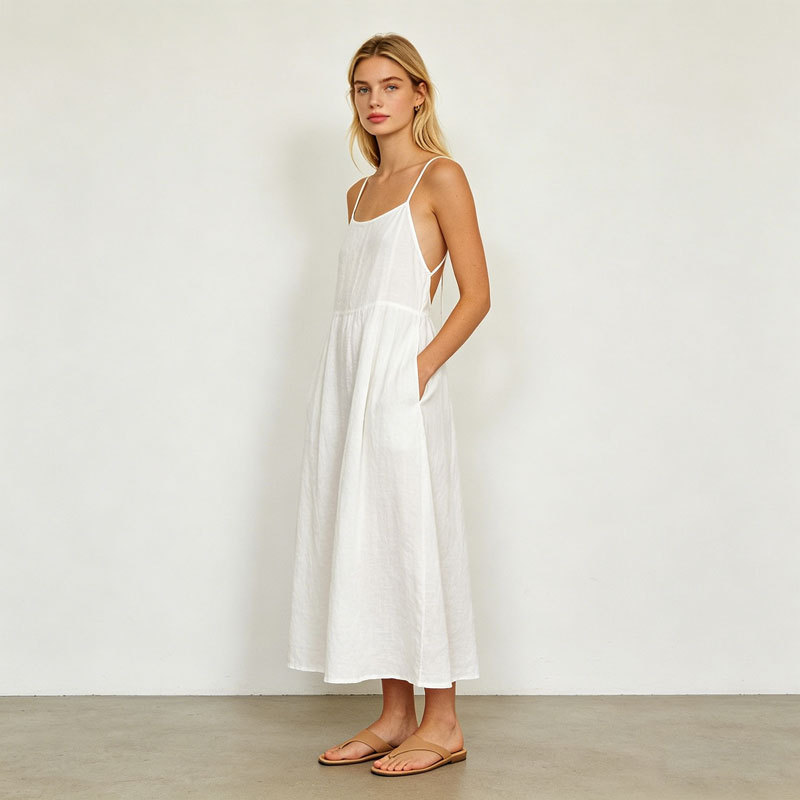
How to Choose Linen Clothing for Travel
Choosing linen clothing for travel is not the same as choosing linen for everyday wear — travel adds hard requirements: packability, crease tolerance, quick drying, easy care on the road, and pieces that mix together into more outfits than the number of items you pack. This guide walks through the buying decisions in order: which fabric weight to look for, washed versus unwashed linen, weave and feel, fit and cut, colour strategy, how many pieces you actually need, what to pay, and how to care for the pieces while travelling. It is written honestly — linen is not the right travel fabric for every destination, and the guide says exactly where its limits are, so you can decide with your own trip in mind.
This is an information guide, not a paid recommendation. Fabric weights, weave descriptions, and care guidance follow how flax linen is described across the industry; no invented statistics, no invented customer stories, and no claim that linen is the right choice for every traveller on earth.
Start With the Trip, Not the Fabric
Before comparing fabric weights and weaves, define the trip. The honest starting point is that linen earns its place in a travel wardrobe primarily for warm-weather and hot-weather destinations — and for long flights to those places. If the trip is a cold-weather city break in winter or a week of heavy rain, linen is not the fabric to build around; a different wardrobe makes more sense. That is not a criticism of linen, it is a matching problem: buy for the destination.
For trips that are warm, humid, or sunny — beach holidays, Mediterranean city breaks, tropical getaways, summer road trips — linen solves the two biggest travel-clothing problems at once:
- The heat problem. Linen breathes and handles moisture better than most fabrics, so long days in the sun stay comfortable. Our FAQ on whether linen is good for hot weather explains the fibre-level reasons.
- The washing problem. Linen dries quickly, which means a small capsule can be washed by hand in a hotel sink and worn again — you pack fewer clothes, not more. For the full picture of why this works, why linen is the best fabric for travel covers the fibre properties in depth.
Once the destination makes linen a sensible choice, the buying decisions below decide whether the pieces you bring actually serve the trip — or just take up space in the bag.
In short: match the fabric to the destination first. Linen suits warm, humid, and sunny travel; for cold or very wet trips, choose accordingly.
Fabric Weight: The First Buying Decision
Fabric weight — measured in grams per square metre (gsm) — is the single most useful number when choosing linen for travel. It determines how the piece packs, drapes, wears, and lasts. The industry ranges below are approximate, and different brands may label weights differently, but they give a reliable mental map:
| Weight range | Character | Best for travel? | Honest trade-offs |
|---|---|---|---|
| Lightweight (roughly 100–140 gsm) | Airy, soft drape, very cool | Good for extreme heat, but delicate | Packs smallest and dries fastest, but wrinkles more, wears faster, and can feel flimsy after repeated hotel washing |
| Mid-weight (roughly 150–180 gsm) | Balanced body and softness | The travel sweet spot | Structured enough to look intentional, soft enough to be comfortable, durable enough for a full trip |
| Heavyweight (roughly 190 gsm and above) | Substantial, crisp, formal-leaning | Only for cooler evenings or structured pieces | Wrinkles less but packs heavier and dries slower — the wrong trade for carry-on travel |
The practical advice: for most warm-weather trips, choose mid-weight washed linen. If the destination is genuinely scorching and you value maximum airflow over structure, lightweight linen works — just accept that it is a delicate summer fabric, not rugged travel gear. If you are packing linen for a cooler evening layer or a dressier dinner outfit, a heavier piece earns its weight.
Weight also interacts with durability: a mid-weight piece survives the trip and returns home intact, while an ultra-light piece may show wear after a hard two-week itinerary. For a travel purchase, slightly more substance is usually the safer bet — the related guide on choosing linen clothes that last goes deeper into this trade-off.
Washed vs Unwashed Linen: Non-Negotiable for Travel
This is the most important single choice in this guide. Linen comes in two basic finishes:
- Unwashed (raw) linen. Stiffer, more crisp, with a formal, structured look. It shrinks noticeably in its first wash, and it takes several washes to soften. Buying unwashed linen for travel is risky: the piece may not fit after its first hotel wash, and it will not feel comfortable until it has been softened through repeated laundering.
- Garment-washed (pre-washed) linen. Washed during production, so it arrives pre-shrunk and pre-softened. It is ready to wear from the first day, feels comfortable immediately, wrinkles in the relaxed way linen is known for, and behaves predictably when you wash it on the road.
For travel, choose garment-washed linen. The reasons are practical, not aesthetic: no surprise shrinkage mid-trip, no stiff break-in period, and predictable behaviour in hotel washing machines and hand-wash basins. The dedicated comparison — washed linen vs regular linen — covers the differences in detail, including shrinkage behaviour, which our linen shrinkage FAQ also explains.
If the product page does not say whether the linen is washed, ask before buying. This single detail changes how the piece behaves for its entire life, and it matters even more on a trip where you cannot simply return it for a different size.
Weave, Feel, and Finish
Beyond weight and washing, the weave determines how the fabric looks, feels, and performs on the road:
- Plain weave. The classic linen weave — visible, even grid of yarns. It is breathable, textured, and the most common choice for clothing. Fine, tightly woven plain linen feels smoother and wears longer.
- Slubby or textured linen. Irregular yarns create a rustic, artisanal look. Beautiful and characterful, and slightly more forgiving of creases — the texture hides wrinkles well, which is genuinely useful for travel.
- Open, loose weaves. Maximum airflow and softness, minimum structure. Lovely for beach cover-ups and very hot climates, but delicate — not the first choice for a hard-working travel wardrobe.
- Linen blends. Linen blended with cotton, viscose, or a little elastane changes the hand-feel, stretch, and wrinkle behaviour. Blends are a legitimate choice when you want less creasing or a touch of stretch, but they change the breathability story — see 100% linen vs linen blend for an honest breakdown.
For most travellers, a fine-to-mid plain weave in garment-washed linen is the safest, most versatile choice: it looks intentional in photos, packs well, and softens beautifully. If you want to hide packing creases, textured or slubby linen does the job visually — a legitimate styling trick, not a compromise.
Fit and Cut: Buy for Movement, Layering, and Hotel Washing
Fit is where travel linen succeeds or fails. Linen has almost no stretch, so the fit at the moment of purchase is the fit you live with — and on a trip, that fit will also be tested by hand-washing, airline seats, and long walking days. Three fit principles matter:
- Buy relaxed, not tight. A slightly relaxed cut breathes better, layers more easily, and forgives the small changes that hotel washing can cause. Tight linen looks strained and creases at the stress points — exactly what you do not want in a travel wardrobe.
- Think in layers. Travel weather changes within a day — air-conditioned museums, evening breezes, hot afternoons. Pieces that layer (a linen shirt over a linen camisole, a dress with a cardigan) give you more climate options without more items. Our linen capsule wardrobe guide shows how to plan this deliberately.
- Check the easy points. Sleeve length that works both rolled and unrolled, a waist that sits comfortably whether you sit or walk for hours, and bottoms with a little ease through the thigh — these small choices make the difference between a piece you reach for daily and one that stays in the bottom of the bag.
If you are buying online, measure yourself against the size chart rather than guessing from your usual size, and remember that washed linen is pre-shrunk — what fits at home is what fits on the trip. The Size Questions FAQ covers sizing details for dresses, tops, trousers, and sets.
Colour Strategy: Neutral Pieces, More Outfits
Colour is the cheapest way to multiply a travel wardrobe. The principle is simple: buy pieces that all work together, so every top pairs with every bottom and nothing in the bag is single-outfit-only.
- Lead with neutrals. Sand, oat, white, stone, black, and navy form the backbone. These colours mix with each other effortlessly, photograph well in almost any setting, and hide minor travel stains better than bright pastels.
- Add one or two accents. A terracotta, sage, or olive piece adds life to a neutral base without breaking the system. One accent top or dress can change the whole mood of the capsule.
- Think about what you already own. If the trip is three weeks and the capsule is five pieces, five new pieces that only match each other is a closed system. Choose linen colours that also work with the non-linen items you are bringing — that is where the outfit count really multiplies.
- Patterns hide wrinkles. A subtle stripe or print does double duty: it adds interest and visually masks the creases that travel causes. Plain linen is classic, but a restrained pattern is a practical travel choice.
The result of a disciplined palette: a five-piece linen capsule can produce a different outfit every day of a week-long trip. That is the whole point of choosing travel clothing deliberately rather than just packing whatever is clean.
How Many Pieces Do You Actually Need?
A common mistake is treating "travel wardrobe" as "everything I own, compressed." The opposite is more useful: a small, coordinated set that you wash and rotate. A realistic warm-weather linen travel capsule looks like this:
| Piece | Why it earns its place | Outfits it enables |
|---|---|---|
| 1 linen shirt or tunic | The most versatile piece — worn open over a camisole, tucked into trousers, or knotted over a dress | Pairs with every bottom and dress in the bag |
| 2 linen tops or camisoles | Base layers that layer under shirts and dresses; hand-wash overnight, dry by morning | Swap between bottoms for a new outfit daily |
| 1–2 pairs of linen trousers or shorts | Wide-leg or relaxed cuts travel comfortably; mid-weight resists creasing | Day-to-evening with a change of top and shoes |
| 1 linen dress | The one-piece outfit — beach, dinner, market, sightseeing with a change of shoe | Whole-outfit simplicity; layers over a camisole in cooler evenings |
| 1 linen set (optional) | A matching set reads as a complete look while packing as two flat pieces | Works as a set for evenings, split for daytime variety |
That is five to seven pieces covering a week of warm weather — and because linen dries overnight, the same pieces cover a two-week trip with one mid-trip wash. For a complete view of the packing system, packable linen picks for travel lists specific options by category, and the summer linen buying guide covers season-specific choices.
One honest note: the capsule works only if every piece actually fits and flatters. A five-piece system has no spare capacity — if one piece is wrong, the whole wardrobe strains. Buy deliberately, check fit, and keep pieces within the same colour system.
What Should You Pay — and Where to Save
Linen costs more than most fabrics, and travel linen is worth a considered budget. The honest breakdown:
- Pay for construction. Well-finished seams, quality buttons, reinforced stress points, and dense, even weave are what make a piece last through years of trips. Our guide to choosing linen clothes that last explains what to inspect.
- Pay for garment-washed finish. Pre-washing costs the maker time and money, which is part of why washed linen is priced higher — but for travel it is the difference between a piece that works from day one and one that shrinks or stiffens on you.
- Do not overpay for labels. The fabric and construction matter more than the brand name. Two garments at very different prices can contain similar mid-weight washed linen; compare weight, weave, and finishing rather than assuming price equals quality.
- Think cost per wear. A mid-weight linen shirt that serves a decade of warm-weather trips is cheaper per wear than a cheap synthetic top that survives one season. The full reasoning is in why linen clothing costs more.
The honest caution: do not buy the cheapest linen available and expect travel-grade performance, and do not buy expensive linen that does not fit your trip. Price follows construction and finish; value follows whether the piece actually gets worn.
How to Inspect a Linen Garment Before You Commit
When you are handling a linen piece in person — or inspecting photos and details online — a quick inspection separates a good travel buy from a disappointing one:
- Hold it to the light. A good linen weave looks even and consistent. Uneven gaps, thin patches, or loose yarns suggest lower construction quality that will not age well on the road.
- Feel the weight. The garment should have a reassuring substance without feeling heavy. If it feels papery or flimsy, it is likely very lightweight — fine for extreme heat, but not a versatile travel piece.
- Check the seams. Look at the inside seams, especially at the shoulders, side seams, and hem. Even stitching, secure thread, and tidy finishing are the strongest signals of durability, and seams are where cheap linen fails first.
- Test the drape. Hold the garment up or look at the model photos: does it fall in soft, relaxed folds? Stiff, board-like linen is likely unwashed; soft, fluid drape signals a garment-washed finish.
- Read the label. Care instructions that allow cool machine washing and low tumble drying are travel-friendly. Complicated dry-clean-only care is a warning sign for a piece you will want to wash in a hotel sink.
This five-point inspection takes less than a minute and reliably predicts how the piece will behave on a trip. It also connects directly to the quality question — for a deeper look, our guide on how to tell if linen is good quality covers the same ground from a quality standpoint.
Common Buying Mistakes to Avoid
Most disappointing travel-linen purchases follow a small set of repeatable mistakes. Naming them helps you avoid them:
- Buying unwashed linen for a trip. The shrinkage risk and stiff break-in period make this the single most common error — choose garment-washed.
- Prioritising looks over fit. A stunning linen dress that does not fit comfortably will sit in the suitcase. Travel pieces must earn their place through daily wearability.
- Building a one-colour island. Five pieces that only match each other and nothing else you packed limit the outfit count. Integrate the linen with the rest of the travel wardrobe.
- Buying too light for the itinerary. Ultra-lightweight linen is lovely in extreme heat, but for a busy multi-city itinerary, mid-weight survives the trip better and looks less crumpled in photos.
- Ignoring the care label. If the piece demands dry cleaning, it is the wrong choice for a trip where you will need sink-washing. Travel linen should tolerate water, mild soap, and air-drying.
- Skipping the colour test. White and very light linens show sunscreen, food, and city grime quickly. If the trip involves markets, beaches, or red wine, consider whether the colour can tolerate real life.
Each mistake traces back to the same root: buying the idea of a linen travel wardrobe instead of the reality. The checklist above is the antidote — run it per piece, and the system works.
Caring for Linen on the Road
Travel care is simpler than most people expect — linen is genuinely low-maintenance on a trip:
- Hand-wash in the sink. Cool or lukewarm water, a little mild soap, gentle squeeze. Linen dries quickly, so a hand-washed top is ready by the next morning.
- Roll, don't wring. Press water out by rolling the garment in a towel rather than wringing — wringing distorts the fibres and sets creases.
- Hang to dry. In most hotel rooms a piece dries overnight. Avoid direct sun for long periods if you want to protect the colour.
- Iron only if you must. Garment-washed linen can be worn with its natural creases — that is the look. If you want crispness for an evening, a quick low-heat iron or a steamy bathroom works.
- Embrace the creases. Packing creases in washed linen relax as you wear the piece. The full routine lives in the how to wash linen clothing FAQ and the Linen Care FAQ.
The practical payoff of choosing the right linen: on the road, care takes minutes, drying takes hours, and the pieces look better on day five than day one — which is exactly what a travel wardrobe should do.
Before You Buy: A Travel Linen Checklist
Run this checklist before committing to any linen piece intended for travel:
- Destination match: Is the trip warm, humid, or sunny enough for linen to earn its place? (If cold or very wet — reconsider.)
- Weight: Mid-weight (roughly 150–180 gsm) for versatility; lightweight only for extreme heat with accepted delicacy.
- Finish: Garment-washed (pre-shrunk, pre-softened) — confirm on the product page or by asking.
- Weave: Fine-to-mid plain weave for versatility, or textured weave if you want crease-hiding character.
- Fit: Relaxed through the body, easy to layer, comfortable for full walking days.
- Colour: Neutrals that match your other travel pieces, with at most one or two accents.
- System fit: Does this piece create new outfits with what you already own — or just add another single-outfit item?
- Construction: Clean seams, secure buttons, even weave, no loose threads at stress points.
- Budget: Price aligned with construction quality, judged by cost per wear over years of trips.
The honest limit: no checklist removes judgment. Linen is the right travel choice for warm-weather trips when the pieces are chosen deliberately — weight, wash, fit, and colour all working together. Skim any of the four and the wardrobe underperforms; get all four right and a small linen capsule quietly becomes the best part of the packing list.
Quick Answers to Common Questions
Is linen actually good for travel, or is it just fashionable?
It is genuinely practical for warm destinations. Breathability, quick drying, light weight, and crease tolerance are documented properties of flax linen, and each one maps directly to a travel problem. It is fashionable too — but the practical case stands on its own.
Will my linen wrinkle in a suitcase?
Yes, it will crease — and garment-washed linen is designed so those creases relax as you wear the piece. If crease-free straight out of the bag matters more than breathability, a synthetic or blend fabric serves better; that is an honest trade-off, not a flaw.
Can I wash linen in a hotel sink?
Yes — cool water, mild soap, gentle squeeze, roll in a towel, hang overnight. Quick drying is one of linen's strongest travel advantages.
Should I buy unwashed linen for travel to save money?
Generally no. Unwashed linen shrinks in its first wash and needs repeated laundering to soften — both problems you do not want on a trip. The price difference rarely justifies the risk.
What if my destination is both hot and humid?
That is linen's home territory. Linen handles moisture better than cotton in humidity and dries faster — the combination of breathability and moisture release is exactly what humid climates demand.
The Honest Bottom Line
Choosing linen for travel comes down to five decisions made deliberately: match the fabric to a warm-weather destination, choose mid-weight garment-washed linen, pick a relaxed fit that layers, keep the palette neutral so pieces multiply, and buy construction over brand. Do that and a small linen capsule — a shirt, two tops, a pair of trousers, a dress, maybe a set — covers a week of warm-weather travel and dries overnight for a second week.
The honest limits deserve equal weight. Linen creases (deliberately), has no stretch (so fit matters), and is the wrong foundation for cold or very rainy trips. It also costs more than synthetic alternatives — a price justified by years of wear, but a price nonetheless. Match the fabric to the destination and the budget to the construction, and linen becomes the most reliable item in the bag. Mismatch either, and it becomes the item you wish you had left at home.
For the fuller picture: the fibre-level case in why linen is the best fabric for travel, specific packable options in best linen clothing for travel, and wardrobe planning in the linen capsule wardrobe guide.
Build Your Travel Linen Wardrobe
Browse the KOSSR linen collection — dresses, tops, trousers, and sets in quality washed linen — or contact us with any question about weight, fit, or care before you order.